

Attention Deficit Hyperactivity Disorder and How It Affects Daily Life
Attention deficit hyperactivity disorder (ADHD) is a neurodevelopmental disorder that affects attention, focus, impulse control, hyperactivity, executive function, organization, and daily behavior in both children and adults. Common ADHD symptoms include inattention, forgetfulness, restlessness, impulsivity, poor time management, emotional dysregulation, and difficulty completing tasks, which can affect school performance, work productivity, relationships, and mental well-being. A proper ADHD diagnosis usually involves a clinical evaluation of symptoms across different settings, while ADHD treatment may include behavior therapy, parent training, school accommodations, lifestyle support, and medication to help improve focus, self-control, and daily functioning.
Some people spend years wondering why simple tasks feel strangely hard. They care deeply, yet still miss deadlines, forget instructions, lose focus in meetings, misplace important things, or feel restless even when they want to stay calm. For others, the struggle begins in childhood, showing up as nonstop movement, blurting out answers, difficulty waiting, or trouble staying on task in class. In both cases, the pattern can be frustrating, confusing, and easy to misunderstand.
Attention deficit hyperactivity disorder is often talked about in very short, simplified ways. That does not help the people living with it. A better explanation looks at how it affects real life, from school and work to sleep, emotions, routines, and relationships. It also explains why some people are diagnosed early, while others are missed for years.
This guide covers attention deficit hyperactivity disorder in a way that feels practical and complete. It explains what ADHD is, how symptoms can change with age, what the diagnosis process really involves, how treatment works, and what kind of support makes everyday life easier. Whether you are reading for yourself, your child, your partner, or someone you care about, the goal is simple: clear understanding without confusion or blame.
What is attention deficit hyperactivity disorder?
Attention deficit hyperactivity disorder is a neurodevelopmental condition that affects attention, self-control, activity level, planning, and organization. It often begins in childhood and can continue into adolescence and adulthood. The symptoms may include inattention, impulsivity, hyperactivity, or a mix of all three.
What are the main symptoms of ADHD?
The main symptoms of ADHD include trouble focusing, forgetfulness, disorganization, impulsive behavior, restlessness, frequent interruptions, and difficulty finishing tasks. Some people mainly struggle with attention, while others have more visible hyperactivity or a combined pattern.
Can adults have attention deficit hyperactivity disorder?
Yes. Adults can have ADHD even if they were never diagnosed as children. In adulthood, it often shows up as poor time management, missed deadlines, mental overload, forgetfulness, emotional frustration, and difficulty organizing daily life.
What attention deficit hyperactivity disorder really means
Attention deficit hyperactivity disorder is a condition that affects how the brain manages attention and self-regulation. The name can be misleading because people with ADHD do not simply lack attention. In many cases, they have difficulty directing attention where it needs to go, keeping it there, and shifting it when necessary. They may struggle through a routine task, then become deeply absorbed in something interesting. That uneven pattern is one reason the condition is often misunderstood.
ADHD is not the same as being lazy, careless, immature, or undisciplined. It is also not a sign of low intelligence. Many people with ADHD are bright, creative, and thoughtful. Their difficulty lies in the management system behind daily tasks. Planning, organizing, starting, stopping, sequencing, remembering, and following through can all become harder. This makes everyday life more tiring than it looks from the outside.
The older term ADD is still common in casual conversation, especially when people refer to a quieter, inattentive pattern. But the accepted term today is ADHD. That matters because the condition includes more than visible hyperactivity. It can involve inner restlessness, racing thoughts, poor impulse control, emotional strain, and serious difficulty with organization. A complete understanding must go beyond the stereotype of an energetic child who cannot sit still.
The three symptom patterns of ADHD
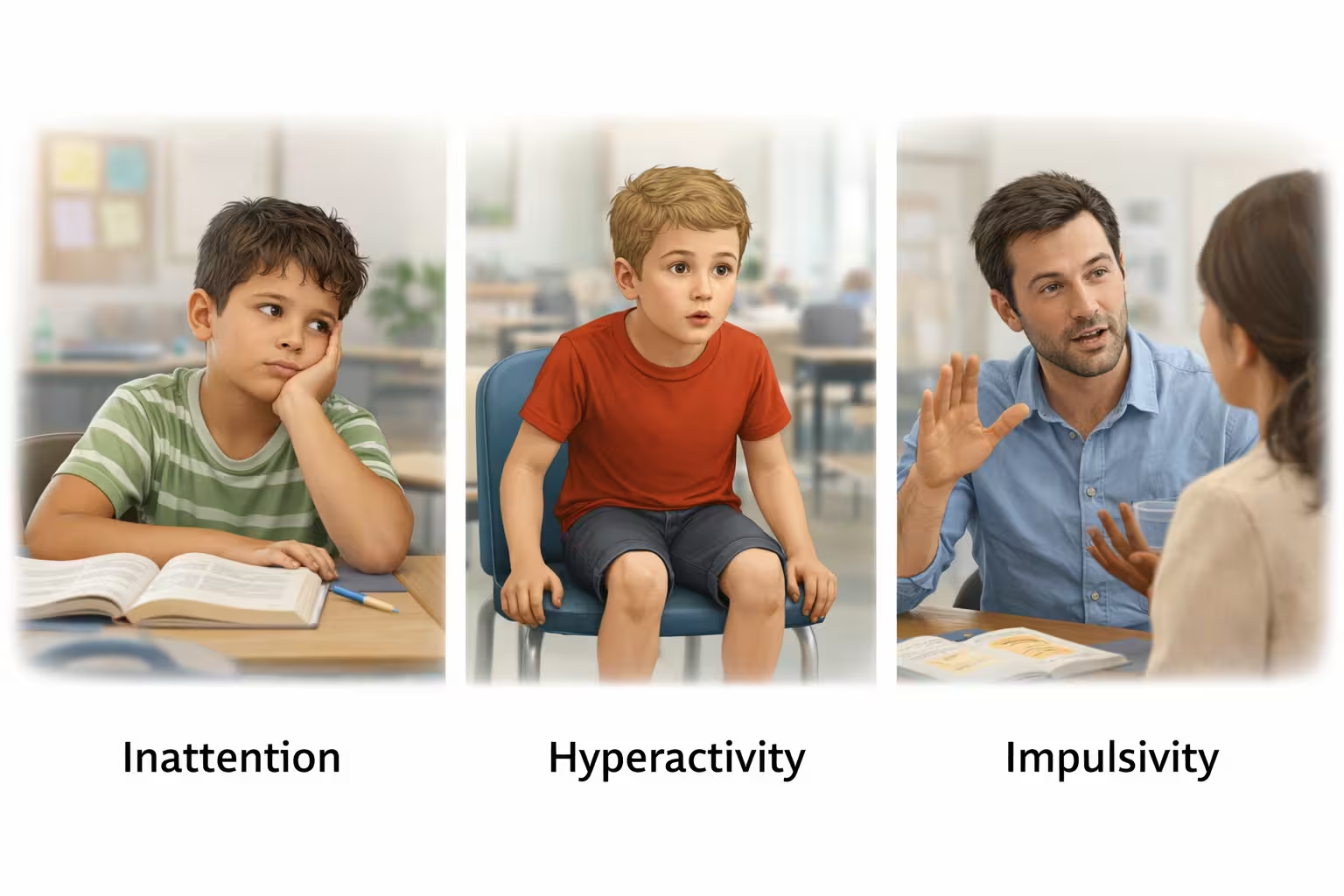
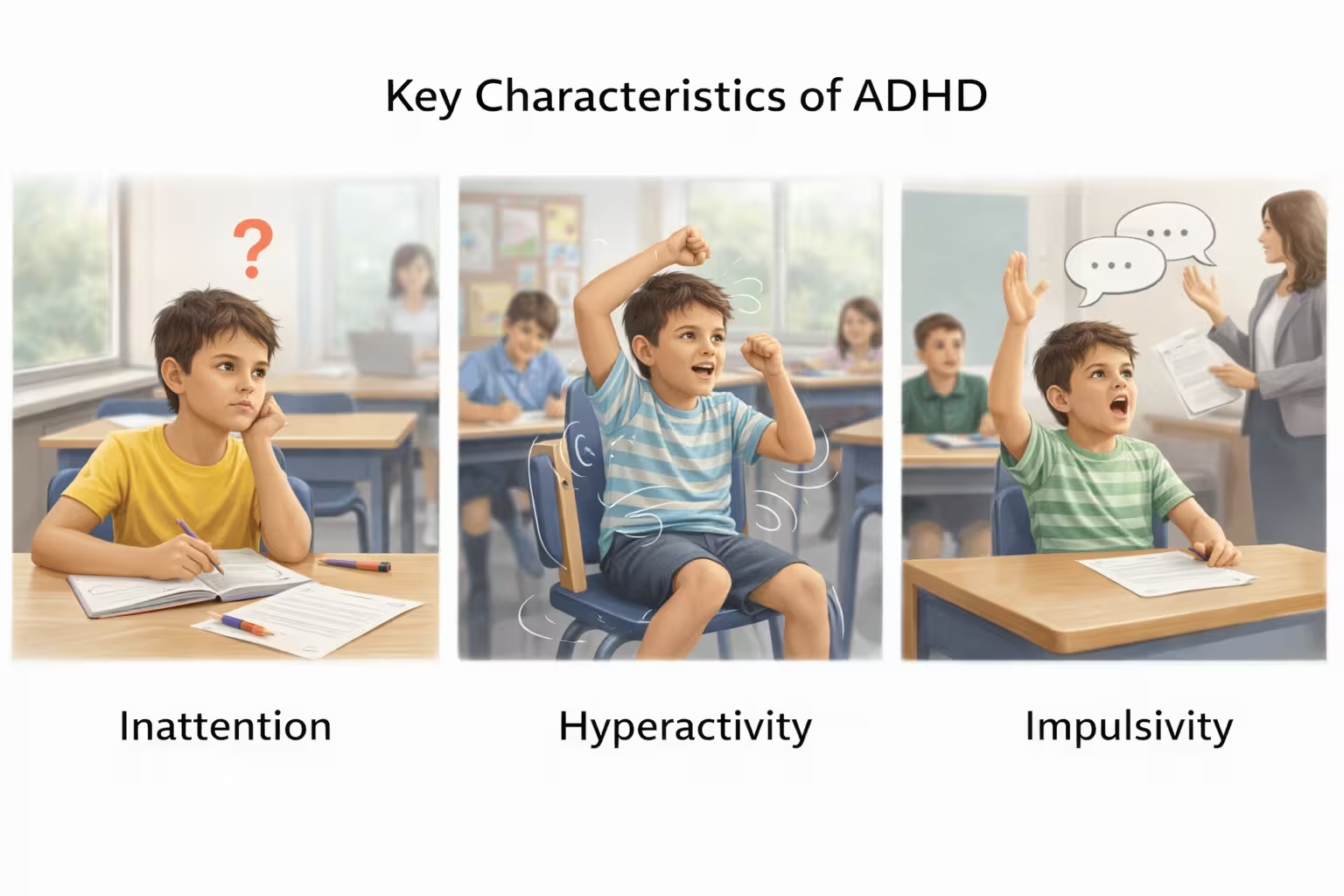
Attention deficit hyperactivity disorder is commonly described through three main symptom groups: inattention, hyperactivity, and impulsivity. A person may mainly show inattentive symptoms, mainly show hyperactive-impulsive symptoms, or show a combined presentation. Understanding these differences helps explain why ADHD can look so different from one person to another.
Inattention
Inattention is more than occasional distraction. It is a repeated pattern of difficulty with focus, follow-through, and mental organization. A person may start tasks and fail to finish them, overlook details, lose track of instructions, or drift away during conversations and routine work. The problem is often strongest when the task is repetitive, boring, or requires sustained effort.
Common signs of inattention include:
- losing track of details
- making careless mistakes
- trouble staying focused on tasks
- seeming not to listen
- failing to finish work
- poor organization
- avoiding mentally demanding tasks
- misplacing important items
- forgetting daily responsibilities
- being easily distracted
Hyperactivity
Hyperactivity can be physical, mental, or both. In children, it may appear as constant movement, climbing, squirming, or difficulty staying seated. In teens and adults, it may look quieter. Instead of running around, the person may feel chronically restless, uncomfortable with stillness, or driven to stay busy all the time.
Common signs of hyperactivity include:
- frequent fidgeting
- difficulty remaining seated
- excessive movement
- talking more than expected
- difficulty relaxing quietly
- a constant feeling of inner restlessness
- needing stimulation to stay engaged
Impulsivity
Impulsivity is the tendency to act before thinking through the consequences. It can affect speech, decisions, emotions, and behavior. A person may interrupt, blurt out answers, make snap decisions, overspend, react too quickly in conflict, or struggle to wait their turn. This can affect school behavior, work performance, relationships, and safety.
Common signs of impulsivity include:
- interrupting others
- blurting out answers
- difficulty waiting
- acting before planning
- impatience in lines or traffic
- sudden emotional reactions
- risky or poorly timed decisions
How attention deficit hyperactivity disorder looks in children
In childhood, ADHD often becomes noticeable when the world starts asking for structure. A young child may seem constantly in motion, have trouble following directions, or become frustrated very quickly. In school, the pattern often becomes clearer. The child may lose homework, forget instructions, struggle to wait, rush through classwork, or move from task to task without finishing. Teachers may notice distraction, impulsive behavior, or difficulty staying organized.
Some children are recognized early because their symptoms are obvious. Others are missed because they are quiet, polite, or academically capable enough to get by. A child can still have significant ADHD even if they are not causing disruption. In many cases, the child is working very hard just to stay afloat. That effort may not be visible to others, but it can lead to exhaustion, frustration, and low confidence over time.
Another reason childhood ADHD can be missed is that symptoms often become more obvious only when demands increase. A child might cope well in a structured early classroom but struggle later when homework, planning, and independent work become more important. The condition does not always appear in the same way at the same age.
How attention deficit hyperactivity disorder changes in teens
During adolescence, the outward picture of ADHD often shifts. The obvious running and climbing seen in younger children may fade, but the executive challenges remain. School becomes more demanding, social life becomes more complex, and independence increases. At the same time, the teenager may still struggle with organization, planning, time awareness, and impulse control. This mismatch can create intense stress.
A teenager with ADHD may forget assignments, put off projects until the last minute, lose interest in routine schoolwork, react emotionally in conflict, or seem capable one day and overwhelmed the next. Parents and teachers may become frustrated by inconsistency. The teen may be described as smart but unmotivated, even though the deeper problem is often difficulty with self-management rather than lack of effort.
Emotions can also feel bigger during these years. Rejection, embarrassment, and frustration may hit harder. Friendships may become strained if the teen interrupts, forgets plans, or acts before thinking. Risk-taking can also become a concern. That is why support during adolescence should address more than grades. It should include routines, emotional skills, school coordination, and realistic structure.
How attention deficit hyperactivity disorder shows up in adults

Many adults live with ADHD for years before they realize it. They may assume they are simply disorganized, forgetful, bad with time, or inconsistent under pressure. In adulthood, the condition often becomes less about visible hyperactivity and more about invisible friction. A person may miss deadlines, struggle to prioritize, start many tasks without finishing, overlook details in important work, or feel mentally overloaded by basic routines.
Adult life exposes executive weaknesses quickly. Bills need to be paid on time. Appointments need to be remembered. Work often requires long periods of self-direction. Household responsibilities do not disappear. Relationships require emotional regulation and consistency. An adult with ADHD may care deeply about all of these things and still feel unable to manage them in a steady way.
This can create a painful internal pattern. The person knows what needs to be done, yet cannot reliably turn intention into action. They may perform very well under pressure or in high-interest situations, then struggle with tasks that seem ordinary to everyone else. That inconsistency often leads to shame. Adult diagnosis can be powerful because it replaces self-blame with understanding and opens the door to better support.
Attention deficit hyperactivity disorder in women and girls
One of the most important areas to understand is how attention deficit hyperactivity disorder can appear in women and girls. For many years, the public image of ADHD focused heavily on boys with obvious hyperactive behavior. That narrow image caused many girls to be overlooked. Instead of being disruptive, they may seem dreamy, quiet, forgetful, anxious, messy, or emotionally sensitive. Their struggles are real, but easier to miss.
Girls are more likely to show a less visible inattentive pattern. They may spend class staring out the window, lose track of instructions, forget assignments, or take much longer than peers to stay organized. Because they are not always disruptive, adults may interpret them as shy, scattered, or lacking confidence rather than recognizing a neurodevelopmental issue.
Many women describe years of masking. They create complex systems, overprepare, double-check everything, or work far harder than others just to appear organized. Anxiety may develop around the constant fear of forgetting something important. By adulthood, the person may be exhausted from trying to compensate. A useful guide to ADHD should always include this perspective because it reflects a major lived reality for many readers.
Executive dysfunction and why daily tasks feel harder
A key part of ADHD is executive dysfunction. This refers to difficulty with the mental skills used to manage daily life. These include planning, organizing, remembering, starting tasks, controlling impulses, shifting attention, and finishing what has been started. When executive function is weak, even simple responsibilities can feel heavier than they should.
This is why people with ADHD often say they know what to do but cannot seem to do it consistently. The issue is not always knowledge or desire. It is the bridge between intention and action. A person may fully understand that they need to answer an email, fold laundry, begin a report, or leave the house on time. Still, they may freeze, drift, or get pulled into something else.
Executive dysfunction also explains why reminders like “just focus” or “just be more organized” are usually unhelpful. They ask the person to use the exact skills that are already strained. More effective support involves reducing mental load, making tasks visible, breaking work into steps, and using external systems to support the brain rather than fighting against it.
Time blindness and emotional regulation
Many people with ADHD experience what is often called time blindness. This means they have difficulty sensing the passage of time in a useful way during everyday tasks. Five minutes can feel like thirty. Thirty minutes can disappear without warning. This can lead to lateness, missed deadlines, underestimated projects, and a repeated feeling of surprise when time runs out.
Time blindness does not mean the person does not care. It means internal timing is unreliable, especially during tasks that are boring, stressful, or highly absorbing. This is also why some people with ADHD hyperfocus for long stretches without noticing hunger, fatigue, or other responsibilities. The issue is not simply attention. It is attention regulation.
Emotional regulation can be difficult too. A person may feel frustration quickly, take criticism hard, or react more sharply than they intended. Small setbacks can trigger outsized stress, especially when the person is already overwhelmed. These emotional patterns are important because they affect relationships, work, and self-esteem. Many short articles skip this area, but it matters deeply in everyday life.
What causes attention deficit hyperactivity disorder
There is no single cause of ADHD. Current understanding points to a mix of influences, with genetics playing a major role. ADHD often runs in families, which is why a child’s diagnosis sometimes leads a parent, sibling, or close relative to recognize the same pattern in themselves. Researchers also study brain development and other biological factors that may shape risk.
What matters most for readers is separating cause from myth. ADHD is not caused by laziness, poor parenting, too little discipline, or weak willpower. Those ideas are both inaccurate and harmful. Family environment can affect how symptoms are managed, but it does not create the condition on its own. A child is not choosing ADHD, and an adult is not failing on purpose.
It is also important to understand that lifestyle factors can make symptoms worse without being the root cause. Poor sleep, stress, and chaotic routines may increase problems with focus and self-control, but that is not the same as causing the disorder itself. A clear article should reduce blame and replace it with accurate understanding.
Conditions that can look like ADHD
A careful diagnosis matters because other problems can resemble ADHD. Sleep deprivation can cause poor focus and irritability. Anxiety can make concentration harder because the mind is crowded with worry. Depression can reduce motivation, memory, and mental clarity. Learning disorders can create school struggles that look like inattention. Trauma can also affect behavior, focus, and emotional control.
Common overlapping or similar conditions include:
- anxiety disorders
- depression
- learning disorders
- autism spectrum disorder
- sleep disorders
- hearing or vision problems
- thyroid and other medical concerns
- trauma-related conditions
- substance use problems in teens and adults
This does not mean people must choose between one label or another. In many cases, ADHD exists alongside other conditions. That is one reason self-recognition is useful, but self-diagnosis should not be the final step. A full evaluation helps make sure the real picture is understood.
How attention deficit hyperactivity disorder is diagnosed
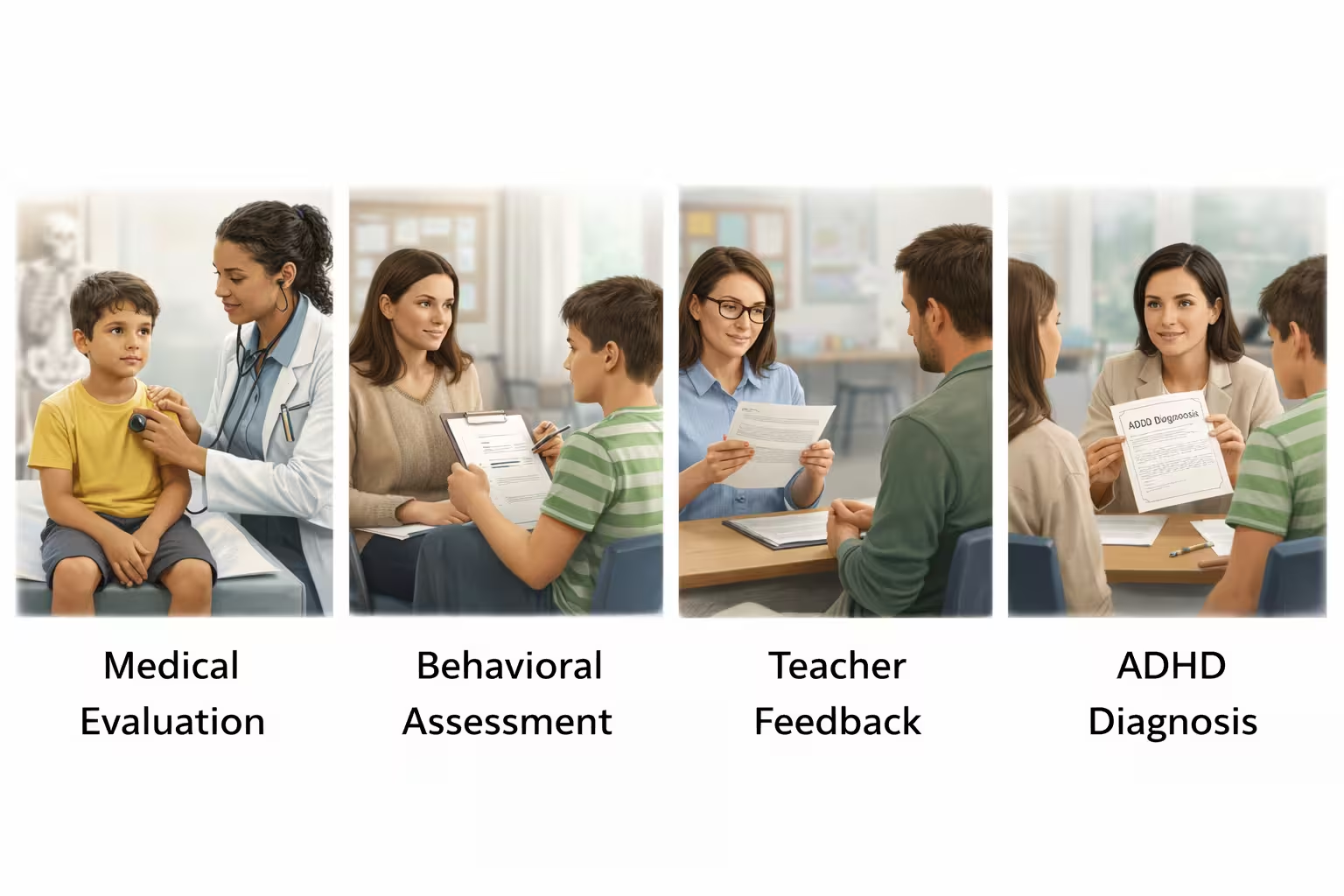
Attention deficit hyperactivity disorder is not diagnosed through a single scan, blood test, or online checklist. Diagnosis is based on a careful clinical evaluation. The clinician looks at symptom history, age of onset, daily impairment, and whether the symptoms appear in more than one setting. They also consider whether another condition better explains the pattern.
In children, the process often includes information from parents, caregivers, and teachers. School reports, behavior descriptions, and developmental history are especially useful. In adults, diagnosis may involve a detailed review of long-term patterns across school, work, relationships, and home life. Sometimes old report cards, family observations, or earlier records help fill in the picture.
A solid evaluation often includes:
- a detailed history of symptoms
- developmental and medical background
- family history
- rating scales or structured questionnaires
- discussion of school, work, and relationships
- screening for anxiety, depression, learning issues, and sleep concerns
- physical review when necessary
The most important question is whether the symptoms are persistent, began in childhood, and meaningfully interfere with life. Occasional distraction is not enough. ADHD involves a lasting and impairing pattern.
Why adult diagnosis can feel emotional
An adult diagnosis often brings more than simple relief. It can also bring grief. Many adults spent years thinking they were careless, unreliable, lazy, or somehow failing at basic life. Once ADHD is identified, the past often starts to look different. School struggles, forgotten deadlines, chaotic routines, impulsive decisions, and chronic overwhelm may suddenly make sense in a new way.
That clarity can be deeply validating. It can also feel painful because the person may wonder what life would have been like if they had been understood earlier. This is a very normal response. For some people, the diagnosis changes the way they view childhood, family relationships, academic performance, and even their own self-worth.
A good article should acknowledge this emotional side. ADHD is not just a list of symptoms on paper. It is a lived experience. When people finally get an explanation that fits, they often begin rebuilding self-trust. That process matters as much as any formal label.
Co-occurring conditions and why they matter
ADHD often appears alongside other conditions. These are sometimes called co-occurring conditions because they exist at the same time and influence how the person functions. Anxiety is common. Depression can also appear, especially when years of frustration and self-criticism have built up. Sleep problems are common too, and poor sleep can intensify nearly every ADHD symptom.
Children may also have learning disorders or behavior-related challenges. Adults may have ongoing stress, burnout, or patterns of emotional overload that developed around unmanaged symptoms. When these conditions overlap, life becomes more complicated. A person may need support in several areas at once.
This matters for treatment. The best plan is rarely built around one symptom alone. A child may need classroom support plus parent training. An adult may need medication, therapy, sleep improvement, and better work systems. Understanding the full picture usually leads to better outcomes than focusing too narrowly on one part of the problem.
Treatment for attention deficit hyperactivity disorder
Treatment for attention deficit hyperactivity disorder usually works best when it is tailored to the person’s age, symptoms, environment, and daily needs. There is no single perfect solution for everyone. What helps most is a balanced plan that makes life more manageable in real settings, not just during short appointments.
For some people, treatment includes medication. For others, therapy, behavioral health support, parent coaching, school accommodations, or practical skill-building make the biggest difference. In many cases, a combination works best. The goal is not to remove personality or create perfection. The goal is to reduce impairment, improve consistency, and make everyday demands easier to handle.
Good treatment also changes with age. A young child may need parent-focused strategies first. A school-age child may need classroom support and behavior management. A teenager may need structure that respects growing independence. An adult may need work systems, emotional regulation tools, and help building routines that can actually last.
Medication options and what they do
Medication can be helpful for many people with ADHD, especially when core symptoms are clearly interfering with school, work, or daily life. In general, medicines used for ADHD fall into two major categories: stimulants and nonstimulants. Both aim to improve attention regulation and reduce stress impulsive or restless behavior, though they work in different ways.
The right medication is not the same for everyone. Some people respond well to the first option they try. Others need adjustments, a different type, or a slower approach. Follow-up is important because treatment should be based on real-life function, not just a short-term impression. Benefits, appetite changes, sleep effects, and mood should all be reviewed carefully.
Medication is not a cure and it does not teach organizational skills by itself. What it can do is reduce enough friction for a person to use other supports more effectively. Many people describe it as making it easier to start, stay with, and complete tasks. Others choose not to use medication or use it only during certain periods of life. A balanced discussion should leave room for individualized care.
Therapy, coaching, and behavior support
Medication is only one part of the picture. Many people with ADHD benefit from therapy, coaching, or structured behavior support that helps them manage daily life more effectively. Children often do well when caregivers receive guidance in behavior management, routines, and consistent reinforcement. Clear expectations and predictable structure can reduce chaos at home and school.
For teens and adults, practical support is especially useful. Cognitive behavioral therapy may help with procrastination, negative thinking, time management, emotional reactions, and problem-solving. Coaching can help with routines, accountability, planning systems, and task breakdown. The best support is usually concrete rather than abstract.
This matters because “try harder” is rarely useful advice. ADHD is not a motivation shortage. It is a self-management challenge. Effective help focuses on what the person can do next, how the environment can support them, and which tools make follow-through easier in daily life.
School support, 504 Plans, and classroom help
Children with ADHD often need support in the school environment, not just at home. A student may understand the material and still perform poorly because the classroom demands strong attention, organization, working memory, and impulse control throughout the day. Without support, the child may be judged by output alone instead of by the barriers they are facing.
Common school accommodations include:
- extra time for tests
- written instructions
- seating with fewer distractions
- movement breaks
- help with organization
- smaller task chunks
- frequent check-ins
- positive reinforcement systems
- support with transitions
- assistive tools when needed
In the United States, a child may qualify for support through a 504 Plan or, in some cases, an IEP. The right option depends on how strongly ADHD affects learning and school function. Families benefit most when support is specific, consistent, and reviewed over time rather than created once and forgotten.
Workplace strategies for adults
Adults with ADHD often do better when work is structured in a way that reduces overload and supports follow-through. Many struggle less with ability and more with managing open-ended demands. A vague assignment can feel much harder than a clearly staged one. Long meetings, constant interruptions, and unclear priorities can also increase mistakes and fatigue.
Helpful work strategies often include:
- calendar blocking
- written follow-up after meetings
- breaking projects into milestones
- visual task lists
- alarms and reminders
- noise reduction
- short focused work sessions
- planned transition time between tasks
- one main calendar instead of several
- accountability check-ins
Role fit also matters. Some people thrive in fast, high-interest environments but struggle in repetitive administrative work. Others do better with predictable structure and clear systems. Workplace success often improves when the person’s strengths and the job’s demands are better matched.
Relationships, family life, and self-esteem
ADHD can affect relationships in ways that are easy to misread. A partner may think forgetfulness means a lack of care. A parent may grow tired of repeating instructions. A friend may feel ignored when plans are forgotten. In reality, the person with ADHD may care deeply and still struggle with attention, memory, and consistency.
These repeated misunderstandings can erode self-esteem. Many people with ADHD grow up hearing versions of the same message: you are smart enough, so why are you still doing this. Over time, they may begin to expect failure, overcompensate through perfectionism, or stop trusting themselves with responsibilities. This emotional layer is often as painful as the practical difficulties.
Families and partners often do best when they move from blame to understanding. That does not mean excusing every behavior. It means recognizing that support, communication, and clear systems usually work better than criticism. Shared calendars, written plans, realistic expectations, and calm follow-up often improve relationships more than repeated arguments.
Sleep, exercise, food, and routine
Lifestyle habits do not replace treatment, but they can strongly support it. Sleep is especially important because poor sleep can worsen attention, memory, emotional control, and irritability. A person who already has difficulty with self-regulation usually struggles more when rest is inconsistent. Protecting sleep can make a meaningful difference.
Exercise can also help with stress, energy regulation, and mental settling. Some people find it easier to focus after movement, especially earlier in the day. Predictable meals can help reduce crashes that worsen concentration. Routine matters too. The fewer decisions a person has to make while already overloaded, the more energy they can save for important tasks.
The key is not to treat lifestyle habits as a cure. They are support tools. Their value lies in making the whole system work better. A stable routine, regular sleep, and movement may help medication feel smoother, therapy skills stick better, and daily demands feel less chaotic.
Practical ways to make daily life easier
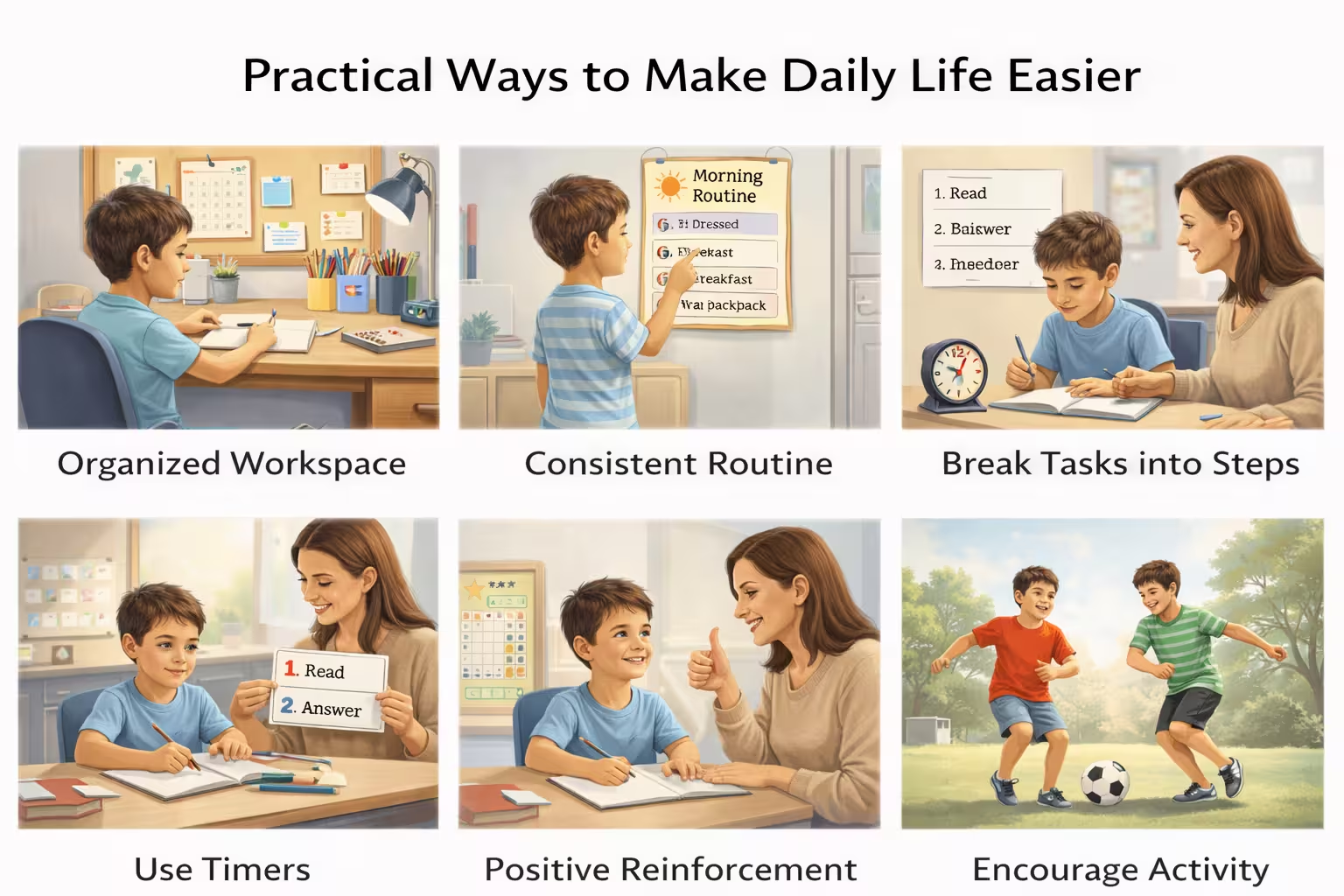
Living with ADHD often becomes easier when important tasks are moved out of memory and into the environment. The goal is not to rely on motivation alone. The goal is to reduce the number of things the brain has to track internally. Simple systems usually work better than complicated ones.
Useful everyday supports include:
- one central calendar
- visible to-do lists
- timers for transitions
- recurring reminders
- clear storage spots for essentials
- preparing tomorrow the night before
- breaking large tasks into first steps
- keeping routines short and repeatable
- using body-doubling for accountability
- reducing clutter that creates distraction
Many people make the mistake of building systems that are too ambitious. A better approach is to make routines lighter, more visible, and easier to repeat. The best system is not the most impressive one. It is the one that keeps working on an ordinary week.
Strengths and long-term outlook
ADHD should not be romanticized, but it should not be described only through deficits either. Many people with ADHD are creative, curious, energetic, quick-thinking, adaptable, and deeply engaged by ideas that matter to them. Some do especially well in fast-moving environments or in work that rewards originality, responsiveness, and high-interest problem solving.
The long-term outlook is usually better when the condition is recognized and supported. That support may include diagnosis, treatment, better routines, school or work adjustments, and a more compassionate understanding of how the person functions. Progress does not always look dramatic. Sometimes it looks like fewer missed appointments, calmer mornings, stronger relationships, or less shame around daily tasks.
That kind of progress matters. ADHD does not have to define a person’s entire future. With the right support, many people build stable, meaningful, and successful lives. The goal is not to become someone else. The goal is to understand what works and build life around that knowledge.
When to seek professional help
It is time to seek professional help when problems with attention, impulse control, restlessness, organization, or follow-through are persistent and interfering with daily life. In children, signs may include repeated school concerns, behavior struggles, unfinished work, or serious trouble with routines and peer relationships. In adults, warning signs often include chronic lateness, missed deadlines, lost items, disorganized living, relationship strain, or a long history of feeling overwhelmed by ordinary demands.
It is also important to seek help when these patterns are mixed with anxiety, depression, sleep problems, or substance-related concerns. A full evaluation can help separate overlapping issues and guide the right treatment plan. It is never too early to ask questions, and it is never too late to understand yourself more clearly.
Frequently Asked Questions
Conclusion
Attention deficit hyperactivity disorder is a real and often misunderstood condition that affects much more than attention alone. It can shape school performance, work consistency, daily routines, emotional regulation, sleep, relationships, and self-esteem. It may look obvious in one person and nearly invisible in another. It may be identified in early childhood or not recognized until adulthood.
The most useful way to understand ADHD is to look at the full picture. Symptoms matter, but so do daily patterns, life stage, support needs, and emotional impact. When the condition is recognized accurately, people often stop seeing themselves as broken and start seeing themselves more clearly. That shift can lead to better treatment, better systems, and a more stable sense of self. Understanding is not the end of the process, but it is often the beginning of real change.