

Court Ordered Psychological Evaluation in the USA: Complete Guide
Introduction
Court ordered psychological evaluations are crucial in a variety of legal cases across the USA. Whether you are involved in a criminal trial, a custody battle, or a civil dispute, these evaluations can significantly influence the outcome of your case. In this detailed guide, we’ll explore everything you need to know about court-ordered psychological evaluations — including what they are, why they are used, the evaluation process, costs, and your rights throughout the procedure.
Here’s a summary of what you will learn
- What a court-ordered psychological evaluation is and why it’s needed.
- Common situations where a court may order one.
- Step-by-step process of undergoing a psychological evaluation.
- The types of tests used during an evaluation.
- Costs and who typically covers the fees.
- Your legal rights during a court-ordered evaluation.
- Tips on preparing for your evaluation and the importance of being honest.
- How the evaluation results affect your case or legal situation.
What Exactly Is a Court-Ordered Psychological Evaluation?
A court-ordered psychological evaluation is a legal assessment of a person’s mental health, mandated by a judge. It is typically requested in cases where a person’s mental health is relevant to the legal proceedings. These evaluations are not about therapy or counseling; they are legal tools used to determine whether a person is fit for trial, capable of making decisions, or suitable for custody of children, among other things.
The evaluation is conducted by a licensed mental health professional, typically a psychologist or psychiatrist, who is trained to provide expert opinions in legal settings. Once completed, the findings are submitted directly to the court, where they can be used to help the judge make decisions on legal matters.
Understanding the psychological aspects of court-ordered evaluations can help differentiate between sociopath vs psychopath traits, which are often assessed in legal contexts such as criminal cases and custody disputes.
Why Would a Court Order a Psychological Evaluation?
A court may order a psychological evaluation for several reasons, depending on the nature of the legal case. Below are the most common situations:
1. Criminal Cases
In criminal cases, the judge might order a psychological evaluation to assess the defendant’s competency or mental state at the time of the crime.
Competency to Stand Trial
The primary reason for a psychological evaluation in criminal cases is to determine if a defendant is competent to stand trial. This means evaluating whether the individual understands the charges against them and can assist in their defense. If the defendant is found incompetent, they may be sent to a mental health facility for treatment until they are deemed capable of standing trial.
Mental State at the Time of the Crime
Another reason a psychological evaluation might be ordered is to determine whether the defendant was mentally fit at the time the crime was committed. This is often done in cases where an insanity defense is being used. If the individual was unable to understand the nature of their actions due to mental illness, this could affect their sentencing.
Sentencing and Treatment Recommendations
Evaluations in criminal cases can also help the judge decide on sentencing. A judge may use the findings to recommend mental health treatment, rather than jail time, or to determine the length of the sentence.
2. Family Law and Custody Disputes
Court-ordered psychological evaluations are often used in family law cases, especially child custody disputes. A judge may order an evaluation to determine whether a parent is fit to have custody of a child.
Child Custody and Parental Fitness
In custody battles, the evaluation will assess a parent’s mental health to ensure they can provide a safe and nurturing environment for their child. In some cases, evaluations may also determine whether a parent is emotionally stable enough to make decisions in the child’s best interest.
3. Civil Litigation
In civil cases, psychological evaluations might be requested to assess an individual’s mental health condition in relation to the claim being made.
Personal Injury Claims
When someone files a personal injury claim based on psychological trauma, the court may order a psychological evaluation to confirm the severity of the emotional impact. This is often seen in cases of workers’ compensation claims or lawsuits related to emotional distress.
Guardianship or Conservatorship
In civil cases involving guardianship or conservatorship, where an individual may need someone to legally manage their affairs, an evaluation can assess whether the individual is capable of making decisions on their own.
The Process: How Does a Court-Ordered Psychological Evaluation Work?
The process for undergoing a court-ordered psychological evaluation typically follows several key stages. Here’s what you can expect:
Step 1: The Court Issues the Order
Once a judge deems a psychological evaluation necessary, they issue a formal order that explains the specific questions the evaluator needs to address. This order will detail what the court is trying to assess (e.g., competency, mental state, fitness for parenting) and may also specify any particular tests to be conducted.
Step 2: Appointment of the Evaluator
After the court order is issued, an evaluator is appointed. This is usually a forensic psychologist or psychiatrist who specializes in mental health assessments for legal purposes. It’s crucial that the evaluator is independent and objective, as their role is to provide unbiased findings.
Step 3: The Evaluation Itself
The evaluation typically begins with an interview. The evaluator will ask questions to gain insight into your psychological and emotional state. This is often followed by standardized tests that assess various aspects of mental health, such as personality traits, intelligence, emotional functioning, and cognitive abilities.

Common tests used during these evaluations include:
- MMPI-2 (Minnesota Multiphasic Personality Inventory): Assesses personality structure and psychopathology.
- WAIS (Wechsler Adult Intelligence Scale): Measures intellectual functioning.
- Rorschach Inkblot Test: Assesses thought disorder and emotional functioning.
Step 4: Final Report and Submission
Once the evaluation is complete, the evaluator will compile their findings into a written report. This report is submitted to the court, and it can influence decisions related to custody, sentencing, or other legal outcomes.
Costs and Who Pays for a Court-Ordered Psychological Evaluation
The cost of a court-ordered psychological evaluation can vary based on several factors, such as the complexity of the case and the evaluator’s experience. Generally, the cost can range from $1,000 to $5,000 or more.
Who Pays for the Evaluation?
- In criminal cases, the state or the court may cover the cost if the evaluation is deemed necessary for a fair trial.
- In family law or civil cases, the parties involved may be required to pay for the evaluation. In some cases, the court may decide which party is responsible for the cost.
Your Rights and Protections During a Court-Ordered Evaluation
As an individual undergoing a court-ordered psychological evaluation, you have certain legal rights that help protect your privacy and ensure the evaluation is conducted fairly.
1. Right to Know the Purpose
The court must inform you of the purpose of the evaluation and what legal questions it is intended to answer. You have the right to understand why the evaluation is being conducted and how the results will be used.
2. Right to Challenge the Evaluation
If you believe the evaluator is biased or unqualified, you have the right to challenge the evaluator’s selection. Your lawyer can help you file a motion to request a different evaluator.
3. Right to Refuse
While you can technically refuse to undergo a court-ordered psychological evaluation, refusing can have serious legal consequences, including negative inferences drawn by the court. In some cases, refusal can harm your case more than undergoing the evaluation.
How to Prepare for a Court-Ordered Psychological Evaluation
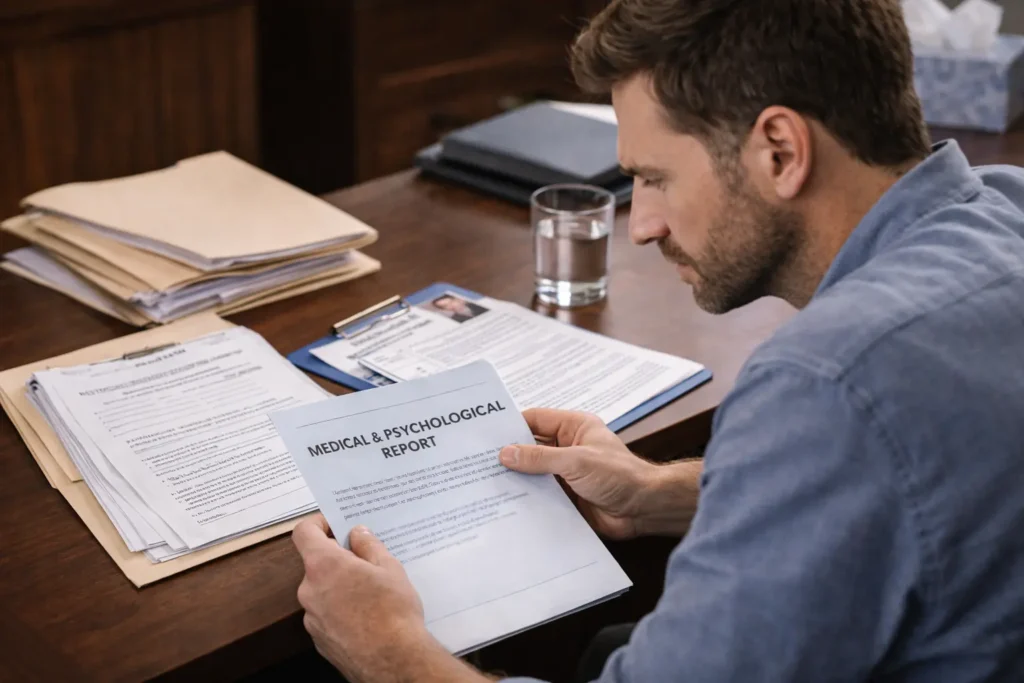
Preparation is key to ensuring the evaluation is as smooth and fair as possible. Here are some practical tips for preparing for the evaluation:
- Bring Relevant Documents: Bring any medical or mental health records you have, including medications you are taking.
- Be Honest: The evaluator is trained to spot inconsistencies, so it’s important to be as truthful and open as possible during the evaluation.
- Clarify Your Rights: If you are unsure about the evaluation process or your rights, ask your lawyer to explain it thoroughly.
- Don’t Overthink: Stay calm and remember that the goal is not to “pass” the evaluation but to provide accurate and honest information.
Common Myths About Court-Ordered Psychological Evaluations
Court-ordered psychological evaluations often come with misconceptions. Here are a few myths debunked to help you approach the process with the right mindset:
Myth 1: It’s Just Like Therapy
Unlike therapy, court-ordered psychological evaluations are legal tools used to assess mental health in relation to a case, not for treatment. Results are submitted to the court, not kept confidential.
Myth 2: Refusing Has No Consequences
Refusing a court-ordered evaluation can harm your case. Judges may assume you’re uncooperative, which can negatively influence decisions in criminal cases or custody battles.
Myth 3: Evaluators Are Biased
Evaluators are impartial professionals. Their role is to assess mental health objectively, not to favor one party in a case.
Myth 4: The Results Are Always Decisive
Evaluation results are important but not the sole factor in legal decisions. Judges consider multiple aspects, including other evidence and legal arguments.
How Do Psychological Evaluations Impact Legal Cases?
Court-ordered psychological evaluations play a crucial role in various legal contexts. Here’s how the findings influence legal outcomes:
1. Criminal Cases:
Evaluations determine if a defendant is competent to stand trial and may influence sentencing. Psychological assessments can also impact the use of an insanity defense and guide judges in choosing between prison or treatment.
2. Family Law (Custody Disputes):
In custody cases, evaluations assess parental fitness and the ability to provide a safe environment. The results can directly affect custody decisions and visitation rights.
3. Civil Cases:
In personal injury claims, evaluations confirm emotional distress. They help determine compensation and are used in cases involving mental health claims or disability assessments.
4. Sentencing and Legal Impact:
Evaluations are essential in sentencing decisions, particularly in cases involving mental health issues like PTSD or depression. Treatment recommendations can influence the type of sentence imposed.
What Happens After a Court-Ordered Psychological Evaluation?
After completing a court-ordered psychological evaluation, several steps follow:
1. Report Submission to the Court:
The evaluator submits a detailed report to the court, summarizing findings, diagnoses, and recommendations. This report is shared with both parties involved in the case.
2. Court Review and Consideration:
The judge reviews the evaluation alongside other evidence. In criminal or family law cases, this can significantly influence sentencing, custody decisions, or mental health treatment recommendations.
3. Further Assessments or Treatment:
If the evaluation reveals underlying mental health issues, the court may order additional psychological assessments or treatment plans, especially in criminal cases or custody disputes.
4. Appeals or Second Evaluations:
In some cases, the results can be challenged. Appeals or second evaluations may be requested if either party believes the findings were inaccurate or improperly
The findings from a court-ordered psychological evaluation may uncover traits such as covert narcissism, which can significantly impact custody decisions and legal outcomes.
Forensic psychological evaluations follow rigorous professional standards set by the American Psychological Association’s Specialty Guidelines for Forensic Psychology, which emphasize objectivity, ethical conduct, and respect for legal rights in court‑ordered assessments.” (APA – Specialty Guidelines for Forensic Psychology)
Conclusion
Court-ordered psychological evaluations play a pivotal role in the legal landscape, offering critical insights that can influence the outcomes of criminal trials, custody battles, and civil litigation. While the process may seem daunting, understanding what to expect, your rights, and how to prepare can empower you to approach it with confidence.
By addressing the legal questions raised by the court, these evaluations help ensure that decisions are based on objective, professional assessments rather than assumptions. Whether it’s determining a defendant’s competency, assessing a parent’s fitness for custody, or verifying claims of emotional distress in civil cases, psychological evaluations provide a clear understanding of an individual’s mental state and functioning.
Remember, preparation is key — bringing necessary documents, being honest during the evaluation, and knowing your rights are crucial steps to ensuring a fair process. While the results can sometimes be intimidating, they are designed to protect both your rights and the integrity of the legal system.
By navigating this process thoughtfully and with the right information, you can ensure that your case is handled as fairly and thoroughly as possible. Ultimately, court-ordered psychological evaluations aim to provide clarity and support in legal decisions, helping judges make more informed, equitable rulings for all parties involved.