

The Overthinker Meaning: Signs of Overthinking and How to Manage It
Introduction
Have you ever found yourself trapped in a spiral of thoughts, replaying a conversation over and over, or worrying about decisions that have already been made? If so, you might be familiar with overthinking. But what exactly does the term “overthinker” mean? In this article, we will explore the overthinker meaning, its definition, why people overthink, and how it can affect your mental health. We’ll also dive into practical solutions to curb overthinking and give you the tools to regain control of your thoughts.
What Is an Overthinker?
The term overthinker refers to someone who tends to analyze or think excessively about situations, decisions, or events. People with this tendency often find themselves stuck in a loop of thoughts, unable to stop analyzing every detail. Overthinking isn’t just about thinking too much; it’s about overanalyzing, often to the point where it negatively impacts decision-making, relationships, and overall mental well-being.
Overthinking Meaning: A Closer Look
At its core, overthinking involves dwelling on a single thought, worry, or decision for an extended period, often leading to increased stress, anxiety, or confusion. This state of mind is typically characterized by the inability to let go of thoughts, even when they no longer serve a productive purpose.
Definition of Overthinking
Overthinking can manifest in various ways, including:
- Ruminating: Thinking about past events or mistakes repeatedly.
- Decision Paralysis: The inability to make a decision due to overanalyzing every possible outcome.
- Excessive Worrying: Feeling anxious about future possibilities, even if they are unlikely to happen.
Signs You Are an Overthinker
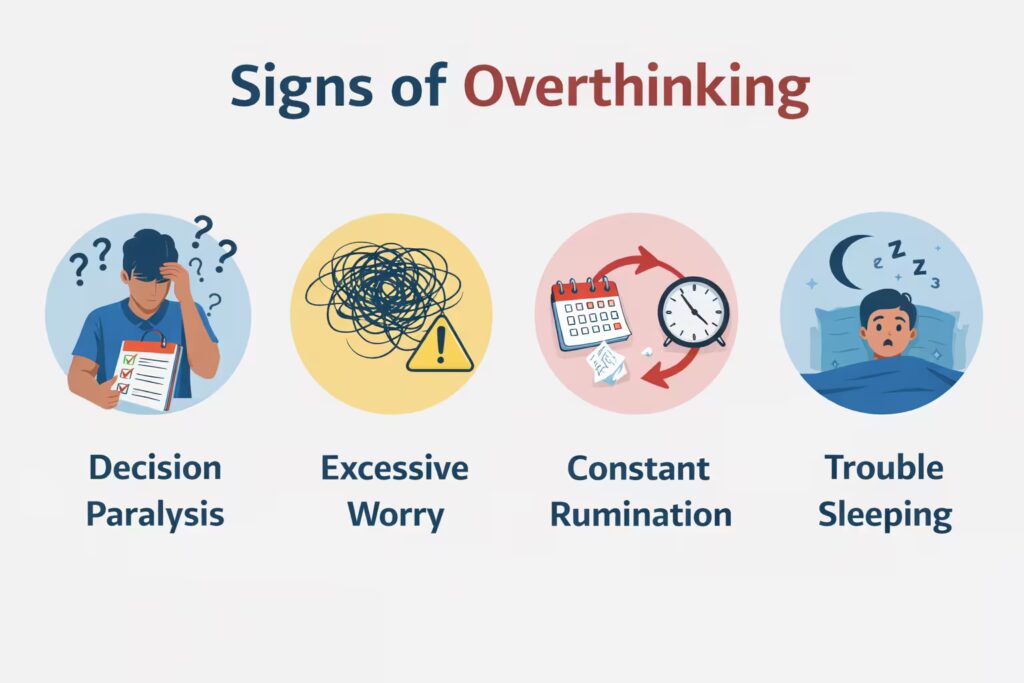
Are you an overthinker? It’s essential to recognize the signs of overthinking so that you can take steps to manage it. Here are some common signs:
1. Difficulty in Making Decisions
You might find yourself paralyzed by choices, whether it’s choosing a meal, buying clothes, or making more significant decisions like career moves.
2. Constant Self-Doubt
Overthinkers often second-guess their actions, wondering if they made the right choice, leading to a lack of self-confidence.
3. Dwelling on Past Events
Overthinkers tend to replay past conversations or events over and over in their minds, especially if something went wrong or if they feel they could have done better.
4. Excessive Worrying About Future Scenarios
Constantly thinking about all the worst-case scenarios can leave you feeling overwhelmed and anxious, even about situations that are out of your control.
5. Trouble Sleeping
Overthinking can keep your mind active long into the night, preventing restful sleep and causing fatigue during the day.
Why Do People Overthink?
The root causes of overthinking can be complex and differ from person to person. However, there are several common factors that may contribute to overthinking:
1. Anxiety
People with anxiety disorders often find themselves trapped in a cycle of overthinking. Their brains continuously scan for potential dangers, leading them to overanalyze situations that may not be dangerous at all.
2. Perfectionism
Individuals who strive for perfection in every aspect of their life may overthink to ensure they meet their high standards.
3. Fear of Making Mistakes
A deep fear of failure can drive people to overthink every decision, as they try to avoid making errors that could have significant consequences.
4. Lack of Control
When people feel out of control in their lives, overthinking can become a coping mechanism. By constantly analyzing situations, they may feel they can regain control or foresee potential issues before they arise.
The Overthinking Mind: Is Overthinking Bad?
It’s important to address the question: Is overthinking bad? While thinking things through is essential for decision-making, excessive overthinking can be harmful. Here’s why:
1. Mental Health Strain
Prolonged overthinking can lead to mental health issues such as anxiety, stress, and depression. When your thoughts become overwhelming, it can hinder your ability to think clearly or make rational decisions.
2. Paralysis by Analysis
When you overthink, you may become so consumed by options and outcomes that you struggle to make a decision, leaving you stuck in indecision.
3. Decreased Productivity
Overthinking can waste time and energy, especially when you are focusing on things that are either out of your control or not that important.
What Is Overthinking a Sign Of?
Overthinking can be a symptom of several underlying psychological issues, such as:
- Generalized Anxiety Disorder (GAD)
- Obsessive-Compulsive Disorder (OCD)
- Depression
- Stress-related disorders
If overthinking becomes chronic and impacts your day-to-day life, it may indicate a deeper issue that requires professional intervention.
How to Curb Overthinking

Overthinking can be a heavy burden, leading to stress, anxiety, and mental exhaustion. But the good news is that it’s possible to break the cycle of overthinking and regain control over your thoughts. Below are several strategies that can help you curb overthinking and foster a healthier mindset.
1. Practice Mindfulness and Meditation
Mindfulness and meditation are powerful tools for bringing your mind back to the present moment. When you overthink, your mind often races through past events or future scenarios. Mindfulness allows you to shift your focus to the current moment, grounding you and stopping your thoughts from spiraling.
How to Practice Mindfulness:
- Mindful Breathing: Take deep breaths and focus on each inhale and exhale. Feel the air entering and leaving your lungs. This helps to slow down your heart rate and calms your mind.
- Body Scan: Slowly scan your body from head to toe, focusing on each part of your body. Notice any tension and consciously relax it.
- Mindful Observation: Look at your surroundings and describe what you see, hear, and smell. This helps distract your mind from negative thought patterns and brings you back to the here and now.
How Meditation Helps:
Meditation is a more structured approach that helps calm the mind and reduce stress. Regular meditation practice, even for just 10–15 minutes a day, can teach your brain to focus, manage negative thoughts, and reduce anxiety. Guided meditation apps like Headspace or Calm can assist if you are new to meditation.
2. Limit Your Decision-Making Time
When you’re stuck in the overthinking trap, you often find yourself paralyzed by indecision, unable to make even simple choices. This is known as decision paralysis. The longer you deliberate, the more anxious and uncertain you become.
How to Curb Decision Paralysis:
- Set a Time Limit: Give yourself a specific amount of time to make decisions. For example, if you are trying to decide on dinner, set a timer for five minutes. After that time, make your decision and move forward.
- Limit Options: Too many options can overwhelm the brain. Narrow down your choices to just a few. This will make it easier to choose and help you stop dwelling on alternatives.
- Trust Your Gut: Sometimes, your first instinct is the right one. Don’t overanalyze every single detail. Trust your intuition and make decisions more quickly.
Setting these boundaries around decision-making helps reduce mental fatigue and encourages you to take action rather than getting stuck in a loop of indecision.
3. Challenge Your Thoughts
Overthinkers tend to view their thoughts as absolute truths. This is where the power of cognitive reframing comes in. By challenging your overthinking and questioning the validity of your thoughts, you can break the cycle.
How to Challenge Your Thoughts:
- Ask for Evidence: When a negative or irrational thought pops into your mind, ask yourself, “Is there any evidence to support this thought?” Most of the time, you’ll find that your fears or concerns are exaggerated or unfounded.
- Consider the Worst-Case Scenario: Often, we overthink because we fear the worst possible outcome. Ask yourself, “What’s the worst thing that could happen?” Then, realistically assess how you could handle that situation. This can reduce anxiety and make the thought seem less overwhelming.
- Reframe the Thought: Turn negative thoughts into more positive or neutral ones. For example, if you’re overthinking about a job interview, instead of thinking, “I’ll mess up,” reframe it to, “I’ll do my best, and if it doesn’t work out, I can learn from it.”
By breaking down your overthinking patterns and challenging irrational thoughts, you can stop them from spiraling.
4. Accept Imperfection
A significant driver of overthinking is the fear of making mistakes or not being perfect. This often leads to endless self-criticism and over-analysis of situations, making it hard to move forward.
How to Let Go of Perfectionism:
- Embrace Mistakes as Learning Opportunities: Understand that no one is perfect, and mistakes are part of growth. Instead of viewing mistakes as failures, see them as valuable lessons that help you improve.
- Set Realistic Expectations: Perfectionism can cause overthinking by creating unrealistic standards. Aim for “good enough” instead of “perfect” in everything you do. This helps reduce stress and allows you to feel accomplished without the pressure of perfection.
- Celebrate Progress, Not Perfection: Focus on how far you’ve come, not on the things you still feel you need to fix. This shift in mindset will help reduce anxiety and overthinking.
Accepting that mistakes and imperfections are part of life helps take the weight off your shoulders and frees you from the cycle of overthinking.
5. Establish a Routine or Create Structure
When you don’t have a structured routine, overthinking often fills the empty spaces in your day. Having a routine provides stability and reduces the mental energy spent on decision-making throughout the day.
How to Create Structure:
- Set Specific Goals for Your Day: Establish a to-do list or schedule that includes both work and personal tasks. Having a set agenda for the day can keep your mind from wandering.
- Create a Wind-Down Routine: Develop a relaxing evening routine to help your mind shut down at night. This could include light stretching, reading, or listening to soothing music.
- Plan Time for Rest and Play: Don’t forget to incorporate breaks, leisure, and self-care into your routine. Balance is key to avoiding mental exhaustion.
A structured day helps you focus on the task at hand instead of worrying about the future or analyzing past actions.
6. Talk to Someone
Talking to someone you trust can be one of the best ways to reduce overthinking. Sharing your thoughts with a friend, family member, or therapist helps you gain perspective and clarity.
How Talking Helps:
- Gaining Perspective: Sometimes, speaking with someone outside of your immediate thoughts helps you see things more objectively. They may offer insights or solutions that you hadn’t considered.
- Feeling Supported: Overthinking often stems from feelings of uncertainty or fear. Having someone listen to your concerns can provide emotional support and help alleviate those fears.
- Therapy or Counseling: If overthinking is affecting your mental health, therapy may be a valuable resource. Cognitive-behavioral therapy (CBT) is particularly effective in helping people break the cycle of overthinking.
Sometimes, just talking things through can give you the clarity you need to move forward without being overwhelmed.
7. Focus on What You Can Control
Overthinking often occurs when we focus on things that are outside of our control, such as future events or the actions of others. By focusing only on what you can control, you can release the grip of overthinking.
How to Focus on Control:
- Let Go of the Uncontrollable: Acknowledge that there are things you can’t control, like the outcome of an event or other people’s behavior. Focus your energy on actions that you can influence.
- Take Small, Actionable Steps: When you feel overwhelmed, break down your tasks into small, manageable steps. Focus on completing one task at a time, which reduces the urge to overthink every possibility.
- Practice Gratitude: Take a moment each day to reflect on what you can control and be grateful for. This mindset shift helps you appreciate the present moment and reduces the urge to overthink.
By focusing on the present and what’s within your control, you can shift your mindset from worry to action.
Conclusion
Overthinking may feel like an inevitable part of our lives, but it doesn’t have to take control. By understanding the overthinker meaning and recognizing the signs, we can begin to break the cycle of excessive rumination. Whether it’s through mindfulness, challenging negative thoughts, or simply accepting imperfection, there are multiple ways to curb overthinking and restore balance to our mental well-being.
By applying practical strategies such as setting decision-making limits, focusing on the present moment, and seeking support from others, you can regain control of your thoughts and reduce the stress that overthinking often brings. Overcoming the habit of overthinking is a journey, but with consistent effort, you can train your mind to be more present, confident, and calm.
Remember, it’s okay to not have everything figured out at once. Each small step you take toward managing overthinking will lead to a clearer, more peaceful mind. Don’t be afraid to reach out for help if needed, and always be kind to yourself along the way.