

Self-Destructive Behavior: Meaning, Signs, Causes, and How to Start Healing
You keep doing the thing that hurts you. You know it hurts you. Yet you do it again anyway.
Maybe it’s picking fights with people who love you. Maybe it’s skipping meals, drinking too much, or putting off the things that actually matter. This pattern has a name: self-destructive behavior. It is more common than most people admit, and it is not a personal failure. It is a coping response that went off track, and it can be understood, unlearned, and replaced with something healthier.
What Is Self-Destructive Behavior? (Meaning and Definition)
Self-destructive behavior, meaning, in simple terms, is any action a person takes that causes harm to their own body, mind, relationships, or future—even when part of them wants something different. The harm can be sudden and obvious, or it can build slowly over months and years.
This behavior sits on a wide spectrum. On one end, it looks like small habits: negative self-talk, procrastination, or pushing away people who care. On the other end, it includes serious actions like substance misuse, self-harm, or reckless risk-taking. Between those two points is where most people actually live, cycling through habits that quietly chip away at their well-being.
It helps to separate two related ideas
Self-sabotage usually refers to undermining your own goals, such as quitting a job right before a promotion or avoiding a relationship that is going well.
Self-harm typically refers to direct physical injury to the body, done as a way to manage overwhelming emotion.
Self-destructive behavior is the broader umbrella. Self-sabotage and self-harm both fall under it, along with dozens of other patterns.
Common Signs of Self-Destructive Behavior
Recognizing the pattern is the first step toward changing it. Because this behavior often feels automatic, many people do not notice it until someone else points it out, or until the consequences pile up.
Common signs include:
- Speaking to yourself in harsh, critical, or dismissive ways
- Numbing emotions through alcohol, drugs, food, or excessive screen time
- Avoiding tasks or deadlines until it is too late to succeed
- Choosing partners or friends who repeat old, painful patterns
- Picking arguments or pulling away right when a relationship deepens
- Taking physical risks without weighing the consequences
- Neglecting sleep, medical care, or basic needs for long stretches
- Feeling a strange sense of relief or control after doing something harmful
None of these signs alone means something is seriously wrong. However, when several of them show up together and repeat over time, they usually point to a self-destructive pattern worth examining.

Why Do I Have Self-Destructive Habits? Understanding the Root Causes
There is rarely one single reason behind this behavior. Instead, it usually forms as an answer to pain that had no other outlet at the time.
Early Life Experiences
Childhood environments shape how a person learns to handle stress. Growing up around conflict, neglect, or inconsistent caregiving can teach a child that their needs are not safe to express directly. Later in life, that same person may express distress through self-destructive actions instead of words, because that pattern was the one available to them early on.
Difficulty Managing Big Emotions
For some people, sadness, shame, or anger arrive so intensely that the feeling itself becomes unbearable. A self-destructive act, such as overspending, isolating, or lashing out, can act like a pressure valve. It does not fix the emotion. Still, it creates a short, immediate sense of release, which is exactly what keeps the cycle going.
Low Self-Worth
When someone believes, deep down, that they do not deserve good outcomes, they may unconsciously create situations that confirm that belief. Sabotaging a healthy relationship or a promising opportunity can feel oddly familiar and “safer” than living up to something better.
Mental Health Conditions
Conditions such as depression, anxiety disorders, PTSD, and certain personality disorders are frequently linked with self-destructive patterns. In these cases, the behavior is often one visible symptom among several, rather than the whole picture.
Learned Coping, Not Character
Perhaps the most important reframe: self-destructive behavior is a learned coping strategy, not a character flaw. It developed for a reason, usually to survive something difficult. That means it can also be unlearned, one small step at a time.
Signs vs. Likely Root Cause: A Quick Reference

The table below pairs common self-destructive signs with the root cause they most often trace back to. Use it as a starting point for reflection, not a diagnosis.
|
Common Sign |
Likely Root Cause |
|---|---|
|
Harsh self-criticism, calling yourself “not good enough” |
Low self-worth, internalized criticism from childhood |
|
Sabotaging relationships or jobs right when things go well |
Fear of vulnerability, discomfort with success |
|
Numbing with alcohol, food, or screens |
Difficulty tolerating strong emotion |
|
Chronic procrastination and avoidance |
Fear of failure or perfectionism |
|
Repeating painful relationship patterns |
Early attachment wounds or unresolved trauma |
|
Reckless or impulsive risk-taking |
Emotional overwhelm, seeking control or distraction |
Self-Destructive Behavior in Teens and Young Adults
Adolescence adds extra pressure to an already vulnerable stage of brain development. Teens are still learning how to regulate emotion, and their impulse control is not yet fully formed. On top of that, social media, academic stress, and shifting friendships create near-constant emotional triggers.
Warning signs in teens can look slightly different from adult patterns. Watch for sudden changes in mood, secretive behavior, declining grades, withdrawal from friends and family, or unexplained injuries. Because teens often struggle to name what they feel, their distress tends to show up through action instead of words — which is exactly what makes self-destructive behavior in this age group so easy to miss.
How to Fix Self-Destructive Behavior: Where to Start
Change rarely happens overnight, and that is normal. What matters more is consistency over time. These starting points are informational only and are not a substitute for professional care.
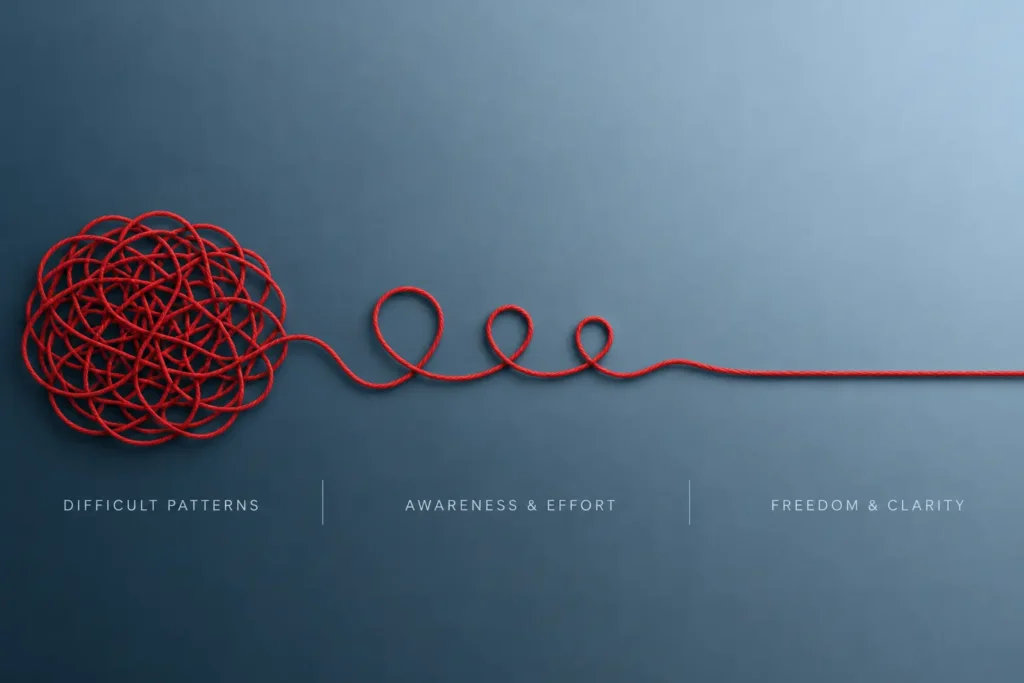
- Name the pattern. Simply noticing, “This is self-destructive behavior, not just bad luck,” creates distance between you and the habit.
- Track the trigger. Before the behavior happens, something usually sets it off — a comment, a memory, a feeling of rejection. Write it down for a week and look for repeats.
- Build one small replacement habit. Instead of trying to erase the behavior completely, swap in a smaller, safer action, such as calling a friend instead of isolating.
- Practice self-compassion, not shame. Shame tends to fuel the same cycle it is trying to stop. Speaking to yourself the way you would speak to someone you love changes the emotional stakes.
- Reach out for support. A licensed therapist can help uncover the deeper root cause and teach coping tools built specifically for your history. Friends, support groups, and trusted mentors matter too.
- Be patient with setbacks. A slip is not proof that change is impossible. It is simply information about what still needs support.
In our experience writing about wellness and emotional health, the people who make the most progress are rarely the ones who try to fix everything at once. They are the ones who choose one honest, repeatable step and stick with it, even when the change feels slow.
When to Seek Professional Help
Occasional self-critical thoughts or a bad habit here and there do not automatically mean something is seriously wrong. However, professional support is strongly recommended if:
- The behavior is frequent, escalating, or causing physical harm
- It is interfering with work, school, or relationships
- You feel unable to control the urge on your own
- You notice thoughts of self-harm or suicide
If you or someone you know is struggling with thoughts of self-harm or suicide, the 988 Suicide & Crisis Lifeline is available by call or text, 24 hours a day, across the United States.
Frequently Asked Questions
What are the signs of self-sabotaging behavior?
Self-sabotaging behavior often shows up as procrastination, avoiding opportunities, picking fights before things go well, or downplaying your own achievements. It tends to appear right when life is starting to improve, almost like an unconscious brake.
What are the signs of destructive behavior?
Signs of destructive behavior include harsh self-talk, substance misuse, reckless decisions, neglecting basic needs, and repeating painful relationship or work patterns. These signs often build gradually before becoming obvious.
Why do I have self-destructive habits?
Self-destructive habits usually form as a coping response to earlier pain, difficulty managing intense emotions, low self-worth, or an underlying mental and behavioral health condition. They are learned patterns, not personal failures, which means they can be changed.
How to fix self-destructive behavior?
Start by naming the pattern, tracking what triggers it, and replacing the habit with a smaller, safer action. Self-compassion and professional support, such as therapy, make lasting change far more achievable than willpower alone.
Final Thoughts
Self-destructive behavior can feel like a private struggle, but it is one of the most common human patterns there is. It develops as protection, even when it looks like harm from the outside. Understanding where it comes from is often the first real step toward change.
Healing is rarely a straight line, and it does not require perfection. Small, consistent choices, paired with patience and the right support, are usually what move the needle. If any part of this article felt familiar, that recognition alone is meaningful progress.
