

Fear of Big Things: Understanding Megalophobia — Causes, Symptoms, & Coping
If the thought of encountering a giant skyscraper, massive animal, or huge vehicle sends your heart racing, you’re likely searching for answers about the fear of big things — a condition most commonly known as megalophobia. In this article, you’ll learn what this fear really means, why it happens, how it affects people in everyday life, and what evidence-based ways exist to manage and overcome it. It ultimately lead to change the behavioral health condition.
Summary
What is the Fear of Big Things?
The fear of big things refers to a strong, persistent anxiety triggered by objects or environments that are perceived as very large, massive, or overwhelming. When this fear becomes excessive and interferes with life, it is commonly labeled megalophobia. In psychological terms, megalophobia is classified under specific phobias — intense fears of a defined trigger.
The prefix mega- comes from the Greek word megas, meaning large or great, and -phobia means fear. Put together, megalophobia literally means “fear of large things.”
Megalophobia Meaning & Definition
Megalophobia is an anxiety disorder in which the presence, anticipation, or even thought of large objects causes a disproportionate fear response. Unlike rational fear — such as being cautious around a speeding vehicle — people with megalophobia experience anxiety that goes beyond reason and may lead to avoidance behaviors that disrupt daily life.
What counts as “big” can vary widely between individuals. For one person, viewing a towering statue might be distressing, while for another, a huge animal or wide open space may trigger alarm.
Common Triggers of the Fear of Big Things
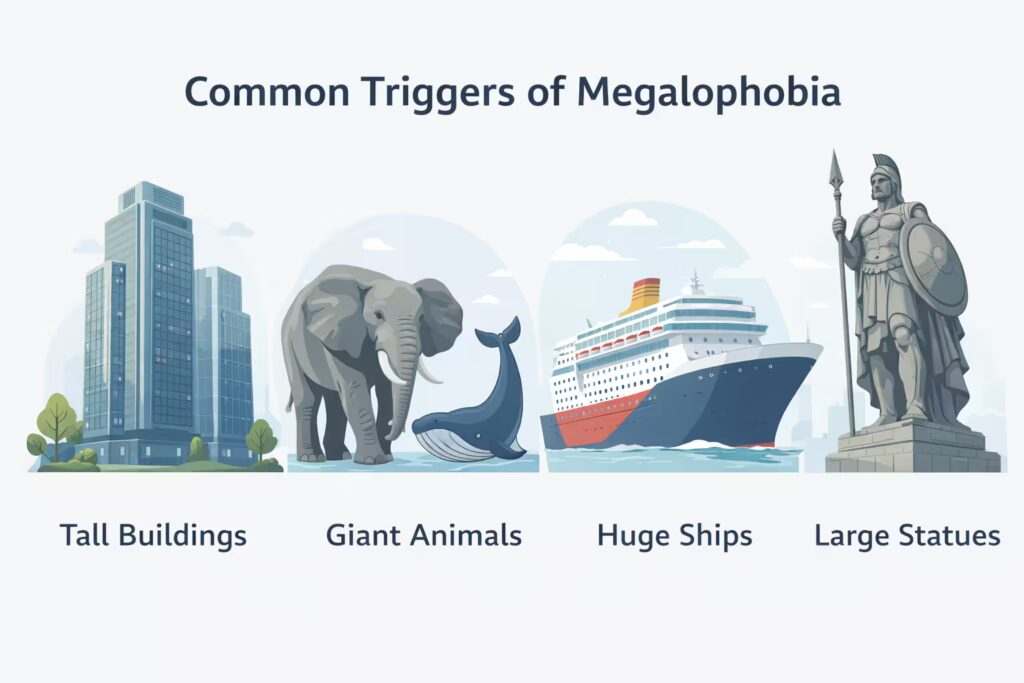
People with megalophobia may fear various large objects or environments. Common triggers include towering city skyscrapers, monumental statues, expansive landscapes like mountains or oceans, immense vehicles like cruise ships, and even large animals such as elephants or whales.
This fear can also extend into more abstract areas — for example, vastness in video games or the night sky — where the sheer scale alone induces anxiety. In online communities, individuals often describe feeling overwhelmed or insignificant when confronted with these large entities.
Symptoms: Signs You May Have Megalophobia
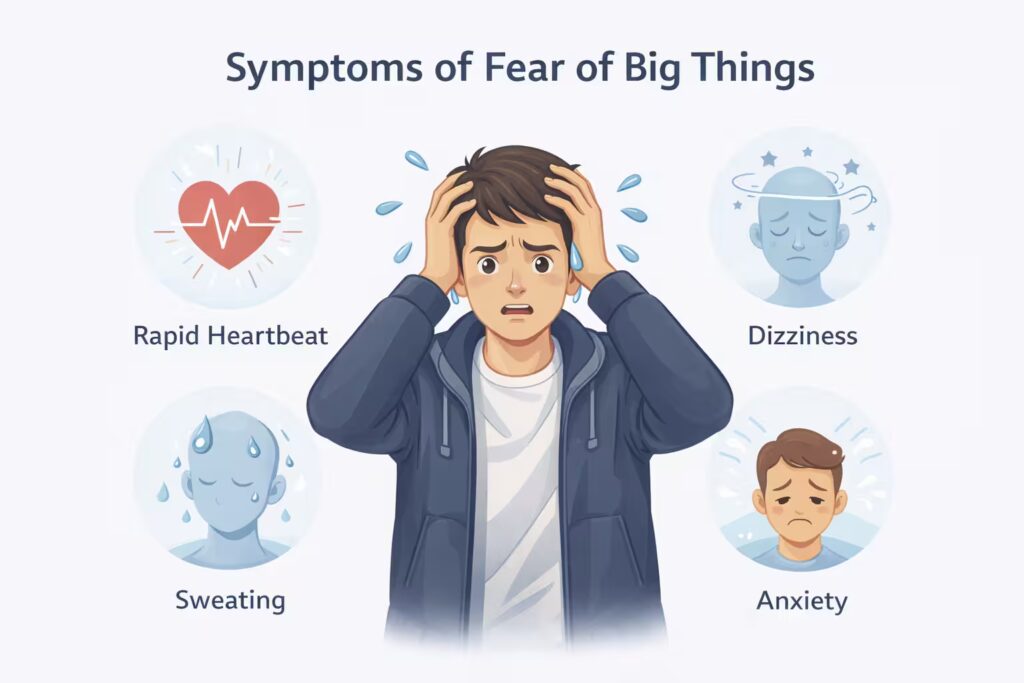
Megalophobia doesn’t just involve mild dislike or discomfort. People with this fear may experience intense anxiety or panic when they anticipate or encounter large objects. Symptoms can include:
- Rapid heartbeat and shortness of breath
- Sweating or trembling
- Dizziness or nausea
- A strong desire to flee or avoid the situation
- Distress that interferes with everyday functioning
These reactions are rooted in the body’s fight-or-flight response, which becomes triggered even when no real danger exists.
Why Does the Fear of Large Things Happen?
The causes of megalophobia are not fully understood, but researchers believe several factors can contribute:
- Traumatic experiences involving large objects in childhood or adulthood can create strong negative associations.
- Learned behavior — if someone close to you responded fearfully to big things, you might internalize that reaction.
- Genetic predisposition to anxiety or phobias.
- Overactive fear center (amygdala) in the brain perceiving size as a threat.
How Megalophobia Affects Daily Life
Megalophobia is more than feeling uneasy about big things; it can influence where you live, how you travel, what jobs you consider, and even how you spend free time. Some people avoid:
- Urban areas with tall buildings
- Beaches or obstacle-filled horizons
- Museums with large exhibits
- Highways near big trucks
In severe cases, individuals may limit social engagements or avoid travel entirely to sidestep encounters with their triggers. An estimate of about 7% to 10% people are living with this mental health condition.
Related Phobias: How They Differ
It’s valuable to distinguish megalophobia from other fears:
- Thalassophobia – fear of deep bodies of water.
- Acrophobia – fear of heights.
- Apeirophobia – fear of infinity or the infinite.
- Claustrophobia – fear of confined spaces.
Understanding these differences helps readers find more targeted resources and avoids mislabeling their fear experiences.
Treatment and Coping Strategies
Overcoming or managing the fear of big things often involves professional support combined with personal practice.
- Cognitive Behavioral Therapy (CBT) helps people identify and reframe irrational thoughts tied to large objects.
- Exposure Therapy gradually introduces fearful stimuli from afar, then closer, allowing the brain to adapt and reduce fear responses.
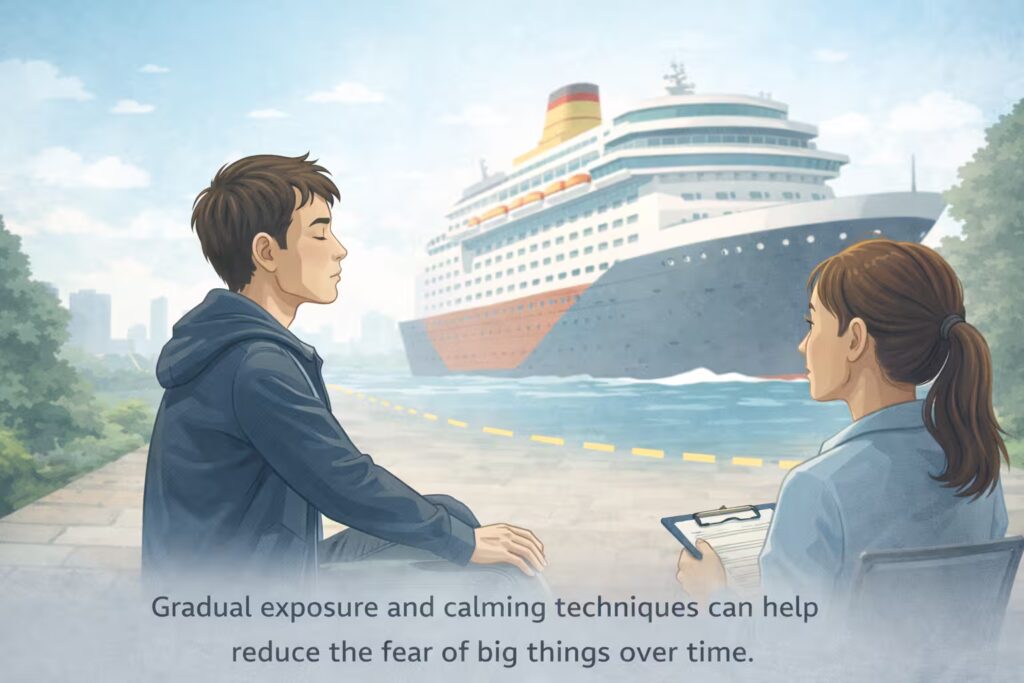
In addition to therapy, individuals often benefit from:
- Breathing exercises to calm anxiety
- Mindfulness and relaxation techniques
Gradual exposure under professional guidance - Support groups with others who share similar fears
Real Experiences: What People Say
People with megalophobia often describe feeling small, overwhelmed, or insignificant when facing large things, even in everyday situations. Some recount panic when seeing a huge cruise ship or giant statue in real life or images. Others report that virtual environments — like vast video game worlds — can trigger the same intense reactions.
These real narratives reflect the deep emotional impact this fear can have on someone’s life.
Expert Insights on the Fear of Big Things
Mental health professionals explain that the fear of big things often develops because the brain misinterprets size as danger. According to psychologists who specialize in anxiety disorders, large objects can trigger a sense of loss of control, which activates the brain’s fear center even when there is no real threat. Experts emphasize that megalophobia is not about weakness or imagination; it is a learned fear response that can be retrained over time.
Clinicians also note that people with megalophobia frequently struggle to explain their fear because large objects are usually considered harmless by others. This misunderstanding can increase embarrassment and prevent individuals from seeking help. Mental health experts stress that acknowledging the fear is the first step toward recovery, and professional guidance can significantly reduce symptoms within months.
Case Study: Living With Megalophobia in Everyday Life
Consider a case where an individual experiences intense anxiety around massive buildings and giant statues. Even walking through downtown areas becomes overwhelming due to towering skyscrapers. The fear of big things causes avoidance behaviors, such as choosing longer routes or declining social plans held in large venues.
After recognizing that the fear was limiting daily life, the individual began gradual exposure therapy. Starting with images of large objects, they slowly progressed to visiting open spaces and tall structures in controlled settings. Over time, the fear response weakened, proving that megalophobia can be managed when addressed consistently and compassionately.
This type of real-world experience highlights how the phobia of big things is not imaginary, yet highly treatable with the right approach.
Self-Assessment: Do You Have Megalophobia?
Many people feel scared occasionally, but megalophobia is more persistent. You may relate to the fear of big things if you experience anxiety when seeing massive objects, feel the urge to escape from large environments, or avoid places with giant structures altogether. Physical reactions such as rapid heartbeat, sweating, or dizziness are also common indicators.
Understanding these signs can help individuals distinguish between normal caution and a phobia that may benefit from professional support.
Downloadable Coping Worksheet: Managing the Fear of Big Things
A structured coping worksheet can help individuals take control of megalophobia by breaking fear into manageable steps. This approach encourages awareness, reflection, and gradual progress rather than avoidance.
Start by identifying specific triggers, such as large buildings, giant animals, or massive vehicles. Next, rate your anxiety level when thinking about or encountering these objects. This helps track improvement over time.
Then, write down calming responses you can use when fear appears, such as controlled breathing, grounding techniques, or rational reminders that size does not equal danger. Regularly reviewing these notes reinforces safer thought patterns and reduces panic responses.
Mental health professionals often recommend pairing worksheets with exposure exercises for maximum effectiveness.
Practical Exposure Exercise You Can Try Safely
A gentle exposure exercise involves viewing images or videos of large objects in a relaxed environment. Begin with small durations and gradually increase exposure as comfort improves. Over time, this retrains the brain to stop associating massive size with immediate danger.
This method works best when paired with relaxation techniques like slow breathing or mindfulness, allowing the nervous system to settle while confronting fear in controlled steps.
Final Thoughts on the Fear of Big Things
The fear of big things, commonly known as megalophobia, is more than simple discomfort around large objects. For many people, it is a real phobia that can quietly influence daily decisions, limit experiences, and increase anxiety over time. Understanding what triggers this fear and why it occurs is the first meaningful step toward regaining a sense of control.
While massive buildings, giant animals, or huge structures may appear harmless to others, the emotional response they provoke can feel overwhelming to someone living with this phobia. The good news is that megalophobia is highly manageable. With education, awareness, and consistent coping strategies, many individuals experience significant improvement and reduced fear responses.
If the fear of big things is interfering with your quality of life, seeking professional guidance can make a measurable difference. Therapies such as cognitive behavioral therapy and gradual exposure are backed by research and have helped countless people retrain their fear response safely and effectively.
Most importantly, no one should feel alone or ashamed for being scared of large objects. Phobias are common, treatable, and rooted in the brain’s natural survival mechanisms. With patience and the right tools, it is possible to face massive fears one step at a time and move toward a calmer, more confident life.