
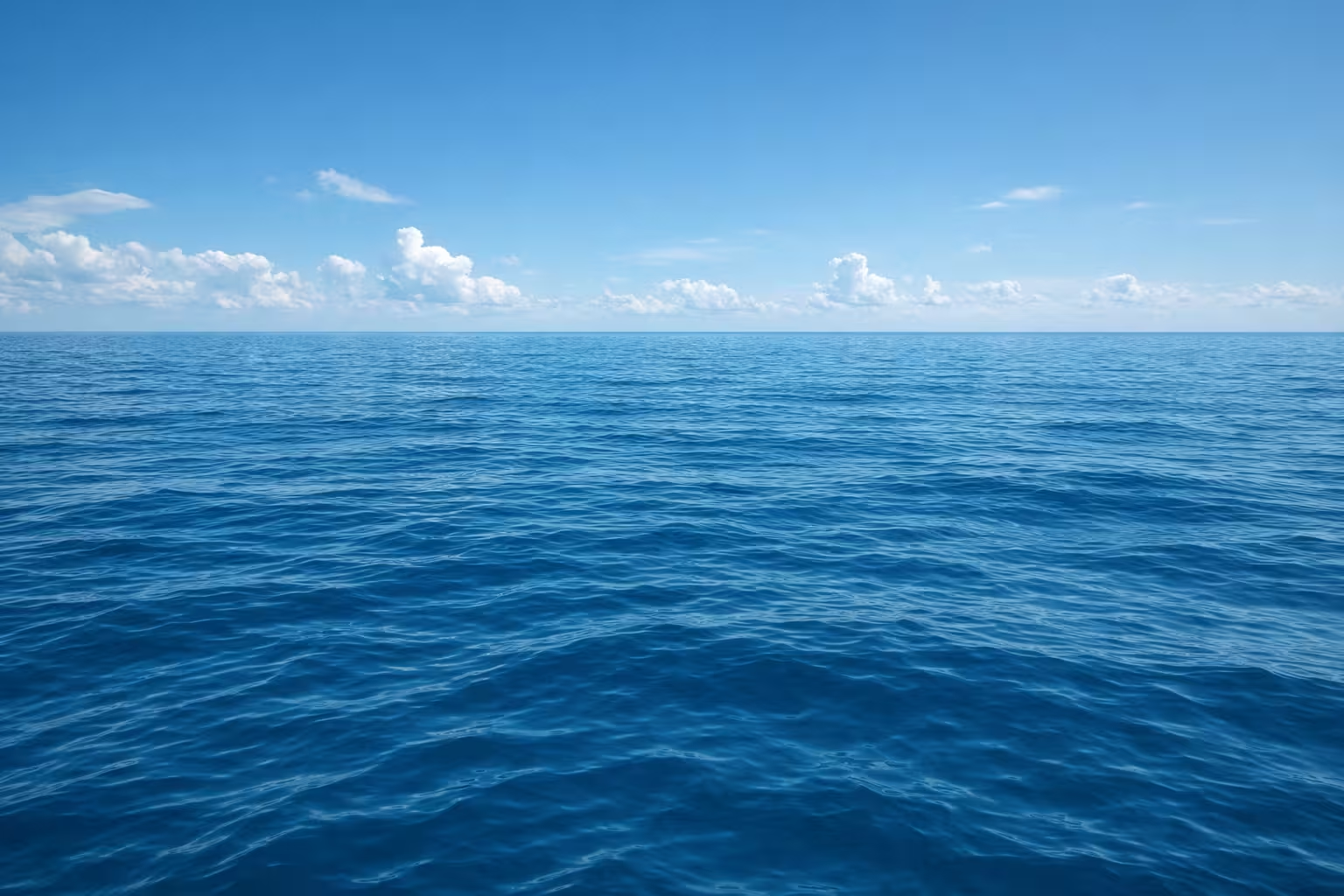
Phobia of the Ocean: Understanding Thalassophobia
The fear of the ocean is more than just discomfort near water; it is an intense, irrational fear of large bodies of water that often leads to anxiety, panic, and avoidance behaviors. For many people, the vastness and depth of the ocean trigger feelings of helplessness and fear. In this article, we’ll explore what thalassophobia is, why it happens, and how individuals can cope with this fear to lead a more fulfilling life.
What is Thalassophobia (Phobia of the Ocean)?
Thalassophobia is defined as the intense fear of large bodies of water, particularly the ocean. The word “thalassophobia” comes from the Greek words thalassa, meaning sea, and phobos, meaning fear. Unlike aquaphobia, which is a more general fear of water, thalassophobia specifically refers to an irrational fear of the sea, oceans, or vast stretches of deep water.
Key distinctions:
- Thalassophobia focuses on deep and open water, while aquaphobia is a broader fear of any water source (like bathtubs, swimming pools, or rivers).
- Thalassophobia often involves fear of the unknown – the dark depths and unseen creatures lurking beneath the surface.
What Causes the Fear of the Ocean?
There is no single cause for thalassophobia, but several factors may contribute to its development:
Evolutionary Survival Instinct
Humans may be biologically wired to fear large bodies of water as a survival mechanism. Historically, vast oceans and deep water posed significant dangers, from drowning to encountering unknown predators. This instinct may still persist in some individuals.
Traumatic Experiences or Childhood Exposure
A traumatic event like near-drowning, being lost at sea, or experiencing a water-related accident can trigger an intense fear of the ocean. For some, the phobia may develop during childhood, especially if water experiences were distressing.
Media Influence and Cultural Factors
Movies, news stories, and documentaries about shipwrecks, ocean disasters, and underwater creatures often exaggerate the dangers of the ocean. These cultural portrayals can create or reinforce irrational fears in individuals.
Psychological Factors
People with general anxiety disorders, panic disorders, or heightened fear sensitivity may be more prone to developing phobias, including thalassophobia. Over time, repeated exposure to triggers can lead to the phobia becoming ingrained in a person’s psyche.
Symptoms of Thalassophobia: What to Look For
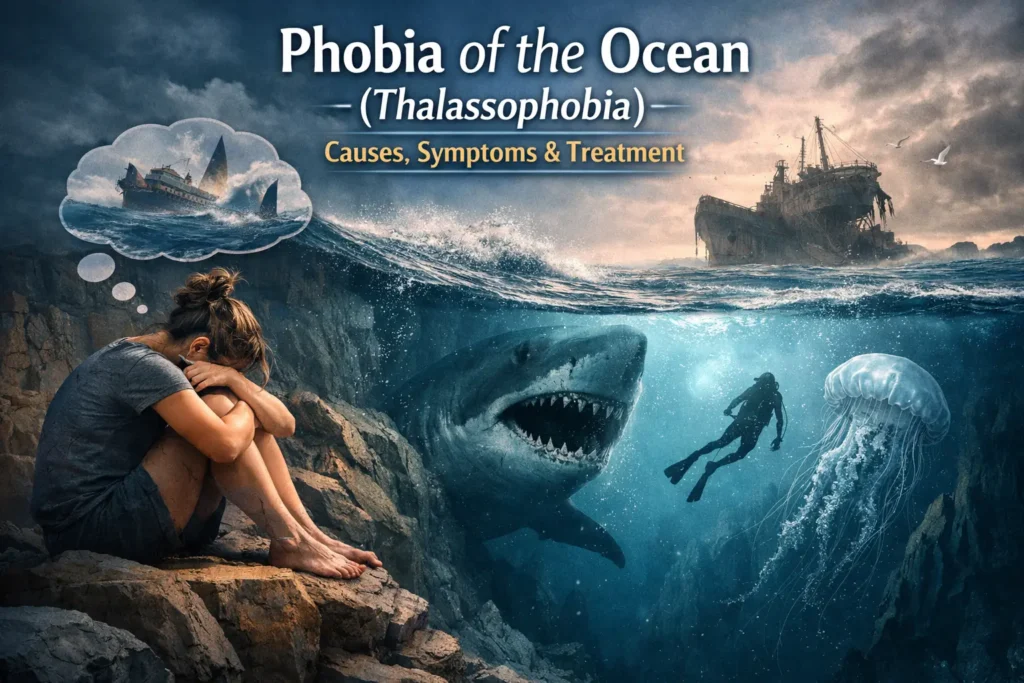
People with thalassophobia often experience both physical and emotional symptoms when they encounter or even think about deep water or the ocean. The severity of symptoms can vary:
Physical Symptoms
- Rapid heart rate or palpitations
- Shortness of breath or difficulty breathing
- Trembling, shaking, or sweating
- Nausea or dizziness
- Panic attacks and tightness in the chest
Emotional Symptoms
- Overwhelming feelings of dread, terror, or helplessness
- The urge to flee or avoid water-related situations (e.g., beaches, swimming, boating)
- Excessive worry or anxiety when anticipating a situation involving large bodies of water
These symptoms may not only occur when in close proximity to the ocean but also when watching movies, seeing images, or even thinking about large bodies of water.
Article you will also like:
Common Triggers of Thalassophobia
Certain situations and stimuli tend to trigger the symptoms of thalassophobia. Understanding these triggers can help individuals better cope with the fear.
Open Water
Wide open seas with no visible land or horizon can make individuals feel exposed and vulnerable. The idea of being far from safety can trigger intense anxiety.
Deep Water
The fear of the unknown, or the inability to see the ocean floor, often exacerbates the fear. The ocean’s depth and what might lie beneath can be unnerving for those with thalassophobia.
Dark Water
The fear of dark water is common among individuals with thalassophobia. Murky, deep, or unclear water heightens feelings of uncertainty, making it even more terrifying.
Water-Related Disasters or Experiences
Movies or news about shipwrecks, drowning, or underwater natural disasters can act as strong emotional triggers. Similarly, hearing about ocean dangers or getting into precarious situations in the water can trigger fear responses.
How is Thalassophobia Diagnosed?
To be diagnosed with thalassophobia, the fear must meet certain clinical criteria:
- Duration: The fear must persist for at least six months.
- Intensity: The fear must be out of proportion to any real danger posed.
- Avoidance: It causes significant avoidance behaviors (e.g., avoiding beaches, boats, flights over oceans).
- Impairment: It impairs daily life and functioning, causing anxiety or distress.
A mental health professional can diagnose thalassophobia by evaluating these symptoms, assessing the patient’s history, and understanding the impact the fear has on their life.
Coping with the Phobia of the Ocean: Practical Tips
Overcoming thalassophobia requires time, patience, and a combination of techniques to manage symptoms and reduce fear. Here are several approaches to consider:
Gradual Exposure Therapy
Exposure therapy is a proven method for treating phobias. It involves gradually introducing the individual to their fear in a controlled, safe environment. Starting with images of the ocean or videos, progressing to visiting calm lakes, and eventually being near the ocean, can help desensitize the brain to fear triggers.
Breathing and Relaxation Techniques
When anxiety strikes, deep breathing exercises can help calm the nervous system. Focusing on slow, controlled breaths can reduce panic and bring focus back to the present moment.
Cognitive Behavioral Therapy (CBT)
CBT helps individuals change irrational thoughts about the ocean and deep water. By reframing thoughts, individuals can develop healthier, more balanced perspectives on water.
Mindfulness and Meditation
Mindfulness exercises help individuals stay grounded and avoid spiraling into anxious thoughts. Regular practice of meditation or mindfulness can reduce overall anxiety and stress levels.
When Should You Seek Professional Help?
If thalassophobia is severely affecting your life, it may be time to seek professional help. Warning signs include:
- Inability to participate in beach trips, vacations, or work involving travel over oceans
- Intense panic attacks when thinking about the ocean or seeing large bodies of water
- A noticeable decline in overall mental health due to persistent fear
A licensed therapist specializing in anxiety disorders or phobias can offer specialized treatment plans, including therapy, exposure exercises, and sometimes medication.
Myths vs. Facts About the Ocean Phobia
Myth #1: “Phobias are just a part of who you are.”
Fact: Phobias can be treated and managed with proper therapy and strategies.
Myth #2: “People with thalassophobia are just afraid of water.”
Fact: Thalassophobia specifically involves a fear of deep water or the ocean, not all water sources.
Myth #3: “There’s no hope for overcoming phobias.”
Fact: With the right treatment, many individuals successfully overcome or manage their phobias.
Key Takeaways and Final Thoughts
Thalassophobia, or the fear of the ocean, is a real and distressing condition that can significantly affect an individual’s life. However, with the right knowledge, understanding, and strategies, it’s possible to manage and reduce this fear. If you or someone you know struggles with thalassophobia, consider using gradual exposure techniques, engaging in mindfulness practices, and seeking professional support.
Remember, while the ocean can be vast and unknown, the courage to face our fears can help us embrace the world around us with a healthier perspective.