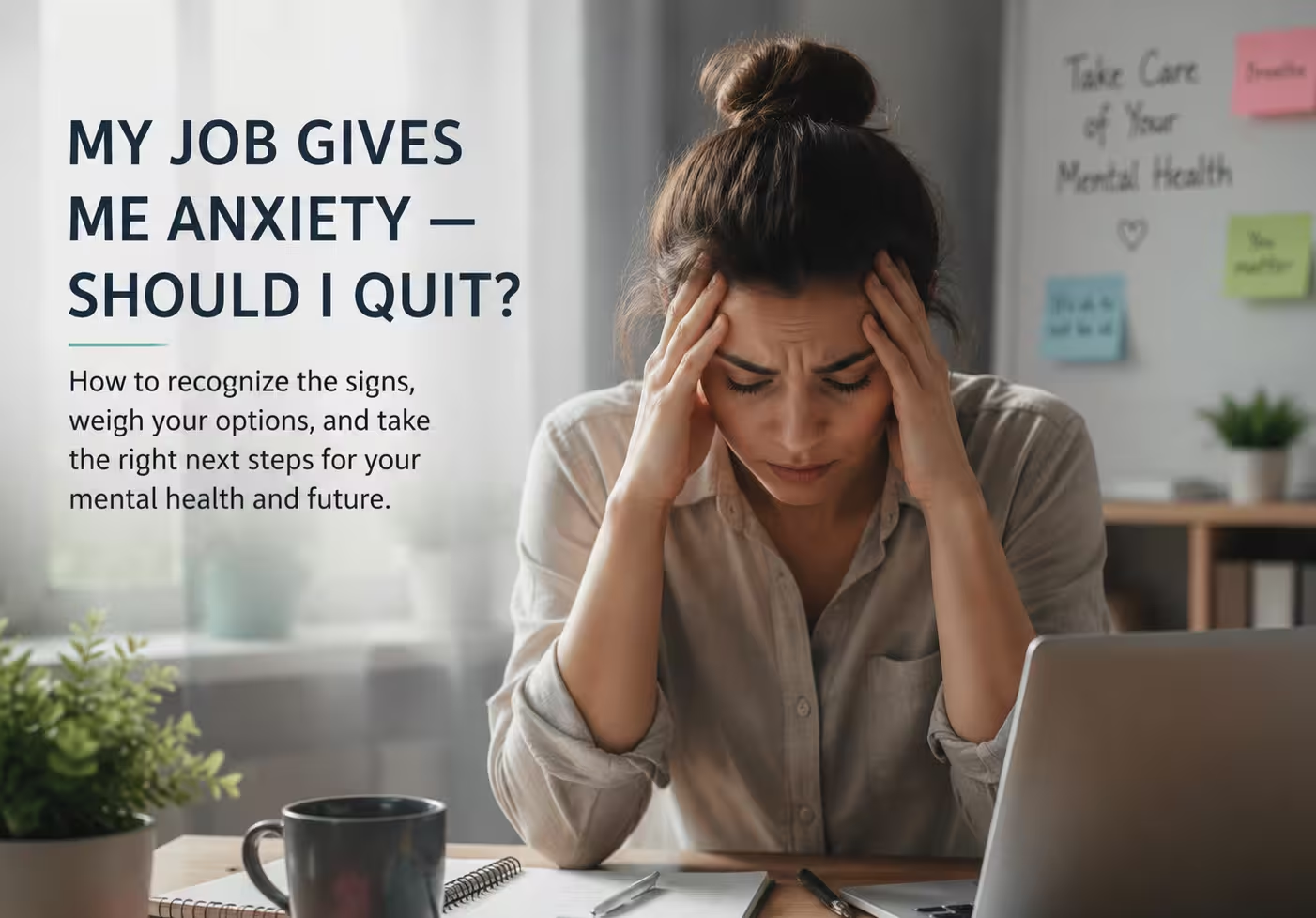
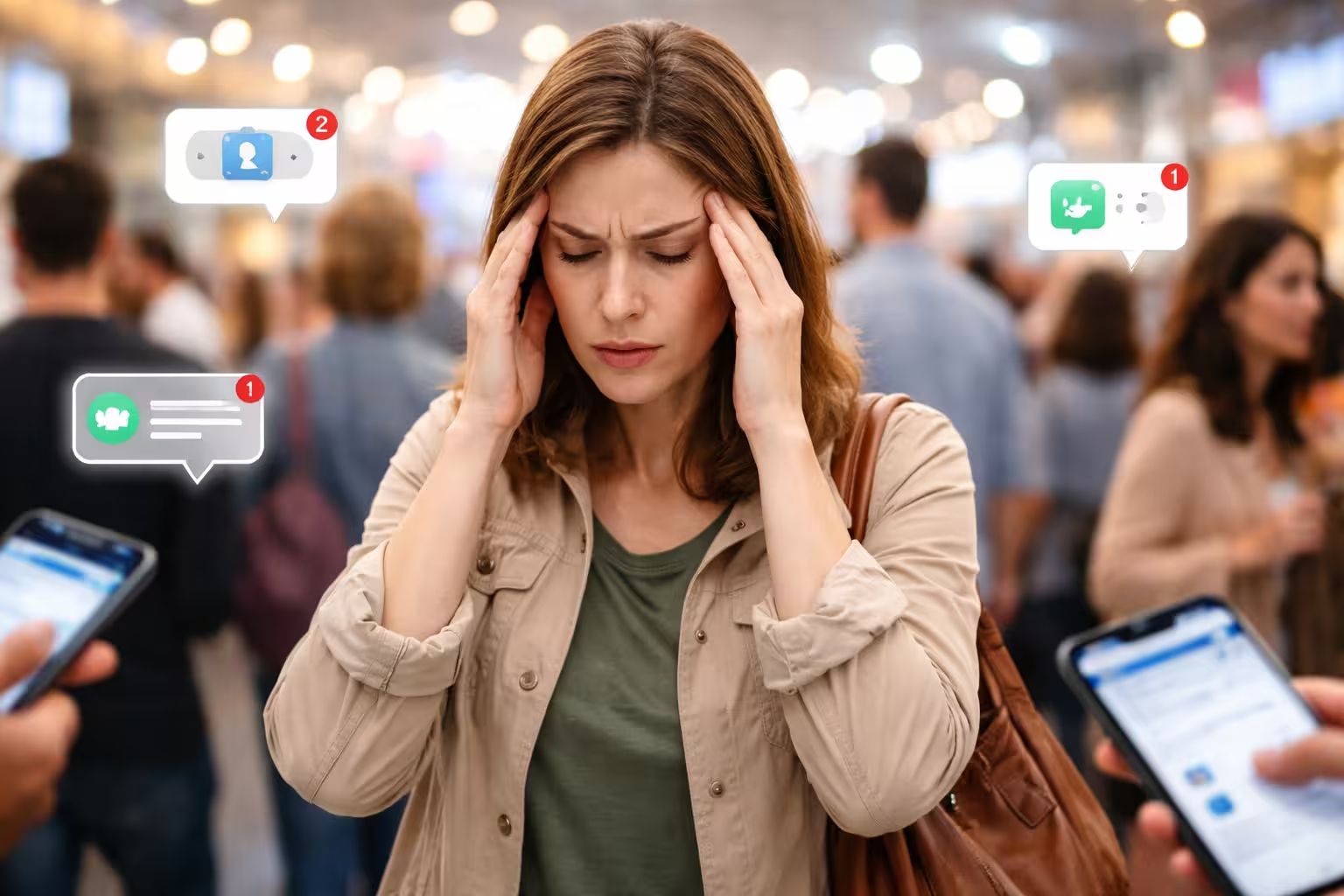
What Is Overstimulation? Symptoms, Causes, and How to Calm Down
Overstimulation is a state where the brain and nervous system receive more sensory or mental input than they can process comfortably. It can lead to irritability, mental fog, anxiety, tension, and a strong urge to escape noise, light, crowds, touch, or constant digital input.
If you have ever felt like the room was too loud, the lights were too bright, and even one more question would push you over the edge, you already know why people ask what is overstimulation. It is not just a trendy phrase people throw around online. It describes a real state where your brain and body are taking in more than they can comfortably process. That can happen in a crowded store, during a long workday, after hours of screen time, or even at home when too many demands hit at once. For some people, it shows up once in a while. For others, it is a regular part of life that affects mood, focus, energy, and daily functioning.
What Is Overstimulation in Simple Terms
The clearest answer to what is overstimulation is this. It happens when your nervous system receives more sensory or mental input than it can handle well in that moment. That input can come from sound, light, movement, touch, smells, temperature, conversation, stress, multitasking, or nonstop digital activity. When too much comes in at once, your brain has a harder time filtering what matters and what does not. That is when you may feel tense, irritated, anxious, mentally foggy, or desperate for a break. Overstimulation is not a personal failure. It is a sign that your system has reached its limit and needs less input, not more pressure.
What Does Overstimulation Feel Like
Many people want a definition, but what they really need is a clear picture of the experience. That is why the question what is overstimulation often leads to follow-up searches about symptoms and relief. In real life, it can feel like everything is too much at once. Background noise starts to sound aggressive. Bright lights become distracting. Small interruptions feel huge. You may notice your patience dropping fast, even if nothing dramatic is happening. Some people feel restless and wired. Others go quiet, shut down, or want to leave immediately. The common thread is simple. Your brain loses the ability to comfortably sort and manage the input around you.
Overstimulation vs Feeling Overwhelmed
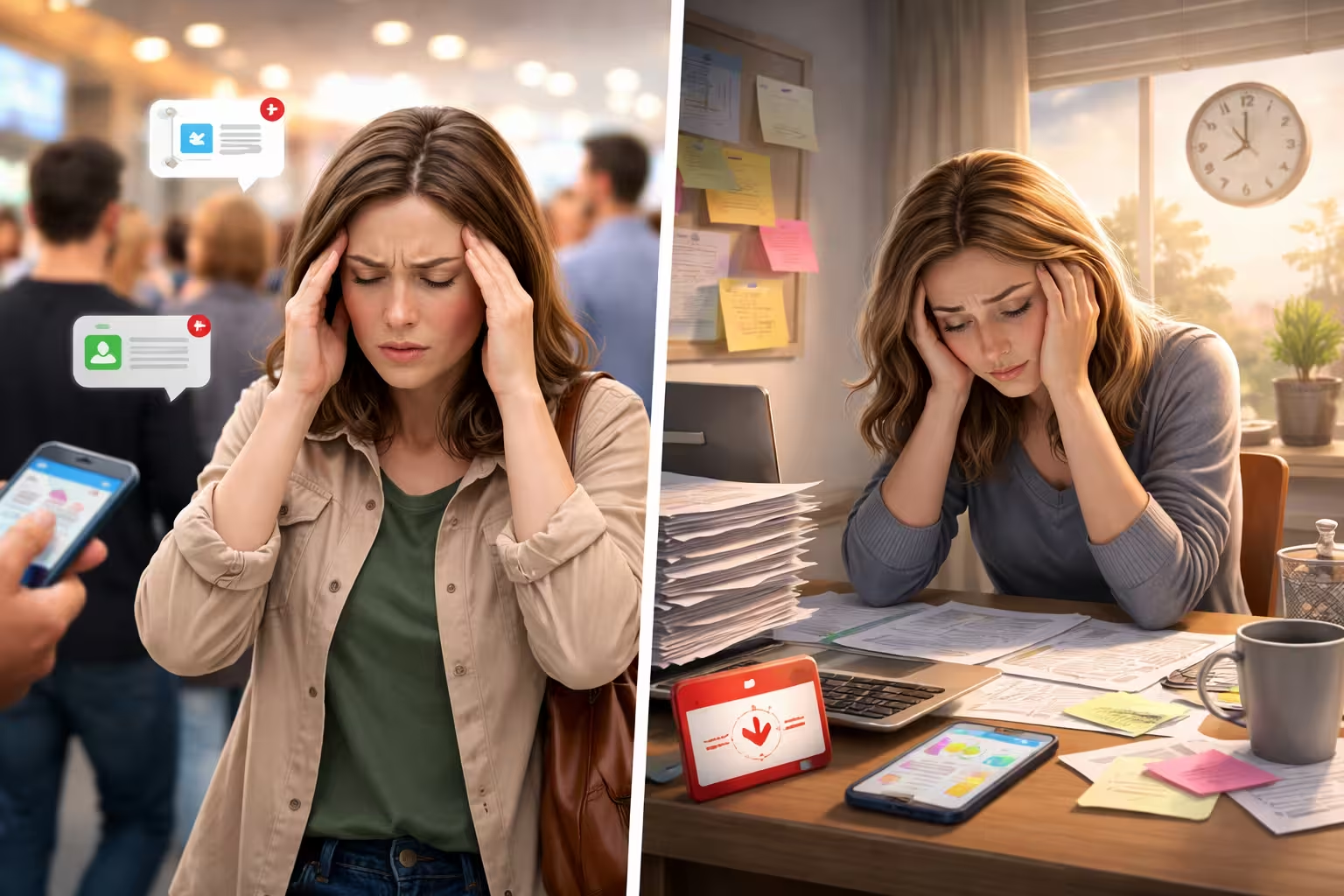
This is where many articles get sloppy. Overstimulation and overwhelm are not the same thing, even though they often overlap. Overwhelm usually comes from pressure, responsibilities, emotional strain, deadlines, or too many decisions. Overstimulation is more directly tied to too much sensory or mental input. You can feel overwhelmed by your workload in a quiet room. You can feel overstimulated in a loud, bright, crowded place even if you have nothing urgent to do. Of course, the two can happen together. A parent may feel overwhelmed by responsibilities and overstimulated by noise and touch. A worker may feel overwhelmed by deadlines, start overthinking and overstimulated by nonstop pings, meetings, and visual clutter.
Quick Self-Check
You may be overstimulated if you:
Common Signs of Overstimulation
Once people understand what is overstimulation, they usually want to know how to recognize it before it turns into a meltdown, shutdown, or emotional blowup. The signs are not always dramatic. In many cases, the early warnings are subtle and easy to ignore. That is a mistake. The sooner you notice the pattern, the easier it is to step back and reset. Some symptoms feel emotional. Others show up in the body, attention, or behavior. The exact mix varies from person to person, but the main pattern stays the same. Your tolerance drops, your system feels overloaded, and everyday input becomes harder to manage than it should be.
Emotional signs
The emotional side of overstimulation often shows up first. You may feel irritable, snappy, anxious, or on edge for no obvious reason. Small requests can feel intrusive. Normal conversation can start to feel like pressure. Some people become more reactive and short-tempered, while others feel like crying or suddenly want to be left alone. The issue is not always the emotion itself. It is the speed and intensity of the shift. When input keeps building, your emotional buffer shrinks. That is why you may react more strongly than usual to something minor. If you keep asking what is overstimulation, look at moments when your mood changes quickly in noisy, busy, or demanding settings.
Physical signs
Overstimulation is not just “in your head.” It often hits the body hard. You may feel a racing heart, shallow breathing, tight shoulders, jaw tension, sweating, restlessness, or a hot and shaky feeling. Some people get headaches or feel slightly dizzy. Others notice that touch, clothing, smells, or temperature suddenly bother them more than usual. These physical signs matter because they show that your nervous system is under strain, not just your mood. Many people dismiss the body signals until they are already at their limit. That is backward. The body often gives the first honest warning that your system is overloaded and needs relief before things get worse.
Mental signs
The mental signs are easy to miss because they often look like distraction or poor focus. In reality, they may be a clue that your brain is trying to manage too much at once. You might find it hard to think clearly, process what people are saying, make basic decisions, or switch tasks without frustration. Some people describe it as having too many tabs open in the brain. Others say it feels like static, pressure, or a mental traffic jam. If you are trying to understand what is overstimulation, this cognitive fog is a big part of the answer. Your brain is still working, but its filtering system is struggling.
Behavioral signs
Behavior often changes when someone is overloaded. You may snap at people, shut down, leave the room, pace, avoid conversation, or suddenly need silence. Some people start scrolling their phone even more, even though it makes them feel worse. Others freeze and struggle to respond at all. Children may cry, run off, resist instructions, or appear unusually wild. Adults may become withdrawn, impatient, or unable to handle one more request. These behaviors are not random. They are attempts to cope with too much input. When you see the pattern, the behavior starts to make sense. The goal is not to judge the reaction. It is to understand what pushed the system there.
What Causes Overstimulation
The question what is overstimulation makes more sense once you understand the cause.
In most cases, it is not one massive trigger. It is the buildup of many inputs at the same time. Noise, bright lights, interruptions, screen alerts, pressure, lack of sleep, hunger, and emotional strain can pile up quietly. A person may seem fine right up until one more sound, one more question, or one more task pushes them over the edge. That is why overstimulation can feel sudden even when it has been building for hours. Your nervous system has a limit. Once the pile crosses that limit, your body and mind start reacting as if they need protection.
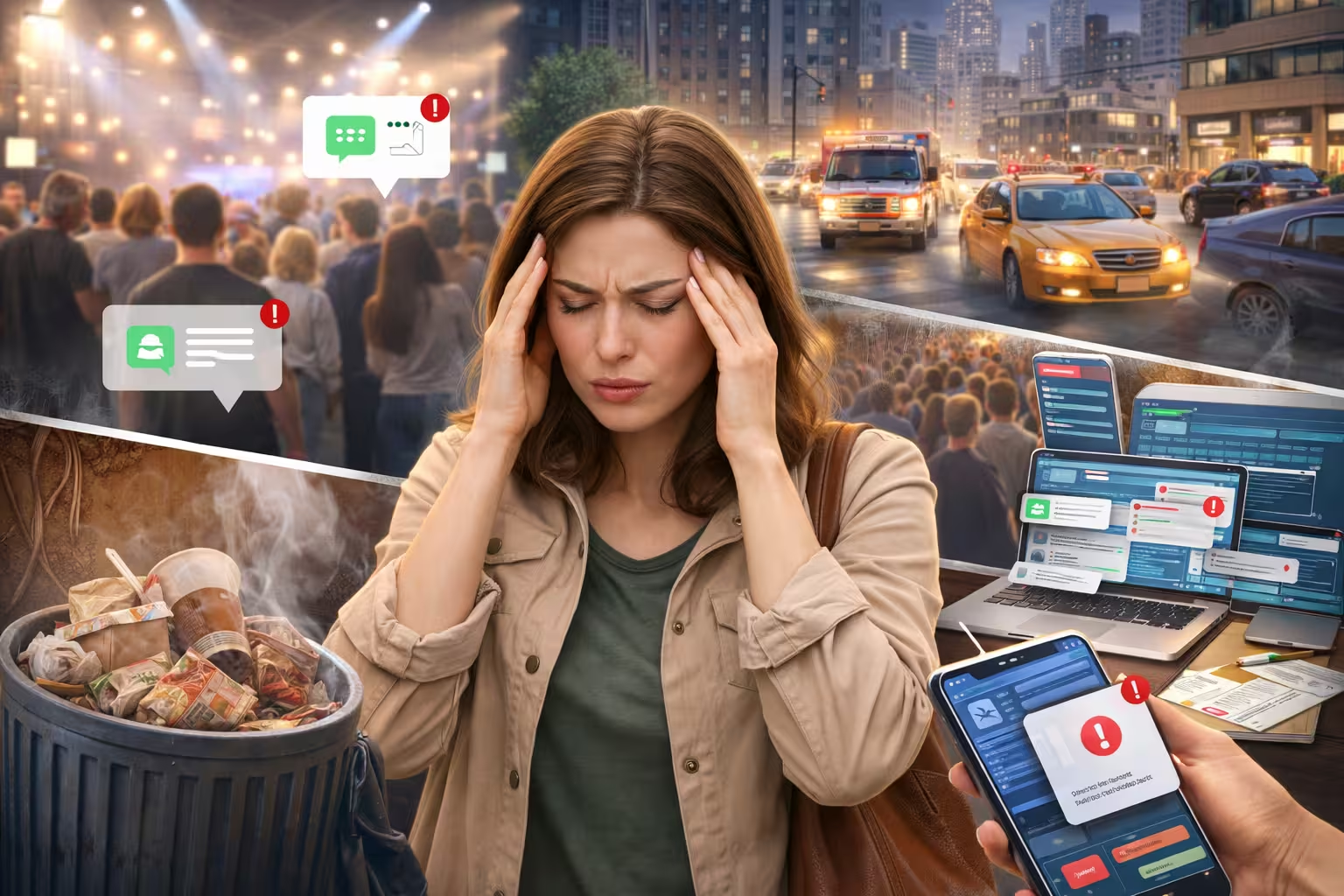
The most common triggers
Some triggers are obvious, while others build slowly in the background. Learning them is one of the best ways to prevent overload before it starts.
- Loud or layered noise
- Bright lights or visual clutter
- Crowded spaces
- Strong smells
- Unwanted touch or irritating textures
- Heat, pain, or physical discomfort
- Constant phone alerts
- Heavy screen time
- Multitasking and interruptions
- Poor sleep, hunger, stress, or burnout
The important point is this. Overstimulation is often a stack problem, not a single problem.
Why Some People Get Overstimulated More Easily
Anyone can experience overload, but not everyone has the same threshold. Some people filter background input well and recover quickly. Others notice more, absorb more, and hit their limit sooner. That difference can come from temperament, nervous system sensitivity, exhaustion, stress, trauma history, or underlying conditions. People with ADHD may struggle with filtering competing input. People with autism may have stronger sensory sensitivities. People with anxiety or PTSD may stay more alert to possible threats in the environment. Burnout can also lower your tolerance. This matters because the answer to what is overstimulation is not the same for every person. The mechanism is similar, but the threshold and triggers are not.
Table: Overstimulation in Adults vs Children
|
Group |
How it often shows up |
Common misunderstandings |
|---|---|---|
|
Adults |
Irritability, brain fog, withdrawal, impatience, needing silence, trouble making decisions |
People assume it is just stress, moodiness, or poor coping |
|
Children |
Crying, covering ears, running away, clinging, refusing tasks, sudden outbursts, shutting down |
People assume it is bad behavior or defiance |
|
Both |
Lower tolerance, trouble focusing, discomfort, anxiety, wanting escape |
The real issue is often overload, not attitude |
What Is Overstimulation in Adults
A lot of content treats this issue like it only matters for kids. That is nonsense. Adults deal with overstimulation all the time, but it is often mislabeled as stress, moodiness, or being bad at coping. In adults, overstimulation may look like losing patience fast, feeling trapped in crowded places, needing silence after work, snapping at family, or feeling mentally drained after meetings and notifications all day. It often shows up in offices, airports, stores, social gatherings, and homes where there is constant noise and little recovery time. Adults are expected to push through, so many ignore the signs until they are exhausted. That makes the cycle worse, not better.
What Is Overstimulation in Children
Children often experience overstimulation more openly because they have fewer skills for masking it. A child who is overloaded may cry, cover their ears, cling to a parent, resist touch, stop listening, or have a sudden outburst. Other children go quiet, stare off, or become unusually withdrawn. Adults sometimes call this bad behavior, but that is often lazy interpretation. The child may not be trying to be difficult. They may simply be flooded. Busy events, loud classrooms, scratchy clothes, strong smells, bright environments, and long days can all contribute. Children also struggle to explain what feels wrong, which means adults need to pay attention to patterns rather than judging only the visible reaction.
Can Phones, Social Media, and Screens Cause Overstimulation
Yes, and this is one of the most ignored parts of the conversation. Modern overstimulation is not only about loud public places. It also comes from digital overload. Phones, laptops, streaming apps, work chats, social media, short videos, emails, and constant notifications keep the brain in a near nonstop state of input. Even when the content seems harmless, the amount of switching, watching, reading, comparing, and responding can wear down your mental filter. Over time, that makes your threshold lower for everything else. You may notice that ordinary sounds bother you more, patience disappears faster, and your mind feels crowded even in a quiet room. That is not random. It is accumulated digital strain.
Common Mistakes When You Feel Overstimulated
What To Do Right Away When You Feel Overstimulated

When overload hits, the goal is not to act tough. The goal is to reduce stress input fast enough to stop the spiral. A lot of people make the mistake of trying to push through, explain themselves, or keep multitasking. That usually backfires. The best response is simple and practical. Create less input, settle the body, and postpone anything that can wait. If you are still wondering what is overstimulation, look closely at how much relief comes from removing just a few layers of noise, light, pressure, or decision-making. That relief is not weakness. It is proof that your system was overloaded and needed a reset.
Step 1: Reduce input
Start by removing what is adding pressure. Move to a quieter spot. Turn down the volume. Dim the lights. Put your phone on silent. Step outside if the room feels packed or stale. If touch is part of the problem, create space. If clothing is bothering you, fix it. This first step matters more than people think because it cuts off the incoming flow that keeps your nervous system activated. Do not waste energy trying to be polite about every little thing while you are overloaded. The point is to lower the input enough that your system has a chance to settle. Without that, nothing else works well.
Step 2: Regulate the body
Once the input is lower, help your body calm down. Loosen your jaw. Drop your shoulders. Unclench your hands. Take a few slow breaths without forcing them. Drink some water. Eat if you have gone too long without food. Notice your feet on the ground or the chair under you. These are not magic tricks. They are ways to tell your nervous system that the danger level is lower than it feels. Overstimulation often seems mental, but the body carries much of the strain. When the body settles even a little, clear thinking becomes easier. When the body stays tense, your brain keeps acting like it is under attack.
Step 3: Delay decisions and demands
One of the worst times to make decisions is when you are overloaded. Your tolerance is low, your focus is weak, and even simple choices can feel huge. If possible, delay anything non-urgent. That includes arguments, purchases, important replies, or tasks that need clear judgment. Tell yourself the truth. You do not need to solve everything in this state. You need to reduce the strain first. Many people make the situation worse by forcing productivity while their nervous system is already maxed out. That turns a difficult moment into a breakdown. Protect your decision-making by giving your brain a short recovery window before you re-engage with the world.
Step 4: Recover before jumping back in
The nervous system does not always bounce back the second the noise stops. Sometimes it needs time. That means recovery should be active, not accidental. Give yourself a short period of low stimulation before returning to demanding tasks, crowded environments, or long conversations. Silence, low light, a short walk, a shower, or sitting alone for a few minutes may help more than mindless scrolling. This is where people often sabotage themselves. They escape one overstimulating situation and immediately open social media, answer messages, or take on another demand. That is not recovery. It is a new layer of input. Real recovery means letting the system come down before asking it to perform again.
Table: What To Do When You Feel Overstimulated
|
Time frame |
What to do |
Why it helps |
|---|---|---|
|
In the next 1 minute |
Pause, stop talking if needed, step away from the trigger |
Stops more input from piling on |
|
In the next 5 minutes |
Move to a quieter space, dim lights, silence notifications |
Reduces pressure on the nervous system |
|
In the next 10 minutes |
Breathe slowly, drink water, unclench your jaw and shoulders |
Helps physical stress come down |
|
In the next 30 minutes |
Avoid big decisions, arguments, or multitasking |
Protects you from making things worse while foggy |
|
Later that day |
Rest, lower screen time, keep the evening quieter |
Gives your system a real recovery window |
How To Prevent Overstimulation
The smartest way to handle overload is to catch the pattern before it explodes. Prevention is not about controlling every detail of life. It is about knowing what drains you, what lowers your threshold, and what helps you recover sooner. Start with awareness. Notice the places, people, times, and conditions that seem to push you toward irritability, shutdown, or mental fog. Then look at what was happening before that point. Were you tired, hungry, overstretched, overstimulated by screens, or stuck in back-to-back demands with no quiet time? Prevention is usually boring and simple, which is why many people ignore it. But boring and simple works better than pretending you can power through everything.
Practical ways to reduce overload
You do not need a perfect life to reduce overstimulation. You need better management.
- Track your early warning signs
- Limit unnecessary notifications
- Take short breaks between high-input tasks
- Protect sleep as much as possible
- Eat before long outings or stressful events
- Use headphones or earplugs in loud settings
- Build quiet time into your day
- Reduce multitasking
- Keep lighting softer when possible
- Plan recovery after crowded or demanding situations
These steps sound basic because they are basic. That does not make them optional.
Build a Personal Sensory Safety Plan
If overstimulation happens often, stop relying on guesswork. Build a personal safety plan for your nervous system. Write down your biggest triggers, your earliest signs, your fastest relief tools, and the recovery habits that work best for you. Your early signs might include jaw tension, impatience, zoning out, or wanting people to stop talking. Your relief tools might include stepping outside, dimming the room, wearing headphones, drinking water, or sitting alone for ten minutes. A plan matters because overload often makes clear thinking harder. When you already know your pattern, you do not have to figure everything out in the moment. You just follow what you already know works.
When Overstimulation May Need Professional Support
There is a point where self-management is not enough, and you should be honest about that. If overstimulation is frequent, intense, or disruptive, it may be time to seek professional help. That includes repeated shutdowns, panic, conflict at home, trouble at work, poor sleep, chronic avoidance, or a child who struggles in ordinary environments again and again. Help can come from a doctor, therapist, psychologist, or occupational therapist, depending on the pattern. Getting support does not mean you failed to cope. It means you are done guessing. If what is overstimulation keeps turning into a daily quality of life problem, the smart move is to get proper guidance and stop trying to solve it by force.
Frequently Asked Questions
Conclusion
By now, the answer to what is overstimulation should be clear. It is a state where your brain and nervous system are dealing with more sensory or mental input than they can comfortably process. That can come from noise, light, crowds, touch, screens, stress, multitasking, fatigue, or several of these at once. The result can be irritability, anxiety, mental fog, physical tension, shutdown, or a strong urge to escape. It is common, real, and often misunderstood.
The bigger lesson is this. Overstimulation is not a character flaw or an excuse. It is information. It tells you your system has hit a limit. When you learn your triggers, notice your early signs, and use practical recovery tools, you stop treating overload like a mystery. You start managing it with more clarity, less guilt, and far better results.