
12 Emotional Challenges That Affect Daily Life and Mental Health
Summary:
Emotional challenges are a common part of life, affecting millions of people worldwide. According to the National Institute of Mental Health (NIMH), nearly 1 in 5 adults in the United States experience some form of mental illness, including anxiety, depression, and emotional dysregulation. These struggles can significantly impact a person’s daily functioning, relationships, and overall well-being. Research from the American Psychological Association (APA) reveals that 77% of people report physical symptoms related to stress, such as headaches, fatigue, and sleep disturbances. Recognizing and addressing these challenges early can help reduce their impact on mental health and improve quality of life.
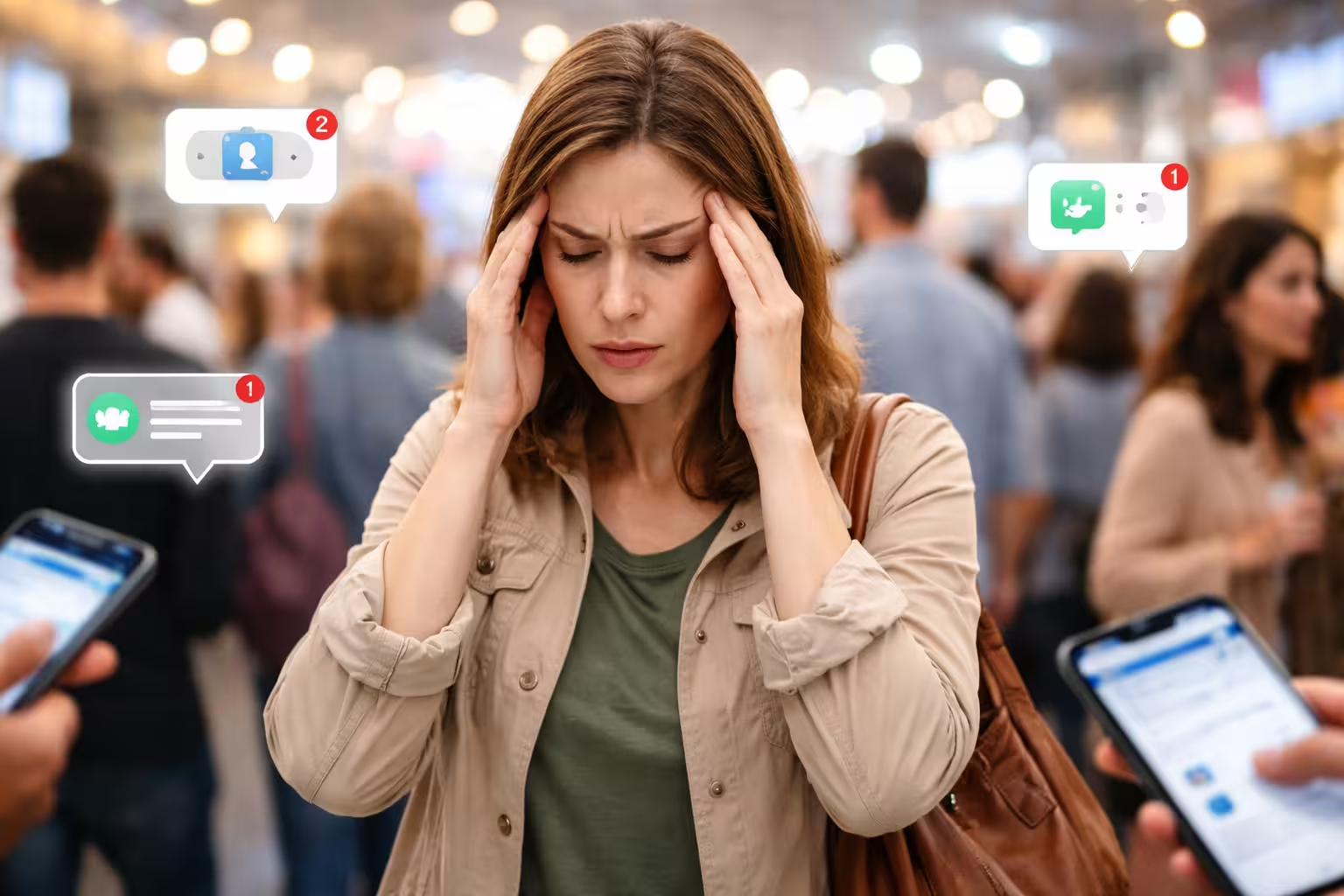
Emotional challenges rarely arrive with a label. They often begin as a feeling you cannot quite name: a heavy chest before work, a short temper at home, a growing urge to avoid calls, or the sense that small problems suddenly feel too big. People may look fine from the outside while feeling stretched thin inside. That is why this subject matters. Emotional strain does not always look dramatic. Sometimes it appears as silence, indecision, detachment, or exhaustion that keeps repeating itself.
Some emotional challenges are short-lived and tied to a hard season. Others last long enough to affect sleep, concentration, appetite, work, and relationships. Not every painful emotion is a mental disorder, but ongoing distress should never be dismissed. When intense feelings persist, grow worse, or start interfering with daily life, they deserve careful attention rather than self-criticism. A useful first step is to recognize the pattern clearly, because naming the experience often makes it easier to respond in a healthier way.
Prevalence of Emotional Challenges:
According to the National Institute of Mental Health (NIMH), nearly 1 in 5 adults in the United States experience a mental illness, which includes conditions like depression, anxiety, and emotional dysregulation.
What emotional challenges really mean
The phrase emotional challenges refers to difficulties in managing, understanding, or recovering from distressing feelings. That can include fear, sadness, anger, grief, shame, guilt, emotional numbness, or a sense of being mentally overloaded. These experiences are part of being human, especially during conflict, loss, illness, trauma, pressure, or uncertainty. The problem begins when the reaction becomes persistent, extreme, or disruptive enough to change how a person functions in everyday life.

A psychiatric perspective also reminds us that feelings do not exist in isolation. They affect the body, thinking, and behavior at the same time. Stress can raise alertness, tension, and pulse. Anxiety can lead to avoidance. Depression can reduce interest, energy, and concentration. Trauma can leave a person feeling detached, on edge, or unable to feel safe. That is why emotional pain often shows up in habits and relationships long before someone says, “I need help.”
12 emotional challenges that commonly affect daily life

These emotional challenges often overlap. A person may start with worry, move into exhaustion, and then become irritable or withdrawn. The goal is not to force yourself into one category. It is to notice which patterns describe your inner world most closely, so you can respond with more honesty and less confusion.
1. Anxiety and constant worry
Anxiety is more than feeling nervous before an important event. It becomes a serious challenge when worry feels constant, hard to control, and large enough to shape decisions. Many people with ongoing anxiety feel tense, restless, watchful, or physically keyed up. They may overprepare, avoid ordinary tasks, or replay possible disasters in their mind. In moderate amounts, worry can sharpen attention. In excessive amounts, it steals peace, drains energy, and makes everyday life feel unsafe even when no immediate threat is present.
2. Persistent sadness and hopelessness
Sadness is a normal response to disappointment, loss, and discouragement. It becomes more concerning when it lingers, deepens, and begins to color everything. A person may lose interest in activities, feel slowed down, struggle to make decisions, or describe life as flat and joyless. Hopelessness is especially important to notice because it can quietly turn ordinary pain into a deeper mental health risk. When low mood keeps returning or begins to interfere with responsibilities, it should be taken seriously.
3. Anger and irritability
Anger is often misunderstood. People think of it as a personality flaw when it is sometimes an alarm signal for pain, stress, fear, sadness, or feeling trapped. Irritability can show up as snapping at loved ones, reacting too quickly, or feeling annoyed by things that normally would not matter. In some cases, it is linked to chronic stress, depression, or trauma-related arousal. When anger becomes the main language of distress, relationships suffer and the original hurt often stays unaddressed.
4. Shame and harsh self-criticism
Shame says, “Something is wrong with me,” not simply, “I made a mistake.” That distinction matters. Shame can make people hide, over-apologize, avoid closeness, or set impossible standards for themselves. Over time, harsh self-criticism wears down resilience and makes recovery harder because the person becomes both the one in pain and the one doing the attacking. Clinically, shame often appears alongside depression, trauma, and crisis states. It thrives in silence, which is why compassionate reflection is more healing than internal punishment.
5. Guilt and regret
Guilt can be healthy when it helps us repair harm, apologize, and act with more integrity. It becomes destructive when it turns repetitive, exaggerated, or impossible to resolve. Some people replay old choices for years. Others feel guilty for resting, setting boundaries, grieving, or needing help. Trauma may also produce blame that does not match reality. When guilt stops guiding behavior and starts defining identity, it becomes an emotional burden that can intensify sadness, anxiety, and withdrawal.
6. Grief and loss
Grief is not limited to death. People grieve breakups, infertility, illness, lost opportunities, lost homes, and former versions of themselves. Grief can feel like sadness, anger, confusion, relief, numbness, or all of them in one week. Many people judge themselves because their grief does not look orderly. In reality, grief tends to move in waves. It becomes especially hard when the loss is sudden, traumatic, complicated, or unsupported by others. Healing does not mean forgetting. It means learning how to live with what changed.
7. Loneliness and social disconnection
Loneliness is not only the absence of people. It is the absence of meaningful connection. A person can be surrounded by family, coworkers, or followers online and still feel unknown. This challenge often grows quietly after life transitions, chronic stress, caregiving, relocation, or emotional burnout. Once loneliness deepens, people may pull back further, which creates a painful cycle. Supportive relationships help emotional well-being because they offer belonging, perspective, and practical help when life becomes heavy.
8. Emotional numbness and detachment
Some people do not feel “too much.” They feel too little. Emotional numbness can look like going through the day on autopilot, feeling cut off from joy, struggling to cry, or sensing distance from loved ones and even from yourself. Detachment may appear after trauma, chronic stress, depression, or long periods of emotional overload. It can be protective in the short term, especially when feelings seem unbearable. But when numbness lingers, it often blocks recovery because a person stops feeling both pain and pleasure.
9. Overwhelm and emotional exhaustion
Overwhelm happens when demands exceed emotional capacity for too long. At first it may feel like pressure. Later it starts to feel like paralysis. Small tasks seem huge, concentration weakens, and the mind may shift between racing thoughts and complete shutdown. Chronic stress keeps the body in a prolonged state of alertness, and that can gradually wear down sleep, patience, energy, and judgment. Emotional exhaustion is not laziness. It is often the result of carrying too much for too long without recovery, support, or limits.
10. Fear of uncertainty and loss of control
Uncertainty is one of the hardest experiences for the human mind. Many people can cope with bad news better than unclear news. When life becomes unpredictable, the mind may start scanning for danger, demanding certainty that real life cannot provide. This can lead to overthinking, checking behaviors, indecision, and physical tension. Fear of uncertainty often grows during health scares, financial instability, relationship strain, and career change. The emotional task is not to control everything. It is to build steadiness while life remains partly unknown.
11. Low self-worth and helplessness
Low self-worth turns challenges into identity statements. Instead of thinking, “I am struggling,” a person starts thinking, “I am the problem.” Helplessness then follows, making effort feel pointless before it even begins. This pattern often appears with depression and prolonged stress, especially when someone has faced repeated disappointment, criticism, or invalidation. It may look like giving up too early, rejecting praise, or believing support will not help. The danger is that helplessness can make treatable pain feel permanent when it is not.
12. Mood swings and difficulty regulating emotions
Some people feel emotions in fast, intense waves. They may move from calm to hurt, angry, or overwhelmed before they fully understand what happened. Difficulty regulating emotions can lead to impulsive reactions, conflict, or a sense of losing control over one’s own inner life. This pattern may be linked with chronic stress, trauma, ADHD, borderline personality disorder, or other mental health conditions, but it can also happen outside a formal diagnosis. The key sign is not strong emotion by itself. It is strong emotion that repeatedly disrupts daily functioning.
Why emotional challenges often cluster together
Emotional challenges rarely travel alone because the mind and body respond as one system. Chronic stress may create poor sleep, poor sleep may worsen irritability, irritability may damage relationships, and relationship strain may increase loneliness and sadness. Trauma can bring fear, guilt, anger, detachment, and avoidance at the same time. Depression can lower energy, flatten pleasure, and make ordinary decisions feel exhausting. That is why a single symptom should be read in context rather than isolation.
This overlap is also why self-diagnosis can be misleading. Two people may both say, “I feel overwhelmed,” while one is dealing with burnout, another with depression, and another with unresolved grief. Careful assessment matters when symptoms persist or become severe. Naming the dominant pattern is helpful, but understanding the full picture is what leads to better support and treatment.
How emotional challenges affect the body, work, and relationships
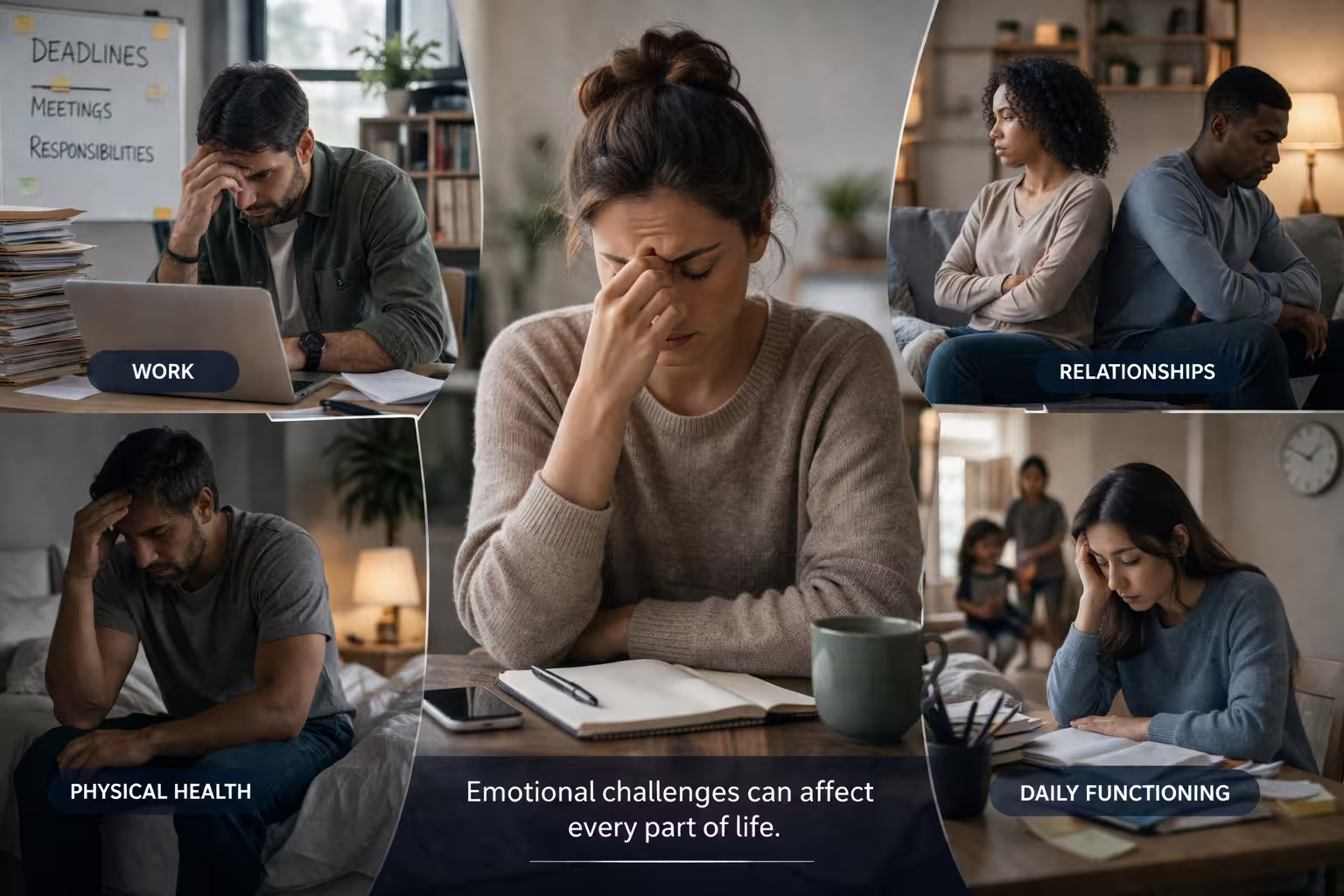
Many emotional challenges show up physically before people recognize them emotionally. Stress can increase alertness, muscle tension, and pulse. Anxiety may bring restlessness, shortness of breath, dizziness, or a racing heart. Depression may affect sleep, appetite, energy, and concentration. Trauma can leave a person constantly on guard or easily startled. These are not “just in your head” experiences. They are real mind-body responses that deserve attention.
At work, emotional strain may look like missed deadlines, indecision, avoidance, perfectionism, or reduced motivation. In relationships, it often appears as withdrawal, defensiveness, conflict, emotional distance, or a need for repeated reassurance. Many people judge themselves for these changes without recognizing that the underlying issue is an untreated emotional burden. Once that burden is named, the next steps become clearer and less shame-based.
Workplace Impact:
Workplace stress is a major emotional challenge, with 83% of US workers reporting high levels of stress at work, according to a study by the American Institute of Stress. This stress not only impacts work performance but also affects relationships and overall health.
How to respond to emotional challenges in a healthy way
Responding to emotional challenges begins with slowing the cycle rather than fighting the feeling. Start by naming what you are actually experiencing: fear, grief, anger, shame, emptiness, or overload. Then ask what the feeling is pointing to. Are you under chronic pressure? Avoiding a painful conversation? Carrying a loss alone? Public-health guidance consistently supports a few core practices: journaling, breathing or relaxation exercises, physical movement, realistic thinking, social support, and better communication about needs and boundaries.
Healthy coping also means matching the strategy to the challenge. Anxiety improves when triggers are understood and avoidance is reduced gradually. Grief needs room, ritual, and support rather than quick fixes. Anger often improves through calm communication and boundary work. Emotional numbness may require gentler re-connection through therapy, routine, body-based grounding, and safe relationships. Overwhelm often improves when responsibilities are reduced, priorities are clarified, and recovery time becomes non-negotiable.

When emotional challenges need professional help
Some emotional challenges can be managed with rest, support, and self-care. Others need structured care from a licensed mental health professional. Seek help when symptoms last for weeks, keep returning, feel out of proportion to the situation, or begin to affect sleep, work, appetite, concentration, or relationships. Professional support is also important when you notice emotional numbness, escalating anger, panic, trauma symptoms, substance misuse, or a strong sense of helplessness.
Urgent help is needed when there are signs of crisis, including talking about wanting to die, unbearable emotional pain, feeling trapped, extreme mood swings, giving away belongings, increased substance use, or withdrawing in a dramatic new way. In the United States, call or text 988 for 24/7 support from the 988 Suicide & Crisis Lifeline. In a life-threatening emergency, call 911.
Frequently Asked Questions
Conclusion
Emotional challenges are not a sign of weakness. They are signals that something important inside your life, body, relationships, or history needs care. The healthiest response is not to suppress every hard feeling or dramatize every bad day. It is to notice patterns early, respond with honesty, and get help before distress grows into isolation or crisis. When people learn to name what they feel, the path forward usually becomes calmer, clearer, and far more hopeful.