Psychology Basics Explained: Core Principles, Theories & Real-Life Applications
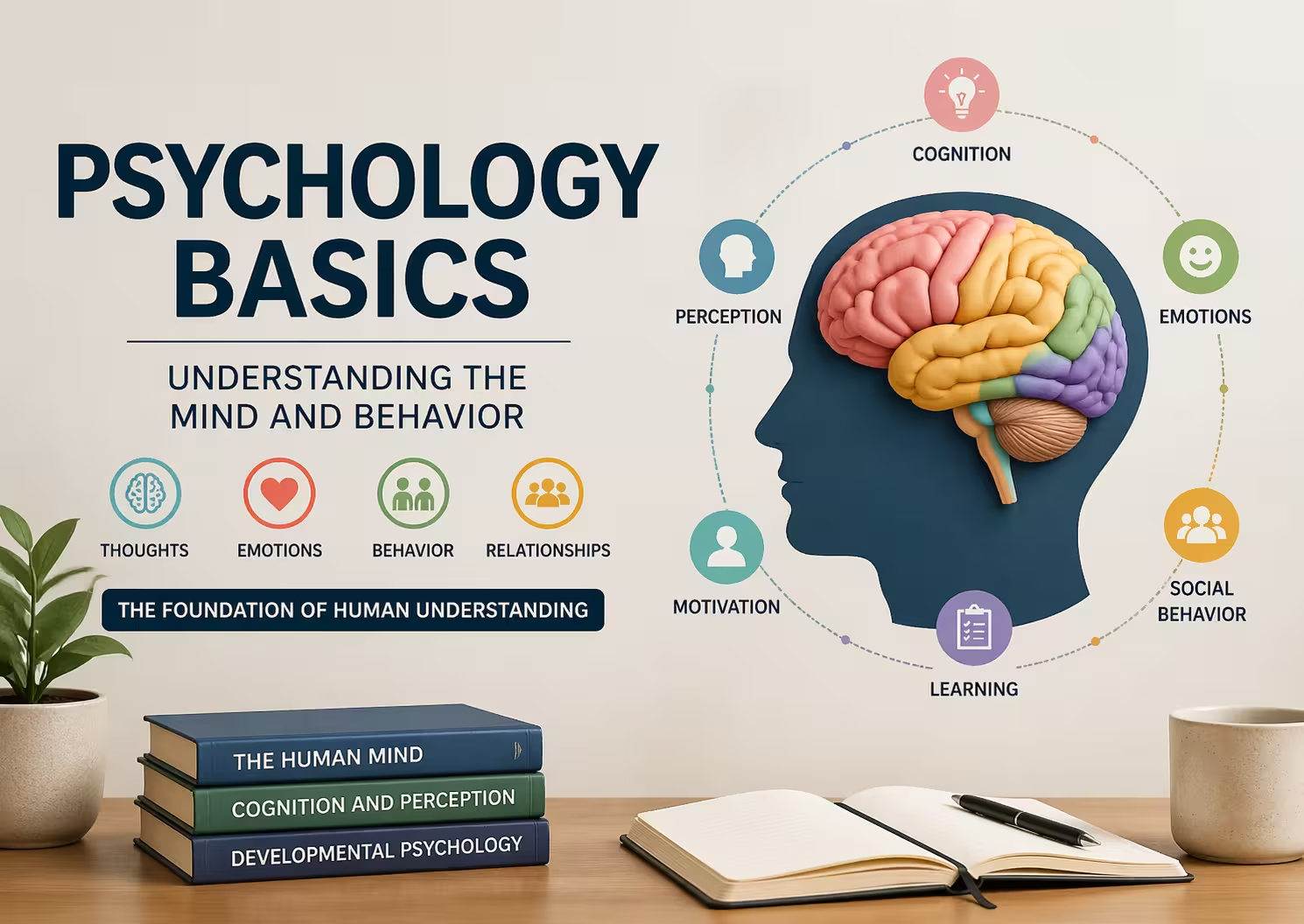
Have you ever wondered why you make certain decisions under pressure, why some memories stick while others fade, or why two people can experience the same event in completely different ways? These questions sit right at the heart of psychology—the scientific study of the human mind and behavior.
Psychology basics are not just for students in lecture halls. They are for anyone who wants to understand themselves better, improve relationships, make smarter choices, and navigate the complexities of everyday life. From how children learn to how grief is processed, from managing anxiety to building motivation—psychology touches every corner of human experience.
This guide breaks down the core principles, major theories, leading figures, and practical applications of psychology basics in a clear, accessible way. Whether you are completely new to the subject or refreshing your knowledge, this is the foundation you need.
What Is Psychology? A Clear Definition
Psychology comes from the Greek words “psyche” (soul or mind) and “logos” (study). Formally defined, it is the scientific discipline that studies mental processes, emotions, behavior, and the factors that influence them—both in individuals and in groups.
Unlike philosophy, which asks abstract questions about the mind, psychology relies on empirical research, observation, and controlled experiments to draw conclusions. It bridges the gap between biology and social science, drawing on neuroscience, sociology, anthropology, and even economics to explain why people think, feel, and act the way they do.
At its core, psychology basics rest on a single ambitious goal: to understand human nature in a way that is measurable, replicable, and useful.
Year psychology was founded:
1879
Wundt’s Leipzig lab
Distinct psychology branches
20+
APA recognized divisions
DSM-5 disorders listed
300+
Published 2013
Adults with mental disorder (USA)
1 in 5
NIMH annual estimate
Milgram obedience rate
65%
Fully complied, 1961
Maslow’s hierarchy levels
5
1943 paper
A Brief History of Psychology
Understanding where psychology came from helps explain why it is the way it is today. The discipline has a long past but a surprisingly short formal history.
The Founding of Modern Psychology
The year 1879 is widely considered the birth of modern psychology. That was the year Wilhelm Wundt, a German physiologist, established the first formal psychology laboratory at the University of Leipzig in Germany. Wundt believed the mind could be studied just as rigorously as the body, and he set about measuring mental processes through a method called “introspection”—training subjects to report their own inner experiences in precise detail.
Around the same time, William James was developing his own ideas in the United States. His landmark work, The Principles of Psychology (published in 1890), introduced the concept of the “stream of consciousness” and laid the groundwork for American psychology.
Sigmund Freud and the Unconscious Mind
No discussion of psychology basics is complete without Sigmund Freud. Though many of his specific theories have been revised or challenged, his contribution was transformative. Freud proposed that much of human behavior is driven by unconscious forces—desires, fears, and conflicts we are not directly aware of. His framework of the id, ego, and superego attempted to map how these inner forces interact, and his development of psychoanalysis introduced the practice of talk therapy to the world.
The Behaviorist Revolution
In the early 20th century, psychologists like John B. Watson and later B.F. Skinner pushed back against the focus on internal mental states. They argued that psychology should focus only on observable behavior — things that could be measured and tested. This school of thought, known as behaviorism, dominated psychology for much of the mid-1900s and gave us foundational concepts like classical conditioning (first demonstrated by Ivan Pavlov with his famous experiments using dogs and bells) and operant conditioning (learning through rewards and punishments).
The Cognitive Revolution
By the 1950s and 1960s, researchers began arguing that ignoring the mind itself was a mistake. The cognitive revolution brought mental processes—memory, attention, problem-solving, and language—back to center stage. Figures like Jean Piaget, Noam Chomsky, and George Miller helped establish cognitive psychology as a dominant force. This shift also paved the way for modern neuroscience and artificial intelligence.
The Major Branches of Psychology
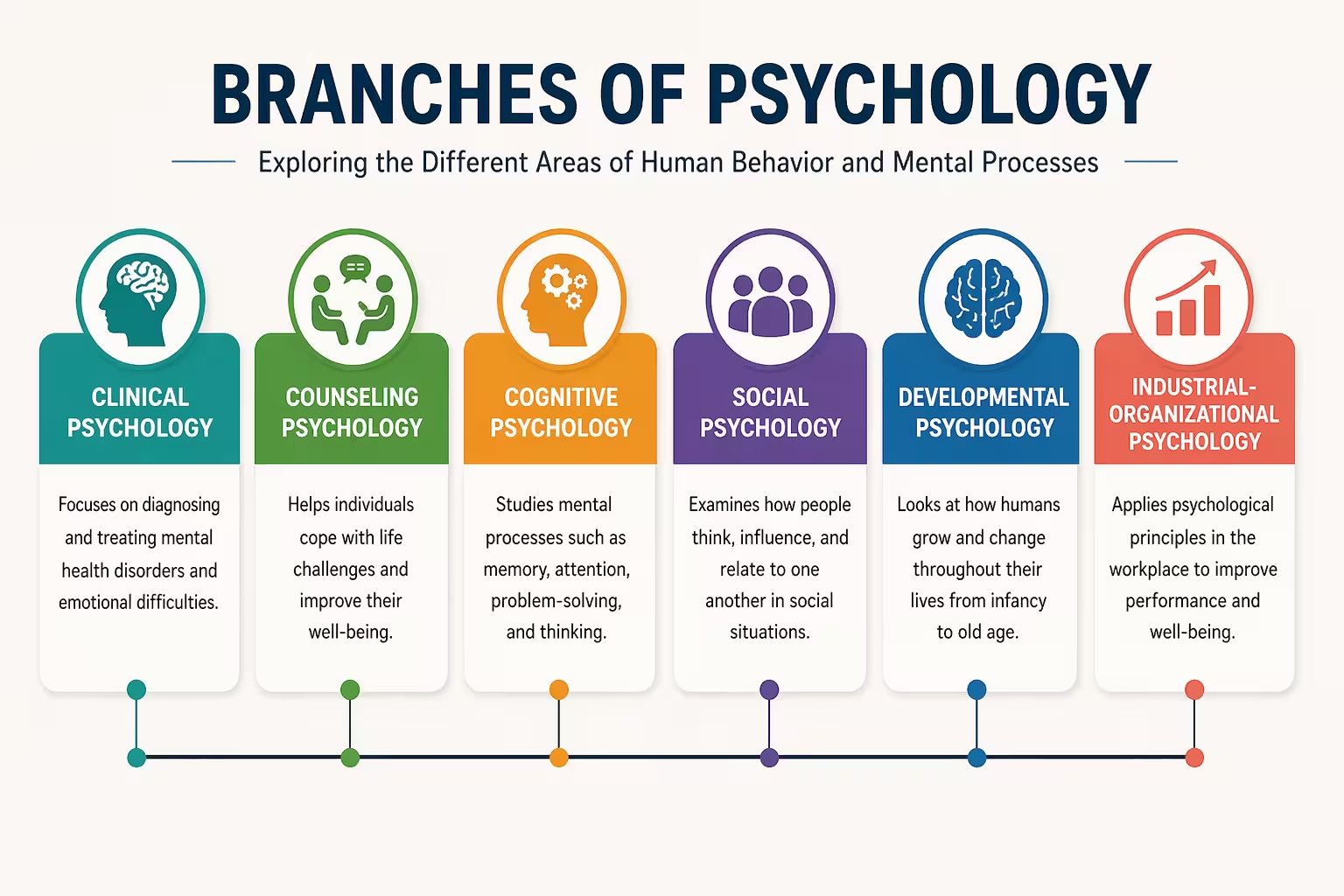
Psychology is not a single, monolithic field. It has branched out into dozens of specialized areas. Here are the most important ones for anyone learning the psychology basics.
Clinical Psychology
This is the branch most people picture when they think of psychology. Clinical psychologists assess and treat mental, emotional, and behavioral disorders. They work in hospitals, private practices, schools, and community centers, using therapies like cognitive-behavioral therapy (CBT), dialectical behavior therapy, and psychodynamic approaches.
Developmental Psychology
This branch studies how people grow and change across the entire lifespan—from infancy through old age. Developmental psychologists examine how genetics, environment, relationships, and culture shape personality, cognition, language, and emotional well-being. Jean Piaget’s stages of cognitive development and Erik Erikson’s eight stages of psychosocial development are central theories in this area.
Social Psychology
Social psychology explores how people are influenced by others and by social contexts. It covers topics like conformity, obedience, prejudice, group behavior, and interpersonal attraction. Classic experiments—such as Stanley Milgram’s obedience studies (1961) and Solomon Asch’s conformity experiments (1951)—revealed how powerfully social pressure shapes human behavior.
Cognitive Psychology
Cognitive psychology focuses on mental processes — how people perceive, remember, think, learn, and solve problems. It is closely related to neuroscience and has practical applications in areas like education, human-computer interaction, and therapy.
Biological Psychology (Neuropsychology)
Also called biopsychology, this branch examines the relationship between brain function, genetics, and behavior. It studies how hormones, neurotransmitters, brain structures, and genetics influence emotions, decisions, and mental health conditions.
Forensic Psychology
Forensic psychologists work at the intersection of psychology and the legal system. They may assess defendants’ mental competency, consult on criminal cases, work with trauma survivors, or advise law enforcement on behavioral profiling.
Industrial-Organizational (I/O) Psychology
This branch applies psychological principles to workplace settings—examining employee motivation, leadership styles, team dynamics, hiring practices, and organizational culture. It is one of the fastest-growing fields in applied psychology.
Core Theories Every Learner Should Know
Psychology basics include a set of foundational theories that explain how the mind works and why people behave the way they do.
Maslow’s Hierarchy of Needs
In 1943, humanist psychologist Abraham Maslow proposed that human motivation follows a layered structure. At the base are physiological needs (food, shelter, sleep). Above those come safety, then love and belonging, then esteem, and finally self-actualization — the drive to reach one’s full potential. This model remains one of the most recognized frameworks in both psychology and business management.
Piaget’s Stages of Cognitive Development
Jean Piaget identified four stages through which children develop thinking and reasoning: the sensorimotor stage (birth to 2 years), the preoperational stage (ages 2–7), the concrete operational stage (ages 7–11), and the formal operational stage (age 12 and beyond). Each stage represents a qualitatively different way of understanding the world.
Erikson’s Psychosocial Stages
Erik Erikson expanded on Freud’s ideas to describe eight stages of psychosocial development spanning from infancy to old age. Each stage presents a central conflict—such as trust vs. mistrust in infancy or identity vs. role confusion in adolescence—that shapes personality if resolved well or creates challenges if it is not.
Bandura’s Social Learning Theory
Albert Bandura demonstrated in his famous Bobo doll experiment (1961) that people—especially children—learn by observing others. His concept of self-efficacy, or belief in one’s own ability to succeed, has had a profound influence on education, therapy, and behavior change.
Attachment Theory
Developed by John Bowlby and later expanded by Mary Ainsworth, attachment theory explains how early emotional bonds between children and caregivers shape social and emotional development throughout life. Ainsworth’s Strange Situation experiments in the 1970s identified distinct attachment styles—secure, anxious-ambivalent, and avoidant—that influence adult relationships decades later.
Key Concepts in Psychology Basics
Beyond the big theories, certain concepts appear again and again across different areas of psychology. Here is a quick overview of the most important ones.
The Nature vs. Nurture Debate
One of the oldest debates in psychology asks, “How much of who we are comes from our genetics (nature) and how much comes from our environment and experiences (nurture)?” Modern research suggests the answer is always both—genes and experience interact in complex ways to shape personality, intelligence, and mental health.
Perception and Reality
Psychology teaches that humans do not experience the world directly. Instead, the brain constructs our experience from sensory data, filtered through expectations, memories, and emotions. This is why two people can interpret the same event very differently — and why cognitive biases (systematic errors in thinking) are so common and so consequential.
Memory: How It Works and Why It Fails
Memory is not like a video recorder. It is reconstructive — every time we recall something, we partially rebuild it based on current knowledge and beliefs. Elizabeth Loftus, a pioneering memory researcher, demonstrated in the 1970s how easily false memories can be implanted through misleading questions. Understanding memory is critical for both education and the legal system.
Motivation and Emotion
Psychology distinguishes between intrinsic motivation (doing something for internal reward, like curiosity or satisfaction) and extrinsic motivation (doing something for external reward, like money or praise). Research consistently shows that intrinsic motivation produces more sustainable behavior change. Emotions, meanwhile, are understood as complex responses involving physiological arousal, subjective experience, and behavioral expression.
Mental Health and Psychological Disorders
The Diagnostic and Statistical Manual of Mental Disorders (DSM-5), published by the American Psychiatric Association, is the primary reference guide used in the United States to classify psychological disorders. It covers hundreds of conditions—from depression and anxiety to schizophrenia and personality disorders—describing their symptoms, duration, and diagnostic criteria. Understanding these basics helps reduce stress stigma and supports early intervention.
How Psychology Basics Apply to Everyday Life
The real power of psychology is not in textbooks—it is in how it improves daily life.
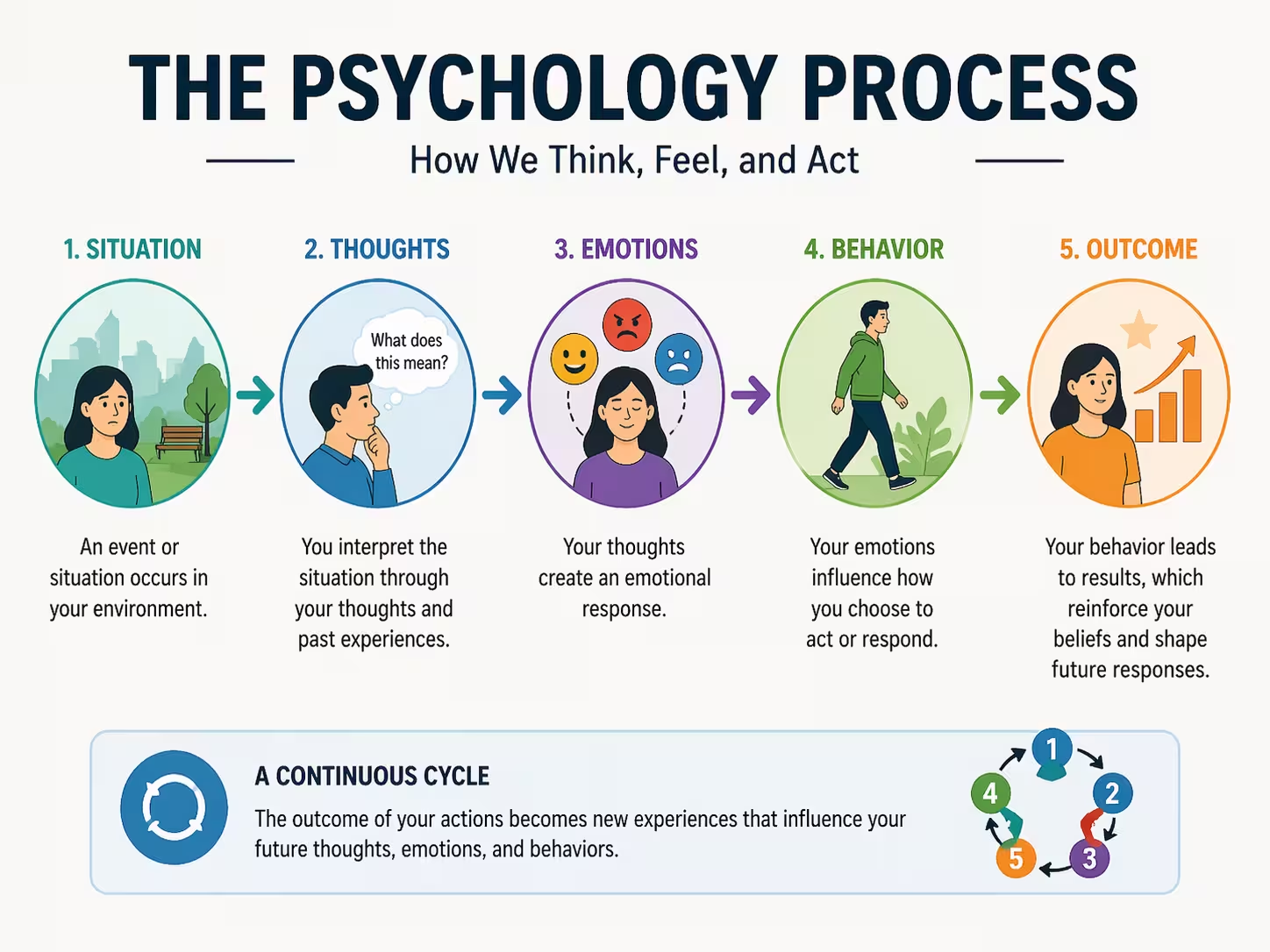
In education, understanding how memory, attention, and motivation work helps students learn more effectively and helps teachers design better lessons. Techniques like spaced repetition, retrieval practice, and interleaving are all grounded in cognitive psychology research.
In relationships, attachment theory and social psychology help people recognize patterns — why they respond to conflict the way they do, why they seek certain kinds of partners, and how communication styles affect intimacy and trust.
In the workplace, I/O psychology insights inform better hiring decisions, more effective leadership, and healthier team dynamics. Concepts like emotional intelligence (popularized by Daniel Goleman in 1995) have become central to professional development.
In personal well-being, cognitive-behavioral principles help individuals challenge destructive thought patterns, manage stress, build resilience, and work toward lasting behavior change.
Common Misconceptions About Psychology
Part of learning the psychology basics involves clearing up widespread misunderstandings.
Myth 1: Psychology is just common sense. In reality, many psychological findings directly contradict common intuitions. Most people assume they would refuse to harm others under authority — yet Milgram’s research showed the opposite. Psychology tests ideas rather than assuming them.
Myth 2: Psychologists can read minds. Psychologists use research, observation, and structured conversations to understand behavior—not supernatural insight. The field is grounded in science, not mysticism.
Myth 3: Only “troubled” people see psychologists. Therapy and psychological support are valuable for anyone seeking personal growth, skill-building, or help navigating life transitions—not just those in crisis.
Myth 4: Your personality is fixed. Research in developmental and personality psychology shows that character traits, habits, and even deep-seated beliefs can change meaningfully over time with the right environment and effort.
Conclusion
Psychology basics offer a window into one of the most complex subjects in existence: the human mind. From Wundt’s Leipzig laboratory in 1879 to today’s cutting-edge neuroscience, the field has grown from a philosophical curiosity into a rigorous, applied science that touches virtually every dimension of human life.
Whether you are drawn to understanding mental health, improving your relationships, performing better at work, or simply satisfying your curiosity about why people do what they do, a solid grounding in psychology basics is an investment that pays dividends for life.
The mind is not a mystery to be feared. It is a system to be understood — and with the right tools, that understanding is within everyone’s reach.
Frequently Asked Questions (FAQs)
This article is intended for informational and educational purposes. For personalized mental health support, please consult a licensed mental health professional.