
What Is Scopophobia? Fear of Being Stared At Explained
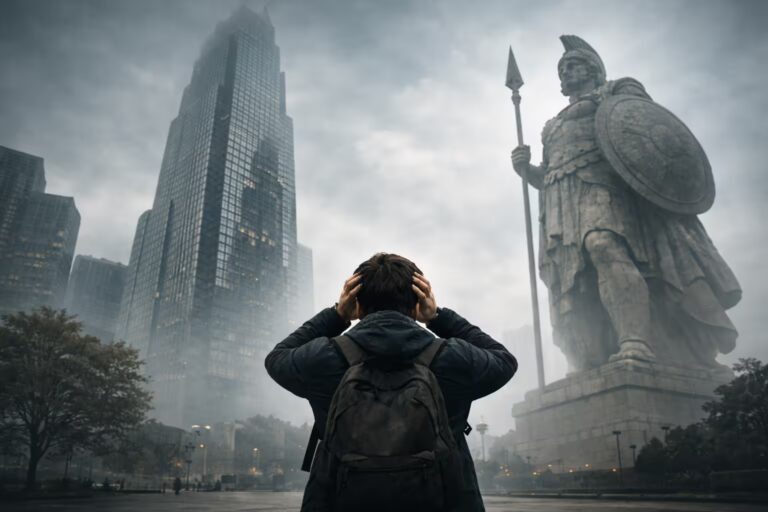
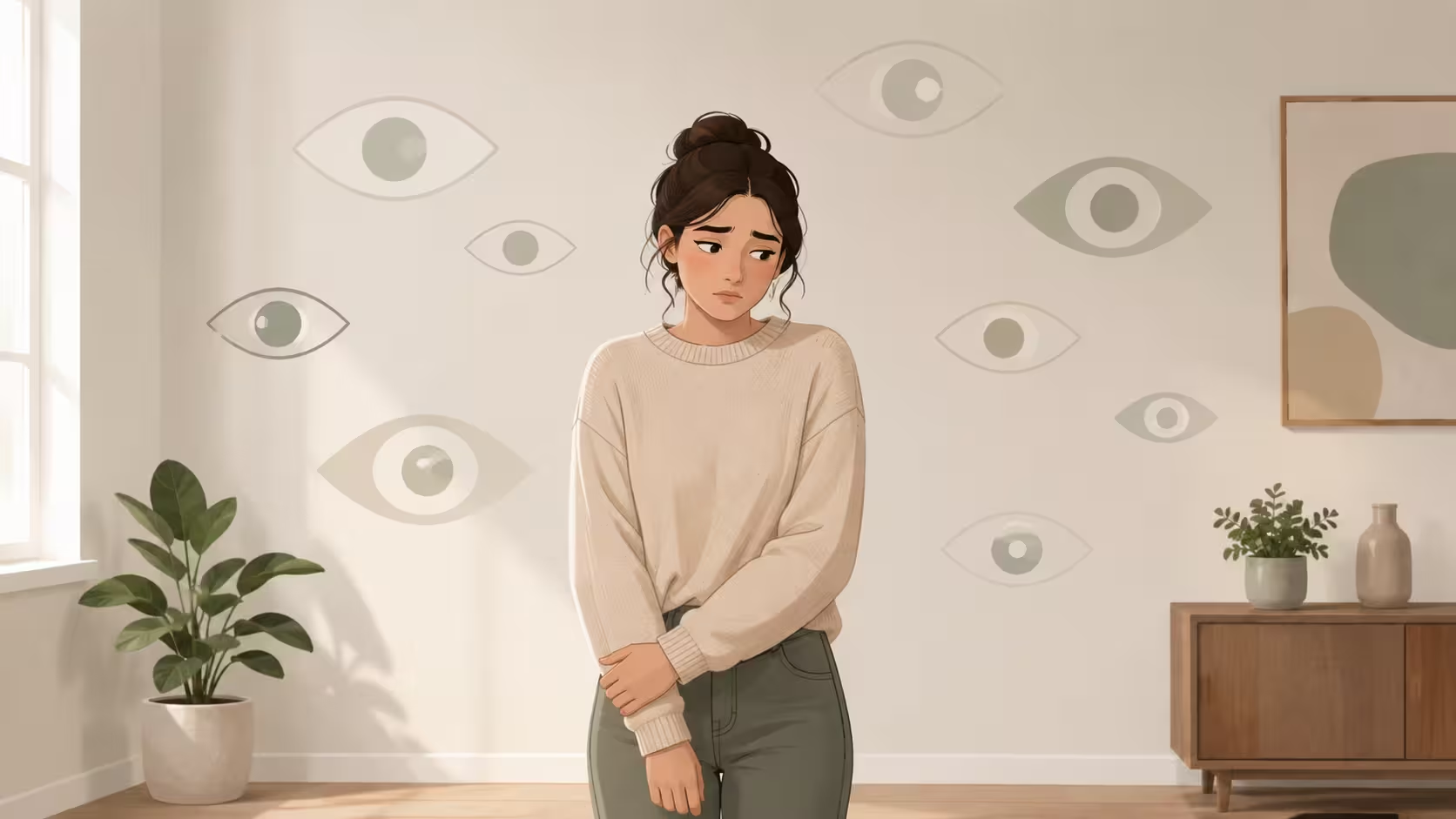
If walking into a room makes your chest feel tight because you think everyone is looking at you, the stress can feel heavy. Your face may get hot, your heart may race, and your mind may say, “They are watching me.” Although part of you may know people are not judging you, your body may still react like there is danger. This is why many people search “What is scopophobia?” when the fear of being watched, stared at, or noticed starts affecting daily life.
Scopophobia is more than simple shyness. It can affect school, work, meetings, relationships, public places, and even small moments like eye contact. From a stress and anxiety point of view, this fear often becomes stronger when the nervous system is already overwhelmed. In this guide, Ziwo Wellness Health explains what is scopophobia in simple words, including symptoms, causes, treatment options, coping steps, and when to seek professional support.
Key Takeaways
What Is Scopophobia?
What is scopophobia? Scopophobia is an intense fear of being seen, watched, stared at, or looked at by other people. It is also sometimes spelled scoptophobia.
A person with scopophobia may feel nervous when someone makes eye contact. They may avoid public places, classrooms, work meetings, restaurants, video calls, or social events. Often, the problem is not the place itself. Instead, the problem is the feeling of being noticed.
This fear can trigger the body’s stress response. The heart may beat faster. Muscles may feel tight. Breathing may become shallow. The person may feel a strong need to escape.
Scopophobia is not just being shy. Shyness can feel uncomfortable, but scopophobia can feel intense, stressful, and hard to control.
Example experience: “I knew people were probably not judging me, but my body still felt like everyone was watching.”
Where Does the Word “Scopophobia” Come From?
The word “scopophobia” comes from Greek roots. “Skopein” means to look, and “phobos” means fear.
So, the simple meaning of scopophobia is fear of being looked at, watched, or stared at. This helps answer what is scopophobia without using difficult medical language.
Scopophobia Meaning in Simple Words
In simple words, what is scopophobia? It means feeling scared, stressed, or panicked when you think people are looking at you.
This fear may happen when someone makes eye contact, when you walk into a room, when you speak in front of people, or when you stand in a line. It may also happen during video calls, public transport, school, work, shopping, or social events.
The fear may appear even when others are not actually judging you. However, the body may still react with tension, heat, panic, or the urge to leave.
That is what makes scopophobia confusing. The mind may understand there is no real danger, but the body may still feel unsafe.
Related Articles
Is Scopophobia a Real Mental Disorder?
Many people ask what is scopophobia because they want to know if their fear is real. The fear is real. A person can feel serious stress, panic, and distress when they feel watched or stared at.
However, scopophobia is not usually recognized as its own separate diagnosis in the DSM-5-TR. A licensed mental health professional may understand it as a specific phobia if the symptoms are strong, long-lasting, and interfere with daily life.
In some cases, the fear may overlap with social anxiety, trauma, OCD, body image concerns, panic symptoms, or paranoia. Because of this, self-diagnosis is not enough.
A professional evaluation can help you understand what is happening and what support may be best.

Diagnosis of Scopophobia
After learning what is scopophobia, diagnosis is the next important step. A licensed mental health professional may ask about your symptoms, triggers, avoidance habits, and how long the fear has affected your life.
They may ask if the fear affects your work, school, relationships, sleep, confidence, or daily routine. They may also ask about past bullying, public embarrassment, trauma, social anxiety, depression, OCD symptoms, panic attacks, or body image concerns.
A diagnosis is not about giving you a label. Instead, it helps explain why the fear is happening and what kind of support may help.

Signs and Symptoms of Scopophobia
Scopophobia symptoms can affect emotions, the body, and behavior. Symptoms may be mild for some people and more severe for others.
Emotional Symptoms
A person may feel fear, stress, panic, shame, embarrassment, self-consciousness, or fear of judgment.
They may also feel exposed, unsafe, watched, or trapped when someone looks at them. Sometimes the worry starts before the event even happens.
For example, someone may feel anxious hours before a meeting because they fear people will notice them.
Physical Symptoms
The body may react with a fast heartbeat, sweating, shaking, blushing, dry mouth, nausea, dizziness, shortness of breath, muscle tension, or an upset stomach.
These symptoms can feel scary. However, they are often part of the body’s stress response.
When the brain senses threat, the body prepares to protect itself. As a result, even a simple glance from another person may feel intense.
Behavioral Symptoms
A person may avoid eye contact, public speaking, photos, videos, eating in public, school events, work meetings, or social gatherings.
They may sit at the back of the room, hide their face, keep their head down, leave places quickly, or cancel plans.
At first, avoidance may feel helpful. However, over time, it can make the fear stronger because the brain does not get a chance to learn that the situation is safe.
Symptoms of Scopophobia in Daily Life
To understand what is scopophobia, it helps to see how it appears in daily life. The fear may show up in small moments that other people may not notice.
At school, a student may avoid raising a hand because attention feels unsafe. At work, someone may avoid presentations, video meetings, or casual conversations. During errands, a person may feel tense when talking to a cashier or walking past a group of people.
Social life can also become harder. Dating, eating out, going to the gym, attending family events, or standing in a line may feel stressful.
This fear can also affect sleep, focus, mood, and confidence. When the mind keeps asking, “Are they looking at me?” the body can stay tense for a long time.

Example experience: “The hardest part was not the place itself. It was the thought that people might notice me.”
Causes of Scopophobia
There is no single cause of scopophobia. Usually, it develops from a mix of stress, anxiety, past experiences, and learned fear.
Social Anxiety and Self-Consciousness
Scopophobia can overlap with social anxiety. Social anxiety involves fear of being judged, embarrassed, rejected, or negatively evaluated.
Because of this, being watched may feel like proof that judgment is coming. A person may worry that others are judging their face, body, voice, clothes, mistakes, or anxiety symptoms.
As a result, normal attention can feel threatening.
Traumatic or Embarrassing Experiences
Past painful events may also play a role. Someone may have been laughed at, bullied, criticized, recorded without consent, or embarrassed in public.
After that, the brain may connect being looked at with danger. Later, even normal attention may trigger fear.
Perfectionism and Fear of Mistakes
Perfectionism can make scopophobia worse. If someone feels they must always look calm, smart, attractive, or in control, being watched can feel risky.
Consequently, the person may avoid situations where others could notice a mistake.
Body Image Concerns
Some people fear that others will notice a perceived flaw in their face, skin, hair, weight, posture, or body.
This can make mirrors, photos, eye contact, and public places stressful. In this case, the fear is not only about being seen. It is also about what the person thinks others may notice.
Hyperawareness and Stress
Stress can make the brain scan for danger. When the nervous system is already overloaded, a simple glance may feel like a threat.
In addition, hyperawareness can make a person notice every face, eye movement, or small reaction. The more they scan, the more watched they may feel.
Scopophobia and Related Disorders
Scopophobia can look similar to other mental health concerns. However, each concern has a different main fear.
|
Condition or Concern |
Main Fear |
Simple Example |
|
Scopophobia |
Fear of being watched or stared at |
Feeling panic when someone looks at you |
|
Social anxiety |
Fear of judgment or embarrassment |
Avoiding meetings, interviews, or class answers |
|
Shyness |
Mild social discomfort |
Feeling nervous but still able to function |
|
Paranoia |
Belief that others are watching or targeting you |
Feeling watched even with little evidence |
|
Body image concerns |
Fear that others notice appearance flaws |
Avoiding mirrors, photos, or public places |
|
Erythrophobia |
Fear of blushing |
Worrying that others will notice a red face |
|
Fear of eye contact |
Fear of direct eye contact |
Looking away because eye contact feels intense |
|
OCD-style rumination |
Repeated unwanted thoughts |
Thinking “everyone is staring at me” again and again |
This table is for education only. It is not a diagnosis.
Scopophobia vs Social Anxiety
What is scopophobia compared with social anxiety? The main difference is focus.
Scopophobia focuses on being watched, stared at, seen, or noticed. Social anxiety is broader. It includes fear of being judged, embarrassed, rejected, or humiliated in social situations.
Both can happen together. For example, a person may fear eye contact because it feels like being watched. At the same time, they may fear that others will judge their voice, clothes, body, or behavior.
Because the two can overlap, a licensed mental health professional can help explain what is really going on.
Fear of Being Perceived
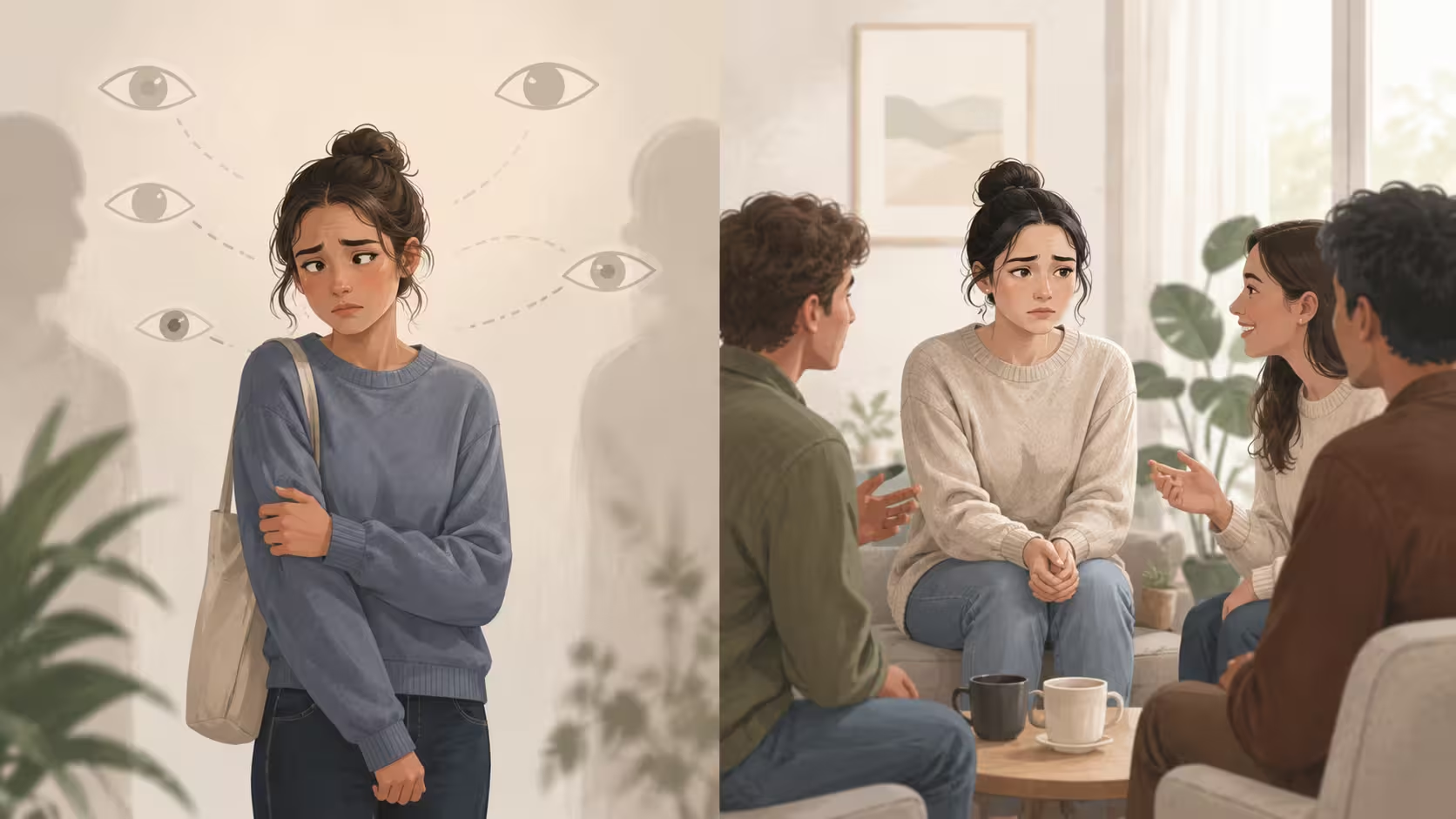
Many people who search “what is scopophobia” also use the phrase “fear of being perceived.” This means feeling uncomfortable when others notice you, observe you, or form opinions about you.
This fear may include fear of eye contact, fear of being judged, fear of people noticing anxiety, fear of being watched while doing normal things, or fear of being the center of attention.
In many cases, fear of being perceived is close to scopophobia. However, it may also come from stress, trauma, low self-esteem, body image concerns, social anxiety, or sensory overwhelm.
Therefore, the cause may be different for each person.
Why Do I Feel Like Everyone Is Staring at Me?
Stress and anxiety can make it feel like everyone is staring. When the body is stressed, the brain becomes more alert to possible danger.
Faces, eye contact, and small movements may stand out more than usual. For example, someone may glance at you for one second. Anxiety may turn that glance into, “They are judging me.”
This does not mean you are weak or dramatic. Instead, it may mean your stress system is working too hard.
Over time, learning to calm the nervous system can help reduce this feeling.
Scopophobia Self-Check
A self-check can support someone who searches for “What is scopophobia?” but it is not a diagnosis. Still, it can help you notice patterns.
Support may be helpful if you often avoid eye contact because it feels stressful, feel panic when people look at you, avoid public places because you feel watched, or worry that people are judging your face, body, voice, clothing, or behavior.
It may also be time to seek help if you cancel plans, avoid school or work, skip video calls, avoid photos, or feel tense for hours after social situations.
If several signs feel familiar, a licensed mental health professional can help you understand what is happening.
Treatment for Scopophobia
What is scopophobia treatment like? Treatment depends on the person, the cause, and how much the fear affects life.
Common options may include therapy, gradual exposure, stress management, coping skills, and sometimes medication from a qualified provider.

Psychotherapy is often the main treatment for phobias. Medication is not the first step for everyone. However, a provider may consider it when anxiety symptoms are strong or linked with another condition.
Cognitive Behavioral Therapy
Cognitive behavioral therapy, often called CBT, can help people notice and question fear-based thoughts.
For example, the thought “Everyone is looking at me” may become “Some people may glance at me, but that does not always mean judgment.”
As thinking becomes more balanced, situations may feel less dangerous.
Exposure Therapy
Exposure therapy helps a person face feared situations in a slow and safe way. The goal is not to force the person. The goal is to build confidence step by step.
According to the National Institute of Mental Health, exposure therapy for phobias is a CBT method that can help people confront fears they have been avoiding.
A person may start with small steps. First, they may imagine eye contact. Next, they may practice brief eye contact with someone safe. Later, they may enter a public place for a short time.
Stress Management
Because stress can make scopophobia stronger, stress management is important.
Helpful skills may include slow breathing, mindfulness, journaling, gentle movement, relaxation exercises, better sleep habits, and healthy routines.
These tools do not replace therapy. Even so, they may support daily coping.
Support Groups and ACT
Some people may also benefit from support groups or acceptance and commitment therapy, also called ACT.
Support groups may reduce shame because people learn they are not alone. ACT may help people notice anxious thoughts without letting those thoughts control every action.
Coping With Scopophobia
Coping skills can help in the moment. They can also support long-term progress.
Find Ways to Relax
Start with the body. Take one slow breath. Relax your jaw and shoulders. Place both feet on the floor.
Then remind yourself, “A glance does not always mean judgment.”
Face Your Fears Slowly
Avoidance gives short-term relief. However, it can make fear stronger over time.
Start small. Look near someone’s face instead of directly into their eyes. Then practice brief eye contact with a safe person. Later, try staying in a public place for one extra minute.
Small steps still count.
Care for Yourself
The nervous system works better when the body has basic care.
Sleep, regular meals, movement, hydration, and less caffeine may help some people feel less reactive.
Also, speak to yourself with respect. Fear is not a character flaw. It is a sign that your mind and body need support.
Long-Term Coping Strategies
Long-term improvement often comes from repeated small steps.
Track your triggers in a journal. Write down fear thoughts. Notice what makes symptoms better or worse.
Next, build a small practice plan. This may include eye contact practice, short social visits, breathing exercises, and reducing safety habits slowly.
Finally, get support when fear blocks your life. A therapist can help you build a plan that feels safe, realistic, and personal.
When to Seek Professional Help
Professional help is important when fear affects daily life.
Consider speaking with a licensed therapist, psychologist, psychiatrist, or other qualified mental health provider if you avoid normal tasks, feel panic often, feel isolated, cannot attend school or work comfortably, or feel watched even when there is no clear reason.
Also seek support if you feel depressed, hopeless, unsafe, or unable to cope. If there is any risk of self-harm, contact emergency services or a crisis line in your area right away.
Getting help is not weakness. Rather, it is a practical step toward understanding your stress response and choosing better tools.
Conclusion
After learning what is scopophobia, the most important point is this: living with scopophobia can feel lonely, especially when other people do not understand why being looked at feels so stressful. Many people try to hide it by avoiding eye contact, staying quiet, sitting at the back of the room, or canceling plans. But avoidance often gives only short-term relief. Over time, it can make the fear feel bigger and harder to manage.
At Ziwo Wellness Health, we believe that understanding your stress response is an important first step toward feeling better. Scopophobia does not mean you are weak, strange, or broken. It means your mind and body may need support, safety, and the right coping tools. If fear of being watched or judged is affecting your daily life, speaking with a licensed mental health professional can help you understand the cause and choose the right next step.
Frequently Asked Questions
What is scopophobia?
Scopophobia is the intense fear of being watched, stared at, or looked at by other people. It can cause stress, panic, and avoidance.
What is the fear of being stared at called?
The fear of being stared at is called scopophobia. It is also sometimes spelled scoptophobia.
Is scopophobia the same as social anxiety?
No. Scopophobia mainly means fear of being watched or stared at. Social anxiety is broader. It includes fear of judgment, embarrassment, rejection, or humiliation in social situations.
What causes scopophobia?
Possible causes include social anxiety, bullying, public embarrassment, trauma, perfectionism, body image concerns, high stress, hyperawareness, or past negative experiences.
How is scopophobia treated?
Treatment may include CBT, exposure therapy, stress management, relaxation skills, and sometimes medication from a qualified provider. A licensed professional can help choose the right plan.
Medical Disclaimer
This article is for information only. It is not a diagnosis or medical advice. If fear, stress, or anxiety affects your daily life, speak with a licensed mental health professional.