

How to Overcome the Fear of Heights: Strategies for Conquering Acrophobia
Fear of heights affects millions and can transform ordinary situations into intense anxiety triggers. Some people feel uneasy on a ladder or balcony; others avoid bridges, tall buildings, or even think about high places with dread. In this complete guide, we’ll break down what fear of heights is, the difference between normal caution and phobia of heights, the causes, real symptoms, and actionable strategies for overcoming it — including how to get over your fear of heights naturally and therapeutically.
What Is Fear of Heights (Acrophobia)?
Fear of heights — medically called acrophobia — is more than just feeling nervous when you look down from a tall place. It’s a specific phobia marked by intense, irrational fear in height‑related situations. People with acrophobia may experience anxiety even when they are safely on a balcony, climbing stairs, crossing a bridge, or simply thinking about a high place.
While a basic fear of falling is a common biological survival response, acrophobia goes beyond instinctive caution. In clinical terms, a person may have a phobia of heights if the fear persists over time, disrupts life, and leads to avoidance behaviors. This fear triggers panic responses that are disproportionate to actual danger.
Some people describe it simply as being scared of heights, but acrophobia represents the intense, persistent form of that fear — one that can affect daily life and choices.
Natural Fear vs. Phobia
Feeling uneasy at heights is normal. Most people get butterflies when standing on a tall observation deck or crossing a high bridge. That’s a healthy fear of falling — an adaptive trait that once protected early humans from dangerous falls.
In contrast, someone with a fear of heights phobia may:
- Avoid elevators, staircases, tall buildings, or bridges entirely
- Feel panic from merely imagining heights
- Experience intense physiological reactions such as shaking, fast heartbeat, dizziness, nausea, or shortness of breath
- Change routines or decisions to avoid height situations
Understanding this difference — between normal caution and debilitating phobia — is foundational in addressing the condition.
Why Are People Afraid of Heights?
There’s no single cause of scared of heights. Experts believe acrophobia arises from a combination of biological, psychological, and environmental factors:
Evolutionary Origins
Humans developed a natural sensitivity to heights as a survival mechanism. Remaining cautious at the edge of cliffs or high places reduced the risk of falls. For some people, this instinct becomes exaggerated into a phobia.
Traumatic Experiences
A frightening event — like falling from a height, slipping on stairs, or witnessing someone else fall — may imprint a lasting association between heights and danger.
Learned Responses
Children may learn to fear heights from caregivers who show intense fear or avoidance. Negative stories, repeated warnings (“don’t go up there!”), or media portrayals of falls can reinforce fear.
Anxiety Sensitivity & Genetics
Some individuals are naturally more sensitive to anxiety. If anxiety disorders run in the family, there’s a higher chance of developing intense fears, including scared of heights.
What Does Fear of Heights Feel Like?
Fear of heights presents in three overlapping ways: psychological, physical, and behavioral. Here’s how sufferers typically experience it:
Psychological and Emotional Signs
- Persistent worry or dread about heights
- Feeling overwhelmed just thinking about high places
- Fear of losing control or falling
- Avoidance thoughts that dominate decision‑making
Physical Symptoms
- Heart palpitations and rapid heartbeat
- Dizziness or lightheadedness
- Sweating, trembling, or shaking
- Shortness of breath or a feeling of choking
- Nausea or stomach discomfort
- Muscle tension and chills
Behavioral Responses
- Avoiding stairs, balconies, bridges, or rooftops
- Refusing to travel to places involving heights
- Taking long detours to stay on lower ground
- Relying on others to navigate high situations
If these responses occur regularly for six months or more, and interfere with life, work, or social situations, professionals may diagnose acrophobia.
Articles you also want to read:
- Phobia of the Ocean: Understanding Thalassophobia
- Fear of Big Things: Causes, Symptoms, & Coping
- What Is a Covert Narcissist? Hidden Signs and Emotional Abuse
Common Situations That Trigger Fear of Heights
People with fear of heights can react differently depending on the trigger. Some common anxiety‑provoking situations include:
- Climbing ladders or tall staircases
- Walking on elevated walkways or observation decks
- Being on a bridge or overpass
- Looking down from balconies, rooftops, or window ledges
- Crossing tall structures like skyscraper skywalks
- Boarding elevators, especially glass ones
- Hiking along steep trails or cliffs
- Riding on amusement park rides with height elements
Even the thought of these situations can cause intense anxiety for some.
Acrophobia vs. Visual Height Intolerance vs. Vertigo
The fear of heights is medically referred to as acrophobia, which is a specific type of anxiety disorder. Acrophobia can be diagnosed when the individual experiences persistent and irrational fear or anxiety when in situations involving heights. Diagnosis is typically carried out by a mental health professional through an in-depth assessment. It’s essential to distinguish between related experiences:
- Visual height intolerance: Anxiety from seeing heights, without full phobic reaction
- Vertigo: Sensation of spinning or imbalance, often linked to inner‑ear issues
- Acrophobia: Irrational fear that includes emotional, physical, and behavioral responses
Someone can be uneasy around heights without having acrophobia. However, when fear becomes extreme, persistent, and limiting, it crosses into phobia territory.
How Is Fear of Heights Diagnosed?
A mental health professional diagnoses acrophobia by:
- Reviewing the duration and intensity of fear
- Assessing how it impacts daily life and functioning
- Observing whether avoidance behaviors are disrupting routines
- Asking about physical and emotional responses in height situations
A thorough evaluation helps distinguish fear of heights from other related conditions or anxiety disorders.
How to Get Over Fear of Heights
There’s no one “quick fix” for acrophobia, but many effective treatments help people regain confidence and reduce fear responses over time:
1. Exposure Therapy
This is the most widely recommended method. It involves gradually exposing someone to height‑related situations in a controlled way. Starting with low anxiety situations (like standing on a step), and progressing slowly to more challenging heights, repeated exposure teaches the brain that fear can be managed and that catastrophic outcomes rarely occur.
2. Cognitive Behavioral Therapy (CBT)
CBT helps individuals identify and challenge negative thoughts about heights. By reframing thoughts from “I will fall” to more balanced perspectives, anxiety response decreases.
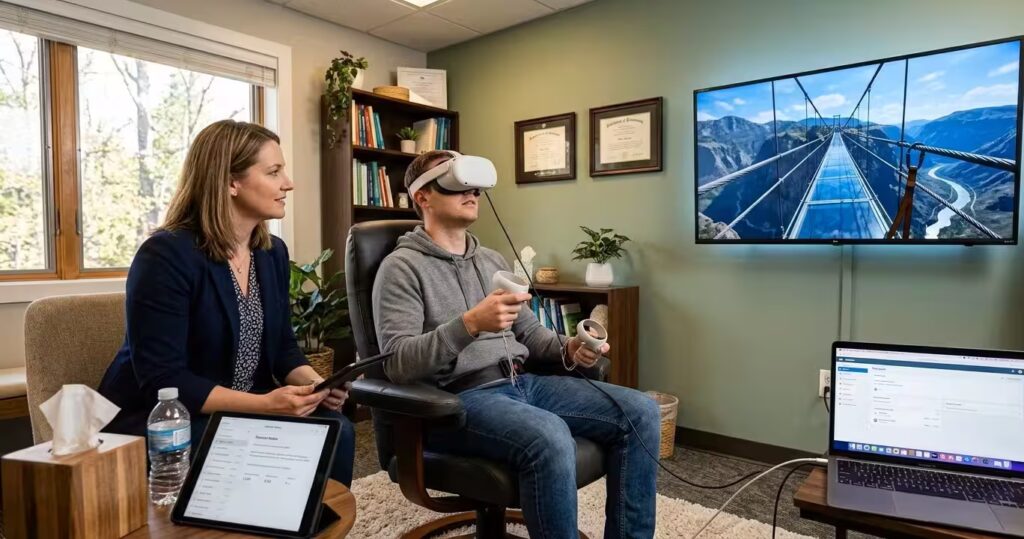
3. Virtual Reality Exposure Therapy
Using VR, people can experience simulated height situations safely. VR therapy allows controlled, repeatable exposures that feel real but pose no danger — making it a powerful tool for overcoming fear of heights fast.
4. Medication (When Appropriate)
Medication isn’t the primary solution, but in some cases, doctors may prescribe anti‑anxiety medications or beta‑blockers to help manage acute symptoms, especially during early therapy.
Natural Remedies & Self‑Help Strategies
Alongside professional treatments, some complementary approaches can support fear reduction:
- Deep breathing exercises
- Mindfulness and meditation
- Progressive muscle relaxation
- Visualization techniques (imagining calm, safe elevation)
- Regular physical exercise to reduce general anxiety
- Building a gradual hierarchy of height‑related exposures
These methods aren’t replacements for therapy, but they strengthen coping skills and reduce physiological arousal fast.

Practical Tips for Facing Heights
When you’re confronted with a height situation:
- Ground yourself with breath: Slow, steady breathing reduces panic
- Focus outward, not downward: Fix your gaze on stable surroundings
- Break tasks down: One step at a time reduces overwhelm
- Use positive self‑talk: Remind yourself of safety and past successes
- Bring support: A trusted person can make confronting heights less intimidating
With repetition and patience, what once felt impossible becomes manageable.
Overcoming Fear of Heights: Personal Stories & Motivation
Many people once terrified of heights now hike scenic trails, work on tall buildings, or enjoy rooftop views. Their progress didn’t happen overnight, but through consistent, structured efforts, they learned to tolerate and even enjoy height‑related experiences. Progress looks different for everyone, and small wins matter.

When Fear of Heights Interferes with Life
If fear of heights stops you from traveling, affects job opportunities, prevents social activities, or makes daily tasks difficult, it’s time to act. Phobias don’t have to limit your life, and early intervention increases the chances of significant improvement.
What Is the Best Way to Conquer the Fear of Heights?
Conquering the fear of heights is a gradual process that takes time, patience, and persistence. The best approach involves comprehensive treatment plans that combine psychological interventions with self-help techniques to address both the mental and physical aspects of acrophobia.
- Start Small: Begin with low-height scenarios, such as standing on a short stool, and gradually work your way up to more challenging heights.
- Practice Mindfulness: Mindfulness meditation and breathing exercises can help ground you and prevent panic attacks when facing heights.
- Enlist Support: Having a trusted friend or family member present during exposure can make the process feel safer and more manageable.
By committing to these techniques and maintaining consistency, the fear of heights can be significantly reduced, allowing individuals to live a fuller, less restricted life.
For more information on how mental health impacts daily life, check out our article on behavioral health and its role in overcoming phobias.
Frequently Asked Questions
Final Thoughts
The fear of heights, or acrophobia, can feel like a barrier that limits personal freedom and restricts daily activities. Whether it’s avoiding high places or feeling paralyzed by the thought of being elevated, the impact of this phobia is far-reaching. However, it’s important to remember that acrophobia is treatable, and with the right strategies, individuals can regain control over their fear.
By understanding what acrophobia is, recognizing its triggers, and applying scientifically-backed treatments like exposure therapy, cognitive behavioral therapy (CBT), and relaxation techniques, people can gradually diminish the overwhelming sensations tied to heights. Moreover, supplementing these professional therapies with natural remedies, such as deep breathing exercises, can provide further support in managing anxiety.
The journey to overcoming the phobia of heights won’t always be immediate, but with commitment, it’s entirely achievable. Small, consistent steps—whether through gradual exposure or changing negative thought patterns—can lead to profound transformation. Importantly, by addressing the phobia of heights head-on, individuals can open up a world of new experiences, free from the constraints of their fears.
Remember, no matter how deep-rooted the fear may seem, acrophobia is a condition you don’t have to live with forever. By seeking the right guidance and maintaining an ongoing commitment to personal growth, it’s possible to conquer your fear of heights and lead a life with fewer limitations. Take control today, and start living beyond your fears.