

What Is the Fear of Bees Called? Apiphobia: Meaning, Symptoms, and How to Cope
What is the fear of bees called? The fear of bees is most often called apiphobia or melissophobia. It can feel like more than simple dislike. A person may freeze, panic, run away, avoid parks, or feel anxious before an outdoor event even starts.
That fear can shrink daily life. It may keep someone away from gardens, picnics, hiking trails, school trips, or family cookouts. However, the fear can become easier to manage with clear facts, calm coping skills, and support from a trained mental health professional when symptoms disrupt life.
Quick Answer Table
|
Question |
Clear Answer |
|---|---|
|
What is the fear of bees called? |
The fear of bees is called apiphobia or melissophobia. |
|
Is bee fear always a phobia? |
No. Mild fear is normal, but strong panic, avoidance, and daily-life disruption may be a specific phobia. |
|
What triggers bee phobia? |
Common triggers include buzzing sounds, seeing bees near flowers, fear of stings, past sting memories, or allergy worries. |
|
Main symptoms |
Racing heart, sweating, trembling, panic, shortness of breath, nausea, crying, freezing, or avoiding outdoor places. |
|
Is apiphobia treatable? |
Yes. CBT, gradual exposure therapy, education, and calming skills can help reduce fear over time. |
|
When to seek help |
Seek support if bee fear causes panic attacks, outdoor avoidance, missed activities, or constant worry. |
|
Important safety note |
If someone has a bee sting allergy, they should follow medical advice and have an emergency plan. |
Quick Answer: What Is the Fear of Bees Called?
What is the fear of bees called in simple terms? It is called apiphobia, apiophobia, or melissophobia. These words describe a strong fear of bees. When the fear is intense, hard to control, and affects normal activities, it may fit the pattern of a specific phobia.
Apiphobia comes from “api,” which relates to bees. Melissophobia comes from a Greek word linked to honeybees. Both terms are used online, although “apiphobia” is common in mental health content. A quick way to remember what the fear of bees is called is this: “api” means “bee,” and “phobia” means “fear.” Still, many people simply say “bee phobia” because it is easier to understand.
A mild fear of bees is common. After all, bee stings can hurt. Yet a phobia is different. It causes a fear response that is much stronger than the actual risk in the moment. For example, seeing one bee near a flower may cause a racing heart, shaking, chest tightness, or a strong need to escape.
Fear of Bees vs. Bee Phobia: What Is the Difference?
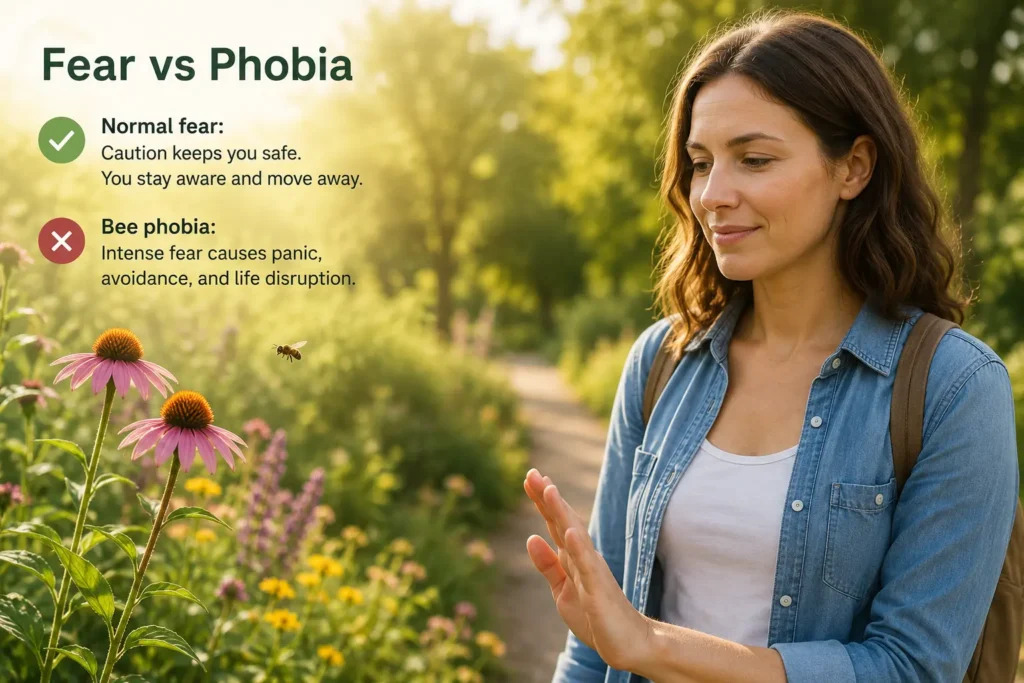
Many people search, “What is the fear of bees called?” because they want to know whether their reaction is normal. The answer depends on intensity, control, and impact.
A normal fear means a person stays careful around bees. They may move away slowly, avoid touching a hive, or cover sweet drinks outside. This response is protective. In contrast, a phobia may cause panic even when a bee is not close enough to be a real threat.
A person with a bee phobia may avoid outdoor plans for weeks. They may check windows again and again. They may refuse to walk past flowers. Moreover, they may know the fear is too strong but still feel unable to stop it. That loss of control is often the key difference.
Apiphobia, Melissophobia, and Entomophobia
What is the fear of bees called if someone is scared of all insects too? The bee-specific fear is called “apiphobia” or “melissophobia.” A wider fear of insects is called entomophobia.
These fears can overlap. For instance, a person may fear bees, wasps, hornets, flies, and beetles. However, the trigger may still be strongest with bees because of the fear of being stung. In some cases, the fear is not really about the bee itself. Instead, it is about pain, allergies, loss of control, or a past memory.
This distinction matters because treatment works best when the true trigger is clear. Therefore, a therapist may ask whether the person fears buzzing sounds, flying insects, stingers, swarms, allergic reactions, or fear of being trapped near bees.
Why Are People Afraid of Bees?
What is the fear of bees called? is only the first question. The next question is why it happens. Bee fear can come from several places.
Some people remember a painful sting from childhood. Others watched a parent panic around bees. In addition, scary movies, news stories, or viral videos can make bees seem more aggressive than they usually are. Misinformation also plays a role because bees, wasps, and hornets are often mixed together in people’s minds.
Past experience is not always required. A person may develop fear after hearing about allergic reactions or seeing someone else get stung. Also, people with a naturally anxious temperament may be more sensitive to sudden buzzing, fast movement, or unpredictable insects.
Common Triggers for Bee Fear
Bee fear often has clear triggers. Knowing them can make the fear easier to understand.
Common triggers include:
- Seeing a bee land nearby
- Hearing buzzing near the ear
- Walking near flowers or fruit trees
- Drinking soda or juice outside
- Seeing a hive, swarm, or nest
- Watching a bee enter the house
- Remembering a past sting
- Thinking about allergic reactions
As a result, the person may start avoiding more and more places. At first, they may avoid gardens. Then, they may avoid parks. Later, they may avoid any outdoor meal. This avoidance can bring short-term relief, but over time it can make the fear stronger.
Symptoms of Apiphobia
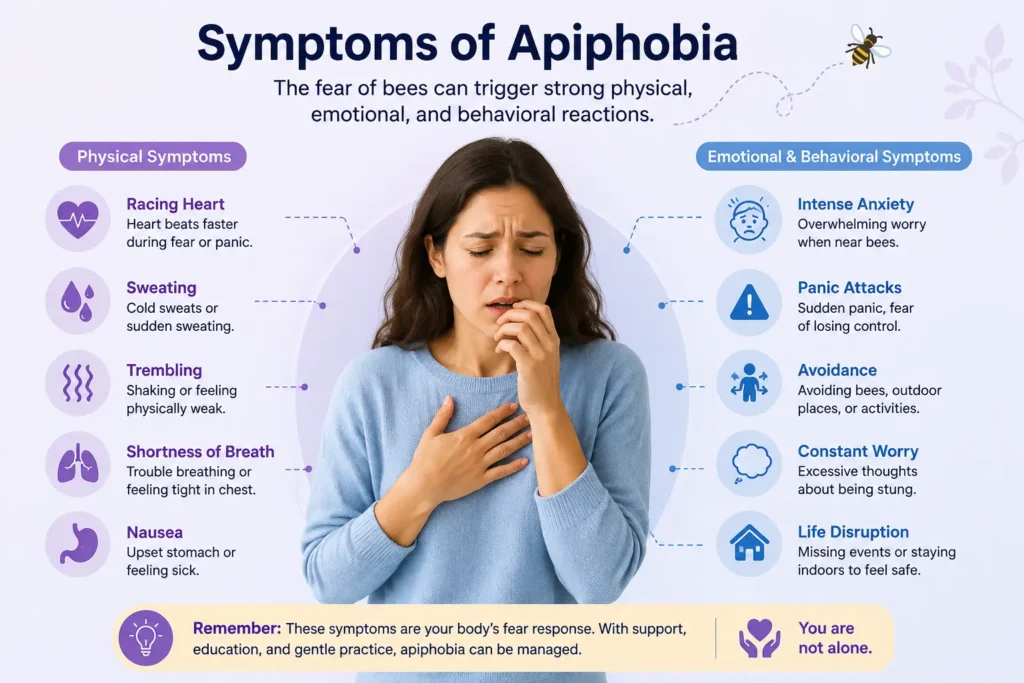
People asking what the fear of bees is called often recognize symptoms before they know the name. Symptoms can be physical, emotional, and behavioral.
Physical symptoms may include a fast heartbeat, sweating, trembling, nausea, dizziness, shortness of breath, tight chest, or a dry mouth. Emotional symptoms may include dread, panic, embarrassment, helplessness, or fear of losing control. Behavioral symptoms may include running, swatting, crying, freezing, hiding indoors, or refusing outdoor plans.
Children may show symptoms differently. They may cling to a parent, cry, scream, throw a tantrum, or refuse to go outside. Therefore, adults should respond with patience rather than shame. Fear is easier to work through when a child feels safe and understood.
When Is Fear of Bees a Mental Health Concern?
A fear becomes a concern when it disrupts daily life. For example, missing school events, avoiding work tasks, canceling social plans, or feeling panic during normal outdoor activities can signal a deeper issue.
It may also be a concern if the fear lasts for months, causes strong distress, or leads to major avoidance. Additionally, a person may need support if they spend a lot of time scanning for bees, checking doors, or worrying before leaving home.
The National Institute of Mental Health reports that specific phobia affects many people in the United States during their lives, so this problem is not rare. The encouraging part is that specific phobias can often improve with the right approach, especially when care begins early. See the NIMH overview of specific phobia for broader context.
Bee Sting Allergy vs Apiphobia
What is the fear of bees called if someone has a real bee sting allergy? In that case, the fear may be partly realistic. A person with a serious allergy has a valid medical reason to be cautious.
Apiphobia usually means the fear is stronger than the danger in the moment. However, allergy risk changes the picture. People with a known allergy should speak with a healthcare provider about an emergency plan. They may need to carry prescribed epinephrine and know when to seek urgent help.
This point is important for safe content. Mental health support can help reduce panic, but it should not replace allergy care. If a sting causes trouble breathing, swelling of the lips or throat, faintness, or widespread hives, emergency medical help is needed right away.
Are Bees Usually Aggressive?
Bees are often less aggressive than people think. Most bees are focused on flowers, nectar, pollen, water, and protecting their colony. They are more likely to sting if they feel threatened, trapped, stepped on, or grabbed or if their hive is disturbed.
However, fear can make a person move in ways that increase risk. Swatting, screaming, or sudden running may make the situation feel more chaotic. Therefore, calm movement matters. If a bee comes near, it is usually better to stay still, breathe slowly, and move away without striking at it.
This does not mean every bee situation is safe. A hive, swarm, or repeated bee activity near a home should be handled carefully. In that case, contact a local beekeeper, pest professional, or property expert rather than trying to remove it alone.
Can Bees Sense Fear?
Many people wonder if bees can sense fear. Bees do not understand human fear the way another person might. Still, they can respond to movement, vibration, scent, and threats around the hive.
In practical terms, fear behaviors matter more than fear itself. Quick arm movements, swatting, and loud panic can increase the chance of a defensive reaction. So, the goal is not to “hide” fear. Instead, the goal is to practice calmer body actions when a bee is nearby.
How Mental Health Professionals Diagnose Bee Phobia
A mental health professional does not diagnose apiphobia with a blood test or scan. Instead, diagnosis usually starts with a conversation. The clinician may ask about symptoms, triggers, avoidance, past experiences, medical history, and how long the fear has been present.
The provider may also consider whether another issue is involved. For example, panic disorder, trauma history, obsessive checking, or health anxiety can sometimes look similar. Because of this, a proper evaluation can help match the person with the right care.
At Ziwo Wellness Health, mental health education focuses on clear, respectful information. A label should never be used to shame someone. Rather, it should help them understand what is happening and know when support may help.
Treatment Options for Fear of Bees
What is the fear of bees called in treatment settings? It is usually treated as an animal-type-specific phobia when it causes major distress or avoidance.
The most common therapy approach is cognitive behavioral therapy, often called CBT. CBT helps a person notice fearful thoughts, test them more carefully, and build new responses. For example, “Every bee will sting me” can become “A bee may sting if threatened, but most bees near flowers are not chasing me.”
Exposure therapy is another key approach. It uses small, planned steps to help the nervous system learn that the feared object is not always dangerous. This is not forced exposure. Instead, it should be gradual, safe, and guided by a trained professional when fear is severe.
In some cases, medication may help with anxiety symptoms. However, medicine is not usually the main long-term treatment for a specific phobia. A licensed provider can explain the safest options based on the person’s health needs.
A Gentle Fear Ladder for Bee Anxiety
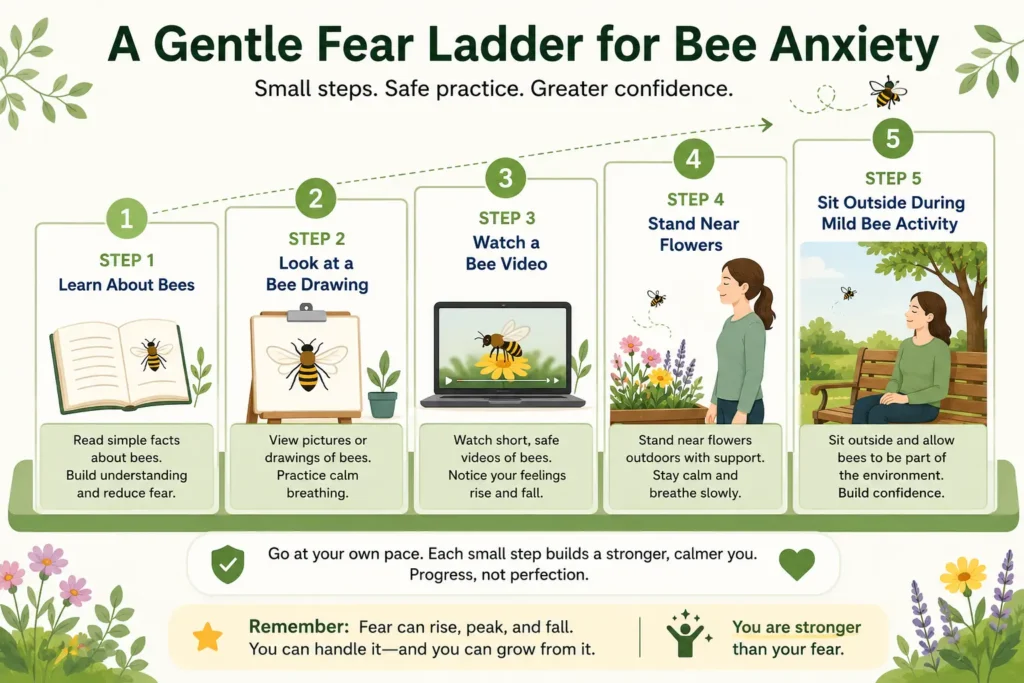
A fear ladder is a step-by-step plan. Each step is small enough to practice but strong enough to build confidence. This kind of plan should be adjusted for the person.
The goal is not to love bees overnight. Instead, the goal is to teach the body that fear can rise, peak, and fall without escape every time.
Safe Coping Tips When a Bee Is Nearby
What is the fear of bees called when it happens in the moment? The name is less important than the response. A calm plan can help.
First, pause and breathe out slowly. Next, keep arms close to the body. Then, avoid swatting. After that, step away at a steady pace. If food or a sweet drink is attracting the bee, cover it or move away from it.
It can also help to use a grounding phrase. For example, “This is fear. I can move slowly.” Another helpful phrase is “A bee nearby is not the same as a bee attacking.” These short statements can interrupt panic and bring attention back to the present.
How to Help a Child Who Fears Bees
Children need calm modeling. If an adult panics, the child may learn that bees always mean danger. However, if an adult stays steady, the child can copy that response.
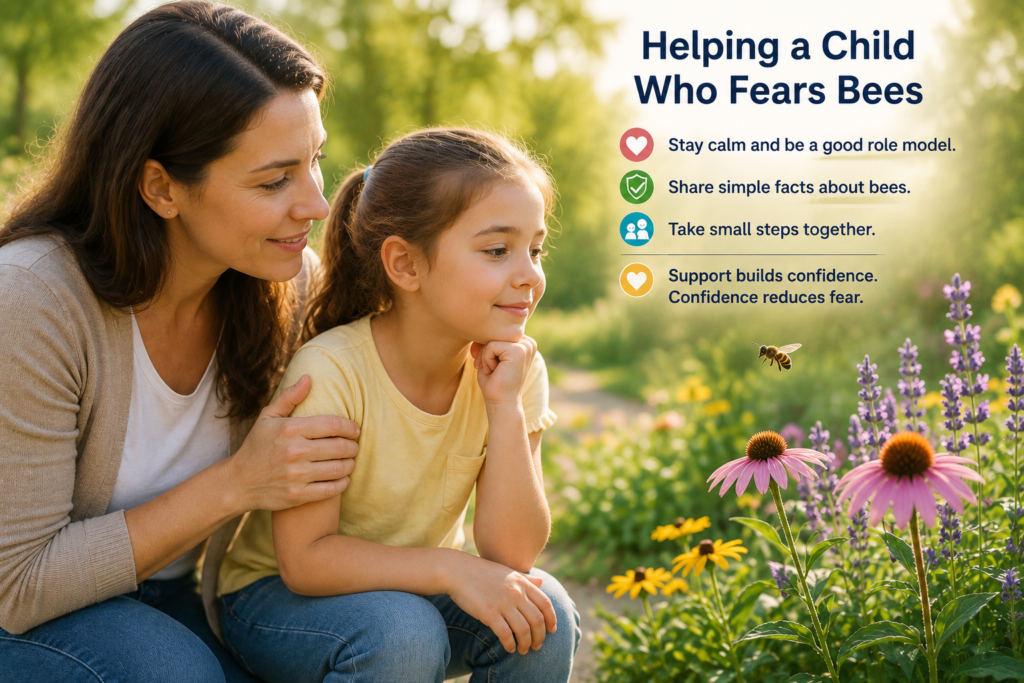
Start with simple facts. Explain that bees help flowers and food grow. Also explain that bees need space. Avoid teasing the child or forcing them to stand close to bees. Instead, praise small brave steps, such as looking at a picture or walking calmly past flowers.
If the fear stops the child from going to school events, playing outside, or sleeping well, it may be time to speak with a pediatrician or child mental health professional.
What Not to Do Around Bees
Some habits can make bee encounters worse. Do not swat at bees. Do not throw objects at a hive. Do not spray a hive without proper guidance. Do not block a hive entrance. Also, do not wear strong floral perfume or leave sweet drinks uncovered when eating outside.
Bright floral patterns, open soda cans, ripe fruit, and uncovered desserts can attract insects. Therefore, simple prevention can reduce stressful encounters. Wear shoes outside, keep trash covered, and check outdoor cups before drinking.
Myths About Bee Fear
Myth one: “Only weak people have phobias.” This is false. Phobias are fear responses, not character flaws.
Myth two: “A person should just get over it.” This is also false. Pressure can increase shame and avoidance. Gradual support works better.
Myth three: “All bees are looking to sting.” Most bees are not focused on people. They usually sting to defend themselves or the colony.
Myth four: “Avoiding bees forever is the safest plan.” Avoidance may feel safe today, but it can make tomorrow harder. Small, safe practice is often more helpful.
When to Seek Professional Help
Consider professional support if fear of bees causes panic attacks, daily worry, major avoidance, family conflict, missed activities, or strong distress. Also seek help if the fear connects to trauma, OCD-like checking, or intense health anxiety.
A healthcare provider can also help if the fear is tied to allergy concerns. This matters because allergy safety and phobia treatment are different needs. Sometimes a person needs both an allergy plan and anxiety support.
Seeking help is not a sign of failure. On the contrary, it can be the first step toward getting outdoor life back.
Summary
What is the fear of bees called? The most common names are apiphobia and melissophobia. It is a strong fear of bees that may become a specific phobia when it causes panic, avoidance, and daily-life disruption.
If the fear includes all insects, that broader fear is often called entomophobia. What is the fear of bees called if it is linked to a serious allergy? It may not be a phobia at all. In that situation, the fear may be a realistic safety concern that needs medical planning.
The best next step depends on the person. Mild fear may improve with education and calm practice. Severe fear may need CBT, exposure therapy, and professional support.
Frequently Asked Questions
What is the fear of bees called?
What is the fear of bees called? It is called apiphobia, apiophobia, or melissophobia. These terms describe a strong fear of bees. If the fear affects daily life, it may be a specific phobia.
Is apiphobia the same as melissophobia?
Yes, the terms are often used for the same fear. Apiphobia and melissophobia both refer to fear of bees. Apiphobia is common in modern mental health writing, while melissophobia is also widely recognized.
Can fear of bees be treated?
Yes. Fear of bees can often improve with therapy, especially CBT and gradual exposure therapy. Relaxation skills, education about bees, and small outdoor steps can also help. Severe symptoms should be discussed with a licensed mental health professional.
Is fear of bees normal if I am allergic?
Yes, caution is normal if a bee sting could cause a serious allergic reaction. In that case, speak with a healthcare provider about an emergency plan. Allergy-related safety planning is different from treating an irrational phobia.
Conclusion
What is the fear of bees called? The answer is apiphobia or melissophobia. Yet the name is only the starting point. The real goal is understanding why the fear happens, how it affects life, and what steps can help a person feel safer and more in control.
Bee fear can be painful, embarrassing, and limiting. However, it does not have to control every outdoor choice. With clear information, safe habits, gradual practice, and professional care when needed, many people can reduce panic and rebuild confidence around normal outdoor spaces.