
Problem-Focused Coping: What It Is, Real Examples, and Strategies That Work
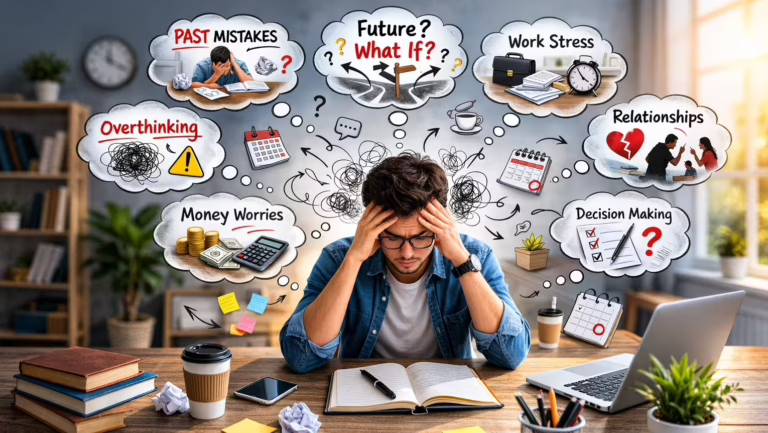
Stress has a way of piling up. One day it’s a tense email from your boss. Next, it’s a bill you can’t quite cover or an argument with someone you love that won’t seem to end. You try to push through it, but the same worry keeps circling back, and it starts to wear you down.
That’s where problem-focused coping comes in. Instead of just managing how a stressor makes you feel, this approach helps you change the stressor itself. Below, you’ll find a clear definition, real-life examples, simple strategies, and answers to the questions people ask most about this coping style.
What Is Problem-Focused Coping?
Problem-focused coping is a way of handling stress by going after the source of it, not just the feelings it creates. Instead of soothing your nerves and hoping the issue fades, you take direct action to fix, reduce, or remove the actual problem.
This idea comes from a coping model built by psychologists Richard Lazarus and Susan Folkman in the 1980s. According to the American Psychological Association, problem-focused coping refers to efforts that alter the stressful situation itself, such as studying for a test to reduce the stress it causes. In short, you’re not managing the worry. You’re managing the cause.
This style of coping works best when the stressor is something you can actually influence. A heavy workload, a messy budget, or a recurring disagreement with a coworker are all things you can act on. A diagnosis you didn’t choose, or the loss of someone you love, usually calls for a different approach.
Problem-Focused Coping vs. Emotion-Focused Coping

Most coping research splits strategies into two broad camps: problem-focused and emotion-focused. Knowing the difference helps you pick the right tool for the right moment.
Emotion-focused coping works on your internal reaction. You might use deep breathing, journaling, or distraction to feel calmer, even though the stressor itself hasn’t changed. Problem-focused coping, on the other hand, works on the external situation. You’re changing the thing that’s causing the stress in the first place.
Here’s a side-by-side look:
|
Factor |
Problem-Focused Coping |
Emotion-Focused Coping |
|---|---|---|
|
Main goal |
Change or remove the stressor |
Manage feelings about the stressor |
|
Best used when |
The situation can be changed |
The situation can’t be changed |
|
Typical actions |
Planning, negotiating, researching, asking for help |
Deep breathing, journaling, distraction, reframing |
|
Example |
Calling the IRS about a tax bill and setting up a payment plan |
Talking with a friend to process grief after a loss |
|
Risk if overused |
Trying to “fix” things that are truly out of your control |
Avoiding action on problems that need to be solved |
Neither style is automatically better. The healthiest approach usually blends both, depending on what the moment calls for.
The 4 Main Categories of Coping
Psychologists generally group coping responses into four broad categories. Knowing where problem-focused coping sits in this bigger picture makes it easier to choose the right strategy for your situation.
- Problem-focused coping – Taking direct action to change the stressor itself, such as making a plan or fixing a conflict.
- Emotion-focused coping – Managing the feelings that come with a stressor, such as practicing acceptance or finding humor in a hard moment.
- Meaning-focused coping – Reframing a situation to find purpose or perspective, especially when nothing about the stressor can be changed.
- Social, or support-seeking, coping – Leaning on friends, family, or a community for emotional or practical help.
Most people use a mix of all four, often without realizing it. The skill is in noticing which category fits the moment you’re in, rather than defaulting to the same response every time.
Why Problem-Focused Coping Works
When you take direct action on a stressor, several things happen at once, and most of them are good for your mental and physical health.
It gives you a sense of control. Stress often feels worse when you feel powerless. Breaking a problem into steps you can actually do restores a sense of agency, even before the problem is fully solved.
It builds real skills. Working through a stressful situation often teaches you time management, negotiation, or problem-solving abilities you’ll use again later. These skills tend to carry over into completely different areas of life.
It can lower chronic stress. Letting a stressor sit unresolved tends to keep your body in a low-grade stress response for longer. Addressing the root cause can shorten that window and ease the physical toll stress takes on sleep, focus, and mood.
It often improves relationships. Many stressors involve other people. Direct, respectful communication, rather than avoidance, tends to resolve conflict faster and build trust along the way.
In our work talking with people who feel stuck in a stress loop, we’ve noticed something simple but consistent: the moment someone writes down even one small next step, their anxiety usually drops a little before they’ve done anything else. Naming the problem and sketching a plan seems to matter almost as much as solving it.

Real-Life Examples of Problem-Focused Coping
Theory is useful, but examples make it click. Here’s how problem-focused coping plays out in everyday situations.
|
Stressor |
Problem-Focused Coping Response |
|---|---|
|
Overwhelmed with deadlines at work |
Block out time on a calendar and ask a manager to help re-prioritize tasks |
|
Anxious about a growing pile of bills |
Call creditors, confirm balances, and set up a payment plan |
|
Ongoing tension with a roommate |
Schedule a calm conversation and agree on clear household rules |
|
Worried about unexplained headaches |
Book a doctor’s appointment instead of researching symptoms online for hours |
|
Stressed about a messy home |
Make a short checklist and tackle one room at a time |
|
Struggling to balance school and a job |
Talk to an advisor about adjusting a course load |
Notice the pattern: each response targets the actual source of stress, not just the discomfort it creates. That’s the core of problem-focused coping examples in action.

Problem-Focused Coping Strategies You Can Use Today
You don’t need a therapy degree to start using these. Most problem-focused coping strategies follow a similar rhythm.
1. Name the real problem. Stress can feel like a fog. Before you can fix anything, get specific. Instead of “I’m stressed about work,” try “I’m behind on the quarterly report and don’t have a clear deadline plan.”
2. Break it into smaller steps. Big problems feel paralyzing. Smaller ones feel doable. Turn “fix my finances” into “check my bank balance,” then “list my bills,” then “set up one automatic payment.”
3. Gather information before you act. Sometimes stress comes from uncertainty rather than the problem itself. A quick search, a phone call, or one honest conversation can clear up what’s actually happening.
4. Ask for support when you need it. Asking for help isn’t a failure of problem-focused coping. It’s often part of it. A mentor, friend, or professional can point out options you hadn’t considered.
5. Take one action, even a small one. Momentum matters more than perfection. Sending one email, making one call, or completing one task can shift your whole mood, because it proves the problem is movable.
6. Set a boundary if the stressor involves other people. Sometimes the most direct action is saying no, or asking someone to change a specific behavior, rather than absorbing the stress quietly.
7. Revisit and adjust your plan. Not every first attempt works. Treat your plan as a draft you can update rather than a one-shot fix.
When Problem-Focused Coping Isn’t the Right Tool
This approach has real limits, and using it everywhere can backfire. Problem-focused coping works best when you have some influence over the outcome. It tends to fall short when a situation truly cannot be changed.
Grief after losing someone, a chronic illness, or a decision someone else made without your input are common examples. Trying to “fix” things like this often leads to frustration, since there isn’t a clear action that resolves the pain.
In these moments, emotion-focused or meaning-focused coping tends to serve you better. That might mean processing feelings with a therapist, leaning on faith or community, or simply allowing space for grief instead of searching for a solution that doesn’t exist.
We’ve also seen the reverse problem in practice: people who try to plan and control everything, even situations far outside their reach. That pattern, sometimes called over-control, can raise anxiety rather than lower it. Knowing when to act and when to accept is its own skill, and it’s just as important as the action steps themselves.
Frequently Asked Questions
What are some examples of problem-focused coping?
Common examples include making a step-by-step plan, managing your time better, asking someone for practical help, gathering information before making a decision, setting a boundary, or directly addressing a conflict instead of avoiding it. Each one targets the source of the stress rather than just the feelings around it.
What are the 4 categories of coping?
Most psychologists group coping into four categories: problem-focused (changing the stressor), emotion-focused (managing feelings about it), meaning-focused (finding perspective or purpose), and social or support-seeking coping (leaning on others). Most people use a blend of all four, depending on the situation.
What is problem-based coping?
Problem-based coping is simply another name for problem-focused coping. Both terms describe the same idea: facing a stressor directly and taking action to reduce or remove it, instead of focusing only on the emotional response it triggers.
What is the 3-3-3 rule for coping skills?
The 3-3-3 rule is a grounding technique, not a problem-focused strategy. It asks you to name three things you can see, three sounds you can hear, and then move three parts of your body. It’s mainly used to calm anxiety in the moment, making it a form of emotion-focused coping rather than problem-focused coping.
What are the 5 C’s of coping?
There isn’t one official, universally agreed-on “5 C’s” model in clinical psychology, so you may see slightly different versions depending on the source. A commonly cited version includes Calm, Control, Connect, Confidence, and Competence, used as an easy way to remember a mix of emotional and practical coping skills.
What are the 5 main types of coping skills?
Beyond the four core categories, many sources add a fifth: avoidance-focused coping, which means sidestepping a stressor instead of facing it. So the five types often discussed are problem-focused, emotion-focused, meaning-focused, social, and avoidance-focused coping. Avoidance can offer short-term relief, but it tends to be less effective over time.
What are 10 coping strategies?
Ten widely recommended strategies include making a plan, managing your time, talking with someone you trust, practicing deep breathing, exercising, journaling, getting enough sleep, setting boundaries, practicing mindfulness, and reaching out to a mental health professional when needed. These mix problem-focused and emotion-focused approaches, since most people need both.
What are 5-4-3-2-1 coping skills?
The 5-4-3-2-1 technique is another grounding exercise: name five things you can see, four things you can hear, three things you can touch, two things you can smell, and one thing you can taste. Like the 3-3-3 rule, it’s an emotion-focused tool meant to calm anxiety by anchoring your attention in the present moment.
Final Thoughts
Problem-focused coping won’t solve every hard thing life brings, and it isn’t meant to. What it offers is a practical, repeatable way to deal with the stressors that actually can be changed, whether that’s a work deadline, a strained relationship, or a financial worry that’s kept you up at night. The goal isn’t to eliminate stress completely. It’s to respond to it with action instead of getting stuck in it.
If you’re not sure whether a situation calls for direct action, emotional support, or both, that uncertainty is common, and it’s worth talking through. A licensed therapist or counselor can help you sort out which coping style fits your specific stressor and build a plan that actually holds up under real-life pressure. For a deeper look at the research behind this coping model, the APA Dictionary of Psychology offers a clear, expert-reviewed definition worth bookmarking.