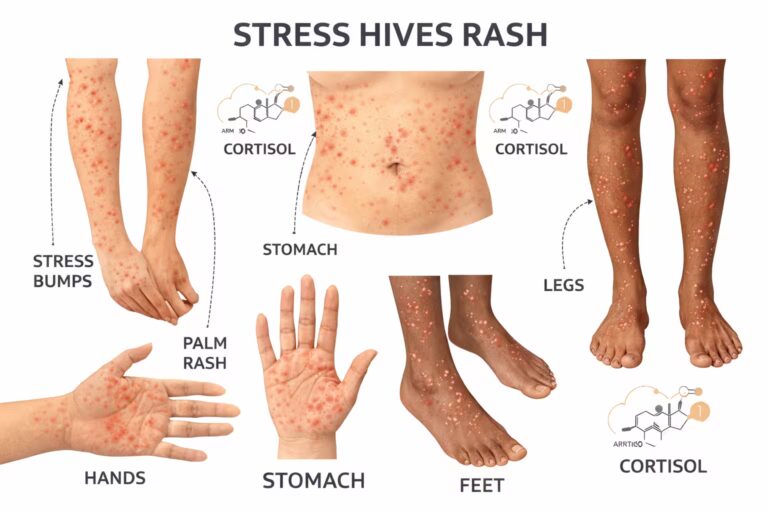

Can Stress Cause Dizziness? Symptoms, Causes, Relief, and When to Worry
Feeling dizzy when you are already stressed can be unsettling. It often seems to come out of nowhere. One minute you are tense, tired, or overwhelmed. Next, you feel lightheaded, unsteady, or as if your body is not quite grounded. The short answer is yes, stress can cause dizziness. But that does not mean stress is always the reason. Dizziness has many possible causes, including anxiety, dehydration, low blood sugar, inner ear problems, medication side effects, and sudden blood pressure changes. That is why the most helpful approach is not just asking whether stress can do it. It is learning what type of dizziness you have, what triggers it, how long it lasts, and what other symptoms come with it.
Quick symptom guide: stress, anxiety, and dizziness
|
Symptom |
How it feels like |
Common causes |
What may help |
When to get checked |
|---|---|---|---|---|
|
Lightheadedness |
Faint, floaty, weak, not fully steady |
Fast breathing, dehydration, skipped meals, tension, poor sleep |
Sit down, drink water, slow breathing |
If frequent, worsening, or unexplained |
|
Vertigo |
You or the room feels like it is spinning |
Stress may worsen it, but inner ear issues are often involved |
Rest, move slowly, track triggers |
If sudden, severe, or paired with hearing changes |
|
Off-balance feeling |
Rocking, swaying, walking on a boat |
Anxiety, neck tension, chronic dizziness patterns |
Reduce overload, relax shoulders, hydrate |
If lasting weeks or disrupting daily life |
|
Near-fainting |
Vision dims, weak, clammy, feels like you may pass out |
Panic, vasovagal response, low fluids, standing too fast |
Lie down, raise legs if safe, fluids |
If repeated or with chest symptoms |
|
Headache with dizziness |
Pressure, tight head, heavy neck |
Tension, fatigue, stress overload |
Rest, hydration, neck relaxation |
If sudden, severe, or with neurologic symptoms |
Can stress make you dizzy?
Yes. Stress and anxiety can make you dizzy, especially when they change the way you breathe, tighten your muscles, raise your heart rate, or make you hyper-aware of normal body sensations. Major medical sources list stress and anxiety among recognized causes of dizziness. Anxiety disorders and panic attacks can also bring on lightheadedness, weakness, and a faint feeling, even in otherwise healthy people. Stress-related dizziness is often more likely when symptoms appear during emotional overload, poor sleep, skipped meals, too much caffeine, or rapid breathing. It is less convincing as an explanation when dizziness starts suddenly with neurological symptoms, chest pain, hearing loss, or repeated vomiting.
What dizziness actually means

Dizziness is not one single sensation. It can describe a few very different experiences, and each points toward a different group of causes.
- Lightheadedness means you feel faint, weak, or as if you might pass out.
- “Vertigo” means you feel like you or the room is spinning or moving.
- “Unsteadiness” means you feel off-balance, wobbly, or as if you are walking on a boat.
This matters because stress most often causes lightheadedness or a vague off-balance feeling, while classic spinning vertigo more often points toward a vestibular or inner ear problem. Some people use all of these words interchangeably, but your provider will not. A clear description makes diagnosis much easier.
Why stress and anxiety can trigger dizziness
Your body does not treat stress as a small event. It shifts into a protective mode. Stress hormones can temporarily change heart rate, blood vessel tone, and blood pressure, while anxiety can change breathing patterns and make you breathe too fast or too shallow. That can leave you feeling woozy, faint, or disconnected from your surroundings. During panic attacks, major medical sources list weakness or dizziness as common physical symptoms. In people with ongoing anxiety, the cycle can feed itself. You feel dizzy, then you worry about the dizziness, then the worry makes the dizziness worse. That loop is one reason stress-related dizziness can feel so real and so persistent.
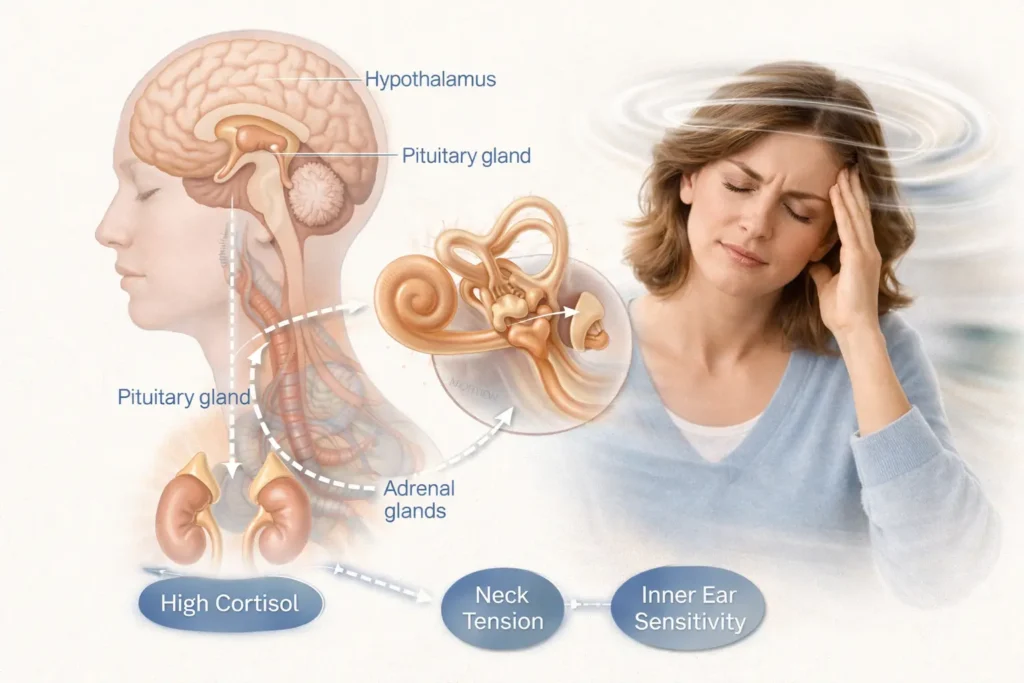
Another reason stress and dizziness travel together is hyperventilation. When people feel panicky or tense, they often breathe faster than they realize. That can change carbon dioxide levels enough to cause lightheadedness, tingling, chest tightness, and a faint feeling. Some people only notice the dizziness and miss the breathing change that caused it. Others notice neck, jaw, and shoulder tension first and then start to feel spacey or unsteady. Stress can also disturb eating, hydration, and sleep, all of which can make dizziness easier to trigger. So the symptom is often not from one single pathway. It is the combined effect of breathing changes, muscle tension, fatigue, and a sensitized nervous system.
Stress and dizziness is not always the same as vertigo
Stress and dizziness do not always mean true vertigo. Stress is more likely to cause lightheadedness, floating, rocking, or feeling off-balance. True spinning vertigo is more often tied to inner ear conditions such as BPPV, Ménière’s disease, or a vestibular migraine. Stress can still matter, though. It may worsen an existing vestibular issue, increase symptom awareness, or make recovery feel slower and more frightening. In other words, stress may not be the only cause, but it can absolutely become part of the problem.
Can neck stress cause vertigo or just a floating feeling?
Can neck stress cause vertigo? It can contribute to a form of dizziness often called cervicogenic dizziness or cervical vertigo, but the pattern matters. The Cleveland Clinic describes it as dizziness linked with neck pain, neck tightness, posture changes, and a lightheaded or floating sensation rather than classic spinning. It can happen when neck structures involved in posture and movement send faulty signals to the brain, especially after strain, arthritis, or an old neck injury. Stress can add to the problem by increasing muscle tension in the neck and shoulders.
A stiff, stressed neck does not automatically prove the dizziness is from the neck. Inner ear disorders, migraine, concussion, and blood pressure problems can look similar. The most useful clue is the combination of neck pain plus dizziness, especially when symptoms flare with posture, long desk work, or head movement. If you have dizziness with vision changes, numbness, weakness, severe headache, or trouble walking, do not assume it is simple neck tension.
Can stress make you tired and dizzy?
Yes. Stress drains energy. It can disturb sleep, increase muscle tension, upset eating habits, and push people toward too much caffeine or not enough water. Anxiety disorders are also linked with getting tired easily and feeling lightheaded or dizzy. On top of that, mild dehydration and sudden blood pressure drops can cause fatigue, weakness, and dizziness. So when someone says, “I feel wiped out and floaty,” stress may be the top trigger, but poor sleep, dehydration, not eating enough, or anemia may be part of the same picture.
This is also where fatigue can cause dizziness fits naturally. Fatigue by itself can come from many conditions, but when your system is run down, your body becomes less resilient to small stressors. A skipped lunch, one bad night of sleep, a stressful meeting, or a strong coffee on an empty stomach can suddenly tip you into lightheadedness. This does not mean the symptom is imaginary. It means the threshold for feeling dizzy has dropped. That is why the most practical advice is rarely one magic fix. It is usually a stack of basics like sleep, regular meals, fluids, slower breathing, and less overload.
Can high cortisol cause dizziness?
High cortisol is part of the body’s normal stress response, and chronic stress can keep that response more active than it should be. But in everyday practice, dizziness is usually not blamed on a single hormone alone. It is more often tied to the larger stress response, including rapid breathing, blood pressure changes, poor sleep, and nervous system overactivation. Conditions involving abnormal cortisol levels, such as Cushing syndrome, usually show a broader pattern of symptoms and are not most often discovered because of dizziness alone. On the other hand, low cortisol states can cause low blood pressure and lightheadedness, especially when standing.
Can high cortisol cause dizziness? Possibly as part of the stress response, but it is not the best stand-alone explanation for most dizzy spells. If someone also has major changes in weight, blood pressure, skin, muscle strength, or standing tolerance, that deserves a proper medical workup rather than a self-diagnosis around cortisol.
How long does dizziness from anxiety last?
It depends on the pattern. During a panic attack, symptoms often build quickly and may last from a few minutes up to about an hour or longer. If the dizziness is tied to brief surges of panic, it may fade as the body settles. But some people feel lightheaded or off-balance in waves throughout the day because the larger trigger is still active. That can happen with ongoing stress, poor sleep, overbreathing, or repeated checking of body sensations. The key point is that anxiety-induced dizziness can be brief, but it can also linger when the nervous system stays on alert.
When dizziness lasts most days for months, especially if it feels more like rocking, swaying, or visual overload, another condition deserves consideration. Persistent postural-perceptual dizziness, or PPPD, often begins after a bout of vertigo, balance trouble, or even a panic attack. It tends to worsen when standing upright, moving through busy places, or processing a lot of visual motion.
Can stress make you pass out?
Stress can absolutely make you feel like you might faint. Can stress make you pass out? Sometimes, yes, but actual fainting is different from simple dizziness. Strong emotions, fear, pain, blood draws, or extreme anxiety can trigger vasovagal syncope, a reflex that makes heart rate and blood pressure drop suddenly, reducing blood flow to the brain. That can cause a brief loss of consciousness. Medical sources also note that presyncope, the near-faint stage, can be triggered by pain, anxiety, fear, or upsetting events. So the answer is not just “stress causes dizziness.” In some people, strong stress can lead all the way to near-fainting or fainting.
Still, this is not a symptom to wave away. If you truly pass out, especially with injury, chest pain, palpitations, shortness of breath, or repeated episodes, you need medical evaluation. Fainting can be benign, but it can also be cardiac, neurologic, or related to blood pressure disorders. Feeling faint during anxiety is common. Actually, losing consciousness is a different level of symptom and deserves more respect.
Tension headache, dizziness, and other related clues
Stress is a common trigger for tension headaches, and tension can spread through the scalp, neck, jaw, and shoulders. Dizziness with a headache should not be automatically blamed on a standard tension headache. Vestibular migraine can cause dizziness and balance trouble. Very high blood pressure can cause a headache with dizziness. Positional headaches and some neurologic conditions can do the same.
If the headache is mild, familiar, and comes with stress, poor sleep, or muscle tension, a tension-type pattern is possible. But if it is sudden, severe, new, one-sided with neurologic symptoms, worse with standing, or paired with vomiting, double vision, or trouble speaking, do not reduce it to stress.
How to stop dizziness from stress
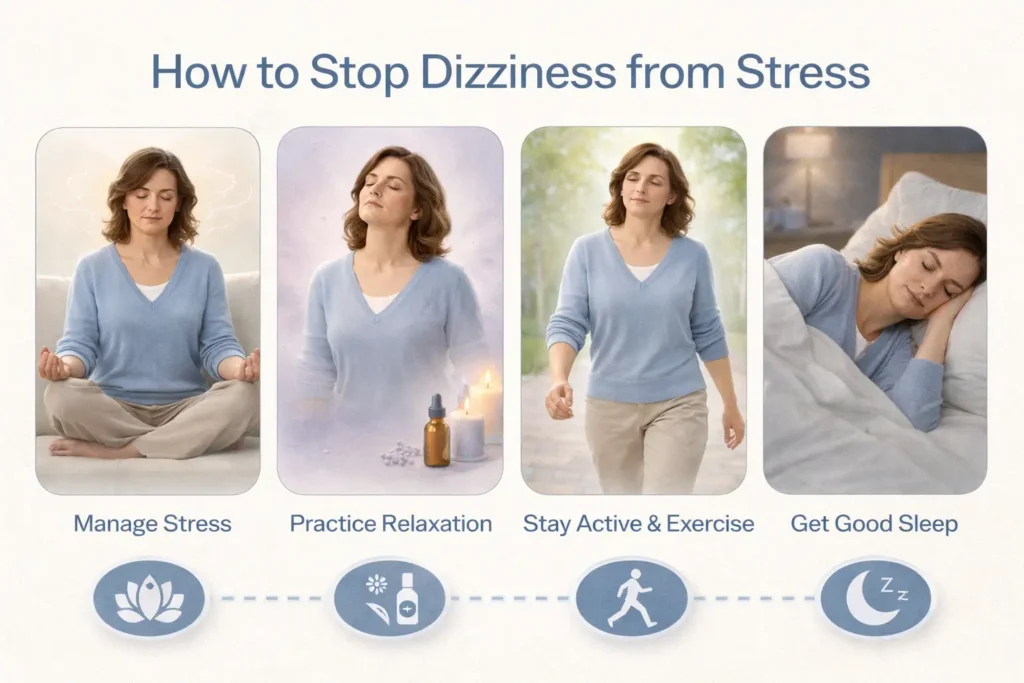
The first goal is to steady the body. Do not try to push through a dizzy spell while standing. Sit down or lie down if needed. Then work through the simplest triggers first.
- Slow your breathing, especially the exhale
- Sip water if you may be dehydrated
- Eat something light if you skipped a meal
- Loosen your jaw, shoulders, and neck
- Stand up slowly and avoid sudden head turns
- Cut back on extra caffeine if you are already jittery
- Step away from busy visual environments for a few minutes
These steps help because stress-induced dizziness often feeds on fast breathing, tension, dehydration, and physical overload.
Longer-term relief depends on what keeps setting the symptom off. If stress is the main driver, improving sleep, pacing work, eating more regularly, and learning to slow breathing can make a real difference. If anxiety is persistent, formal treatment may help more than self-management alone. Some people improve with therapy, some with medication, and some with both. If neck strain is involved, posture work or physical therapy can help. If dizziness is lasting or recurring, the best next step is not endless guessing. It is a focused evaluation to find the pattern and treat the cause behind it.
When dizziness should not be blamed on stress
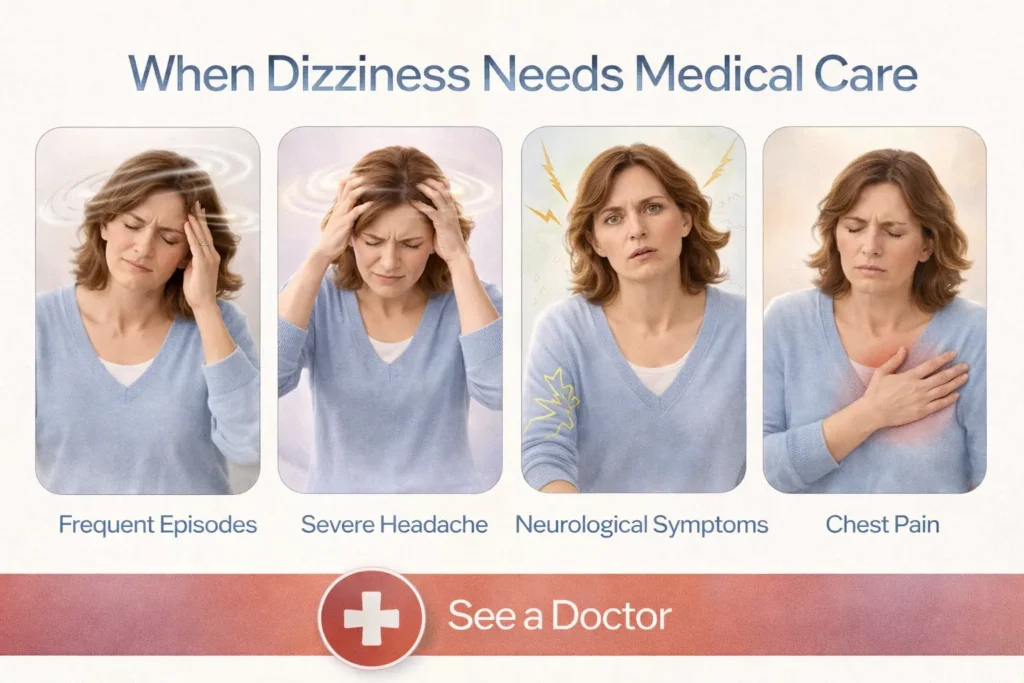
Get urgent care if dizziness is new and severe or comes with any of the following:
- Sudden severe headache
- Chest pain
- Trouble breathing
- Rapid or irregular heartbeat
- Fainting or seizures
- Confusion, slurred speech, or one-sided weakness
- Trouble walking or stumbling
- Double vision or sudden hearing change
- Ongoing vomiting
These symptoms raise concern for serious causes such as stroke, heart rhythm problems, major blood pressure changes, or inner ear emergencies. Stroke warning signs also include sudden trouble walking, dizziness, loss of balance, or lack of coordination. If that picture fits, call emergency services right away.
You should also see a clinician if dizziness keeps coming back, starts suddenly, lasts a long time, disrupts daily life, or has no clear cause. Recurrent dizziness deserves a real history and exam, even when stress seems likely. That is because stress can exist at the same time as BPPV, anemia, dehydration, migraine, dysautonomia, medication side effects, or blood sugar problems. A better diagnosis often starts with a better story about what the dizziness feels like and when it happens.
Frequently Asked Questions
Conclusion
So, can stress cause dizziness? Yes. It can cause lightheadedness, a faint feeling, rocking, or general unsteadiness, especially when it changes your breathing, sleep, muscle tension, and nervous system state. Does anxiety cause dizziness? Also yes. But the strongest answer is not just yes or no. It is knowing when stress is a likely trigger and when the pattern points somewhere else. If your symptoms appear during overload and improve with calm breathing, rest, food, hydration, and sleep, stress may be a major factor. If they are severe, new, or recurrent or come with headache, fainting, chest pain, weakness, speech changes, or true spinning vertigo, do not stop at stress as the explanation.