

Executive Dysfunction ADHD — What It Is, How It Feels, and How to Move Forward
“Executive function” refers to a set of mental skills your brain uses to organize, plan, start tasks, stay focused, switch between tasks, regulate emotions, and follow through with goals. These functions are like the air traffic control system of your brain — making sure everything operates in an orderly way.
When someone has ADHD (Attention-Deficit/Hyperactivity Disorder), these executive systems in the brain don’t communicate or regulate as fluidly as in others. This mismatch isn’t a lack of intelligence or effort — it’s a real neurological difference that affects everyday tasks.
“Executive dysfunction” isn’t a separate diagnosis in medical manuals. Instead, it describes a cluster of struggles tied to how the brain organizes and executes tasks — and in people with ADHD, this cluster is very common.
How Does ADHD Affect Executive Functioning?
ADHD doesn’t just make someone “easily distracted.” It affects the core mental processes that help you:
- Stay on task
- Remember what you need to do
- Organize steps from start to finish
- Shift between activities smoothly
- Regulate impulses and emotional responses
- Manage time and meet deadlines
These skills are all part of executive functioning. When ADHD is present, the communication between brain regions that handle these skills is less efficient. This shows up as everyday struggles like forgetting appointments, trouble starting homework, or losing track of priorities.
What Causes Executive Dysfunction in ADHD?
ADHD is rooted in differences in brain circuits — especially those involving dopamine and norepinephrine, chemicals that help regulate attention and action. These circuits connect the frontal lobe (the brain’s planning center) to other parts of the brain. When these connections are less active or slower, planning, impulse control, and working memory become harder.
It’s not a deficit of character or desire; it’s about brain wiring and chemistry that affect how thoughts become actions.
What Are the Symptoms of Executive Dysfunction in ADHD?

People with ADHD often share many of the following experiences, though not everyone has all of them:
- Difficulty planning or organizing tasks
- Trouble starting important work even when it matters
- Constantly losing things like keys or notebooks
- Struggling to remember multi-step instructions
- Procrastinating until stress spikes
- Feeling overwhelmed with long tasks
- Inability to switch gears between activities
- Underestimating how long something will take
- Difficulty managing time or prioritizing to-dos
- Emotional ups and downs tied to frustration or overwhelm
- Jumping between tasks without finishing
These aren’t character flaws — they’re all rooted in how the brain’s executive processes work.
Articles you also want to read:
- Phobia of the Ocean: Understanding Thalassophobia
- Stress Management for Men: Finding Strength in Balance
Everyday Examples of Executive Dysfunction
Imagine this:
You wake up knowing you must pay bills and send a work email. You intend to do both. But by noon you’ve checked your phone 12 times, wandered into another task, and somehow forgotten the bills. That mismatch between knowing what to do and doing it is classic executive dysfunction in ADHD.
Or think of a child who has trouble packing their backpack every morning despite repeated reminders. They see the steps in their head but struggle to carry them out in real time.
These examples help people recognize the lived experience behind clinical descriptions.
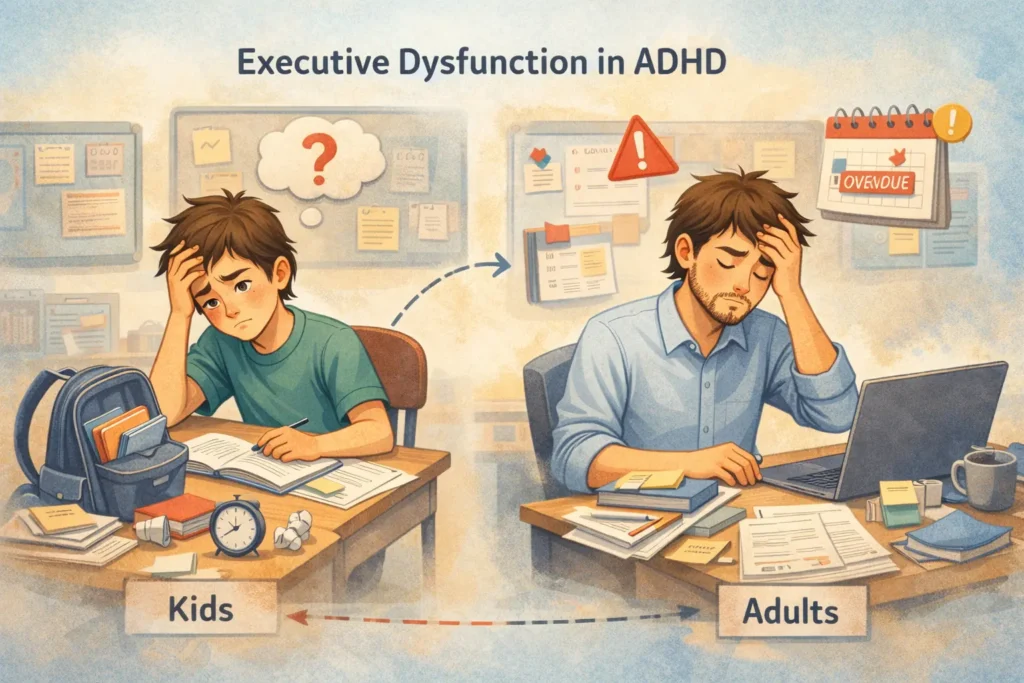
Executive Functioning in Kids vs Adults
Kids with ADHD may show executive dysfunction as:
- Frequent school assignment chaos
- Trouble following classroom instructions
- Emotional meltdowns over transitions
- Forgetting homework or deadlines
Adults struggle with similar issues on a bigger practical scale:
- Missed bill payments
- Trouble completing projects at work
- Difficulty managing time with kids and schedules
- Always rushing to meet deadlines
Children are still building executive skills naturally over time. ADHD adds a layer of delay or inconsistency that often continues into adulthood unless supported with strategies or treatment.
Does Executive Dysfunction Look Different in Women?
Women are frequently underdiagnosed with ADHD until adulthood. Many women with ADHD present with internal struggles more than overt hyperactivity. This can show up as chronic disorganization, emotional overwhelm, perfectionism, or late adulthood burnout.
Because of social expectations and adult responsibilities, women may become experts at masking their executive struggles, making them harder to spot. Real examples like struggling to manage both a work project and a family calendar illustrate how executive dysfunction truly feels inside someone’s life.
Is Executive Dysfunction the Same as ADHD? Vs Autism
Executive dysfunction can appear in several conditions, including autism, depression, and brain injury. However, ADHD’s executive challenges stem mainly from attention regulation and impulse control differences, while autism-linked executive issues may be more tied to cognitive rigidity or repetitive patterns of behavior.
That’s why one condition isn’t “better” or “worse” than the other — the shape of the struggle may vary even when the label sounds similar.
What Executive Functioning Skills Are Helpful for Adults with ADHD?
Adults with ADHD often benefit from strengthening specific executive skills such as:
- Working memory — holding information briefly while doing tasks
- Inhibitory control — resisting impulses
- Planning — breaking big goals into smaller tasks
- Time management — estimating how long tasks take
- Cognitive flexibility — being able to shift focus when needed
- Organization — keeping things orderly so they are easier to use
Focusing on one skill at a time can make improvements more manageable.
Medication and Professional Treatment Options
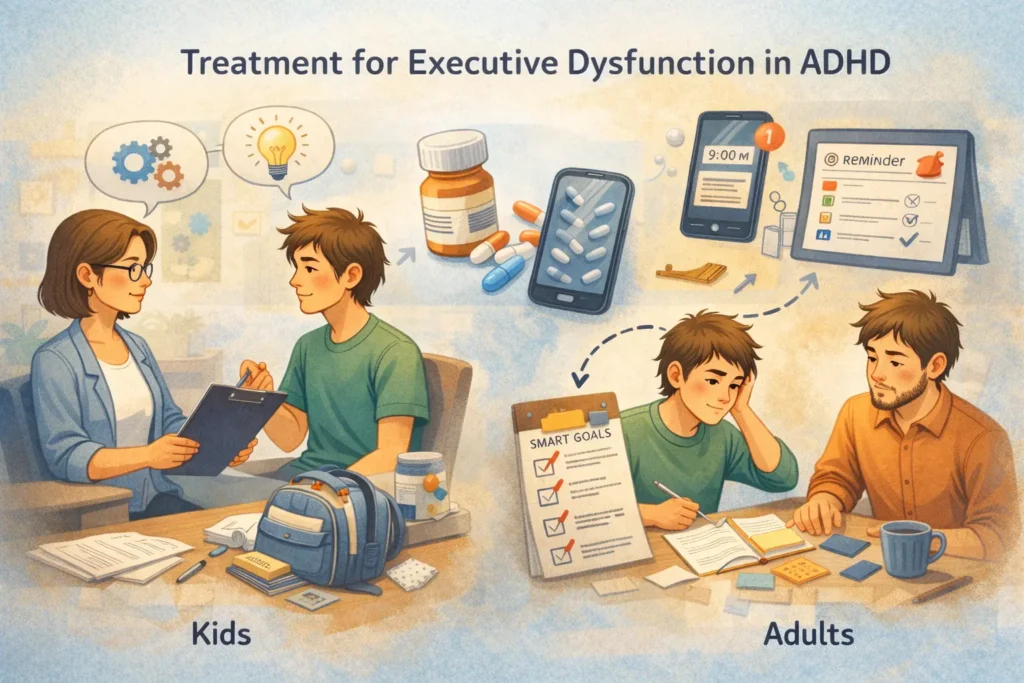
When executive dysfunction is linked to ADHD, treatment usually focuses on improving how the brain regulates attention, motivation, and self-control. Medication and professional support do not change who a person is, but they can significantly reduce the daily friction caused by poor executive functioning.
ADHD Medication and Executive Functioning
ADHD medications primarily work by supporting brain chemicals that play a key role in executive function, especially dopamine and norepinephrine. These chemicals help the brain initiate tasks, stay focused, manage impulses, and organize thoughts more effectively.
Stimulant medications, such as those containing methylphenidate or amphetamine compounds, are often the first option recommended by clinicians. For many people, these medications improve task initiation, sustained attention, working memory, and emotional regulation. When executive dysfunction improves, daily activities like completing assignments, meeting deadlines, and following routines become more manageable.
Non-stimulant medications are another option, especially for individuals who experience side effects from stimulants or have co-existing conditions such as anxiety. These medications work more gradually but can still support planning, impulse control, and consistency over time.
Medication does not “create motivation” out of nothing. Instead, it helps reduce the mental resistance that makes starting and finishing tasks feel overwhelming. This distinction is important, as many people with ADHD mistakenly believe medication should instantly fix every executive struggle.
Therapy and Skill-Based Treatment
Medication is most effective when combined with professional therapy or coaching that directly targets executive functioning skills.
Cognitive Behavioral Therapy (CBT) is widely used for adults and teens with ADHD. It helps individuals recognize patterns like procrastination, negative self-talk, or avoidance, and replace them with structured, practical strategies. CBT also supports emotional regulation, which is closely connected to executive dysfunction.
ADHD coaching focuses on real-world functioning. Coaches help individuals build routines, manage time, organize tasks, and create systems that match their cognitive style. This is especially helpful for adults managing work, family responsibilities, or academic pressure.
For children with ADHD, behavioral therapy and parent training programs are often recommended. These approaches teach consistent routines, positive reinforcement, and clear expectations that support developing executive skills.
Educational and Workplace Accommodations
Executive dysfunction does not mean a lack of ability. In many cases, accommodations can bridge the gap between potential and performance.
In schools, accommodations may include extended time on tests, structured schedules, visual reminders, or breaking assignments into smaller steps. These supports help children practice executive skills without being overwhelmed.
In the workplace, adults may benefit from flexible deadlines, written instructions, task-management tools, or quiet work environments. These adjustments allow executive functioning challenges to be managed proactively rather than becoming a source of chronic stress.
Lifestyle Support That Enhances Treatment
Professional treatment works best when supported by healthy daily habits. Regular sleep, balanced nutrition, and physical activity all influence brain function and attention regulation. Poor sleep or chronic stress can worsen executive dysfunction, even when medication is used.
Mindfulness practices and stress-management techniques can also improve emotional regulation and cognitive flexibility, both of which are essential executive skills.
Long-Term Outlook: Living With Executive Dysfunction and ADHD
Executive dysfunction doesn’t go away overnight, but with support, people with ADHD can thrive in school, careers, and relationships. Awareness, self-advocacy, and tailored strategies help convert struggles into strengths over time.
Support isn’t just about fixing a problem — it’s about understanding how your brain works and working with it, not against it.
Frequently Asked Questions
Final Thought
Executive dysfunction in ADHD is not a personal failure, a lack of intelligence, or a problem of willpower. It is a difference in how the brain manages planning, focus, memory, and self-regulation. Once this difference is understood, the shame often attached to ADHD begins to fade.
With the right combination of awareness, professional treatment, practical strategies, and self-compassion, people with ADHD can build systems that support their executive functioning rather than constantly fighting against it. Progress may not be linear, but it is absolutely possible.
Understanding executive dysfunction allows individuals, families, educators, and employers to shift from blame to support. When expectations align with how the ADHD brain actually works, daily life becomes more manageable, confidence grows, and strengths have room to emerge.
Living with ADHD is not about fixing a broken system. It is about learning how to work with a different one — and doing so in a way that honors both mental health and human potential.