
Insanity Definition: Meaning, Psychology, Legal Use, and Real-Life Signs
The insanity definition is not one single medical label: the APA Dictionary of Psychology treats insanity mainly as a legal condition of the mind, while U.S. federal law 18 U.S.C. §17 connects it to a severe mental disease or defect that prevents a person from appreciating the nature or wrongfulness of an act. In psychology, the meaning is more accurate when discussed through symptoms such as delusions, hallucinations, confused speech, social withdrawal, or difficulty telling reality from fantasy—signs the National Institute of Mental Health associates with psychosis, not a casual insult. The popular idea that repeating the same thing over and over is called insanity is not the formal definition; it better describes a habit loop, rumination, compulsion, or cycle of insanity where the same action keeps creating the same painful result. This guide explains what insanity looks like, how the legal and psychological meanings differ, and when repeated patterns may signal a need for support.
The insanity definition depends on context. In everyday speech, it can mean extreme foolishness or unreasonable behavior. In law, it refers to a mental condition that may affect responsibility or capacity. In psychology, it is not normally used as a formal diagnosis. Understanding these differences helps people speak more accurately, reduce stigma, and know when a behavior may require compassion, boundaries, or professional help. Modern dictionaries still include medical-style and legal meanings, but they also note that the mental-disorder sense is dated or not technical. The APA Dictionary of Psychology defines insanity mainly as a legal condition connected to criminal responsibility.
Understanding the Insanity Definition in Plain English
The simplest insanity definition is a state of mind or behavior that appears seriously irrational, disordered, or disconnected from ordinary judgment. However, “simple” does not mean “complete.” The word has several layers. It may describe a legal question, a cultural judgment, an outdated way of talking about mental illness, or a casual reaction to something that seems absurd.
The most important point is that insanity is not a clean medical label like major depressive disorder, bipolar disorder, or schizophrenia. A clinician usually describes specific symptoms, duration, impairment, and possible causes rather than calling a person insane. That is why the word should be handled carefully. It can help explain history and law, but it should not be used to shame someone who is struggling. Clear language protects dignity and makes the conversation more useful.
The Meaning of Insanity in Everyday Language
In daily conversation, the meaning of insanity often shifts toward “extreme foolishness,” “recklessness,” or “something that makes no sense.” A person might say, “That schedule is insane,” or “It is insane to spend money we do not have.” This use is not meant as a diagnosis. It is a strong way of saying that a choice feels unreasonable or risky.
This everyday use is common because people use vivid words when they feel frustrated. Still, casual language can blur important differences. A bad decision is not the same as a mental health condition. A strange idea is not automatically a sign of illness. A harmful pattern may come from stress, fear, poor planning, trauma, addiction, habit, or social pressure. When the situation involves real distress, danger, or loss of contact with reality, stronger support may be needed.
Insanity Definition Psychology: Why the Word Is Complicated
The phrase “insanity definition psychology” is commonly asked because people want to know whether insanity is a recognized mental health term. In modern psychology and psychiatry, the answer is usually no. Professionals tend to avoid it because it is broad, stigmatizing, and imprecise. Instead, they use specific terms such as psychosis, delusions, hallucinations, mania, severe depression, cognitive impairment, obsessive-compulsive symptoms, substance-induced symptoms, or trauma-related responses.
That does not mean the term has no relationship to mental health. It means the word is too general to guide care by itself. If someone asks, “What is happening to me?” the best answer is rarely “insanity.” A better question is, “What symptoms are present, how long have they lasted, how much are they affecting life, and what support is needed?” That shift moves the conversation from judgment to understanding.
Legal insanity is different from mental illness.
In law, the insanity definition is much narrower than most people think. A person can have a diagnosed mental illness and still not meet a legal insanity standard. In U.S. federal law, insanity is an affirmative defense when, at the time of the act, a severe mental disease or defect made the defendant unable to appreciate the nature and quality or wrongfulness of the act. The law also places the burden of proof on the defendant by clear and convincing evidence.

Cornell’s Legal Information Institute explains that the insanity defense generally involves admitting the act while arguing that mental illness removed legal culpability. It is not simply a claim that someone behaved strangely, acted impulsively, or had a diagnosis. The legal standard asks about mental state at a specific moment, not whether the person has ever experienced symptoms. This is why courts rely on evidence, expert evaluation, statutes, and jurisdiction-specific standards.
Why the Famous Repetition Quote Is Not the Real Definition
Many people believe the insanity definition is “doing the same thing over and over and expecting different results.” The phrase is memorable, but it is not the formal definition. It is better understood as a motivational saying about unproductive patterns. It may describe stubbornness, denial, avoidance, poor strategy, or a loop of habits that never changes the outcome.
So, repeating the same thing over and over is called what? Depending on the situation, it may be repetition, habit, perseveration, rumination, compulsion, self-defeating behavior, or a repeated pattern. In problem-solving, it may simply be an ineffective strategy. In mental health, repetitive thoughts or actions can appear in several conditions, but the behavior must be understood in context. The quote is useful when it encourages reflection. It becomes harmful when it replaces real understanding.
The Cycle of Insanity: How Repeated Patterns Become Traps
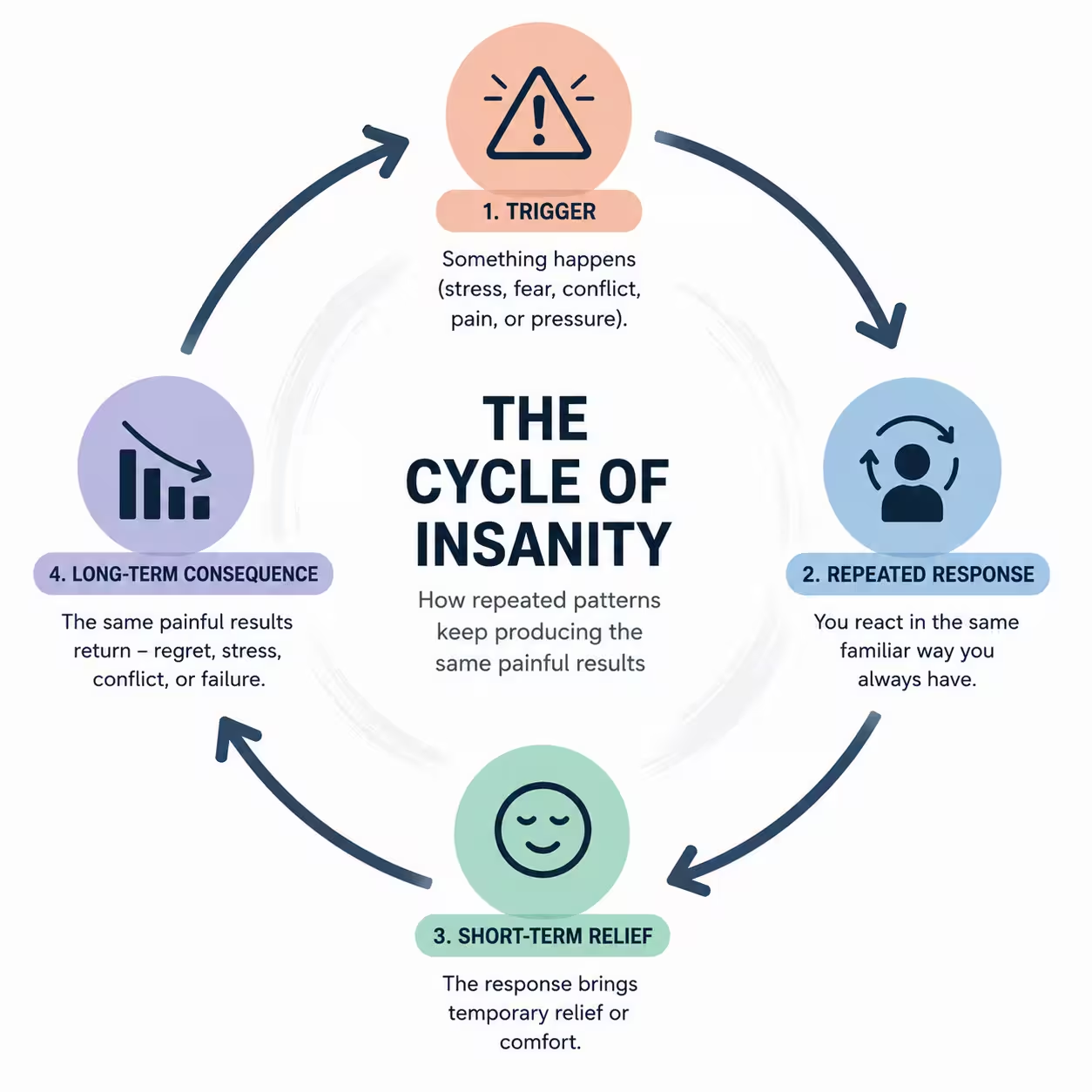
The phrase “cycle of insanity” usually describes a loop where a person repeats a behavior or traits, gets the same painful result, feels confused or frustrated, and then repeats it again. This cycle can appear in relationships, spending habits, work routines, emotional reactions, addiction patterns, and conflict. The loop may feel irrational from the outside, but inside it often has a reason.
A typical cycle begins with a trigger. The person feels fear, shame, anger, loneliness, or pressure. They respond in the familiar way because it offers short-term relief. Later, the consequence arrives: regret, conflict, debt, failure, or emotional pain. Then comes self-criticism, which increases stress and makes the next trigger stronger. This behavioral idea is not about being “crazy.” It is about being stuck in a loop that needs awareness, support, and a different response.
What Does Insanity Look Like in Real Life?
The question “What does insanity look like?” needs a careful answer. It does not always look dramatic. It may look like someone who seems unable to connect actions with consequences. It may look like confused speech, extreme fear, suspicious beliefs, or behavior that feels unsafe. It may also look like a person who appears calm but is privately struggling with thoughts they cannot control.
When people use the word to describe visible behavior, they may actually be noticing signs of distress, intoxication, sleep deprivation, grief, neurological illness, psychosis, or another condition. The National Institute of Mental Health explains that psychosis often involves delusions, hallucinations, incoherent speech, or behavior that does not fit the situation. NAMI lists warning signs such as difficulty perceiving reality, major changes in sleep or mood, withdrawal, and problems functioning.

Signs That Someone May Need Support
Warning signs can include hearing or seeing things others do not, strongly held false beliefs, confused or disorganized speech, sudden decline in work or school performance, extreme mood changes, neglect of basic care, isolation, or behavior that creates immediate danger.
The American Psychiatric Association lists possible signs of mental illness such as changes in sleep or appetite, withdrawal, problems thinking, mood shifts, and decline in personal care. These signs do not prove that a person is “insane.” They are signals that the person may need patience, professional evaluation, or urgent help depending on severity. If someone may harm themselves or others, immediate emergency support is the safest step.
Insanity, Psychosis, and Stigma
One reason the word is sensitive is that it has often been used as an insult. Words such as “mad,” “crazy,” and “lunatic” have long histories, but they can make people hide symptoms instead of seeking help. Stigma can turn a treatable issue into a silent crisis. It can also cause families to focus on blame when they need information and support.
Psychosis is a more specific term than insanity. It describes a set of symptoms involving some disconnection from reality, such as hallucinations or delusions. It can occur in different conditions and may be temporary or longer lasting. Cleveland Clinic notes that psychosis is a collection of symptoms rather than one single disorder, and it can have many causes, including mental health conditions, medical problems, injuries, infections, or substances.
Why People Repeat Harmful Choices
People often connect the term with repetition because repetition can feel irrational when the results are obvious. But humans do not repeat harmful choices because they enjoy failure. They repeat them because the familiar path feels safer than the uncertain one. The pattern may be driven by emotional reward, fear of change, identity, environment, unresolved pain, or a lack of better tools.
For example, someone may keep returning to a toxic relationship because loneliness feels worse in the moment. Another person may keep overspending because buying gives temporary relief from stress. A team may keep using a failed process because admitting the problem would threaten pride. The repeated behavior is not proof of insanity. It is a sign that the current reward, fear, or belief system is stronger than the lesson from past results.
Breaking the Cycle Without Shame
A useful insanity definition should point toward change, not humiliation. Breaking a pattern begins with naming the loop clearly. What is the trigger? What is the repeated response? What short-term benefit keeps it alive? What long-term cost follows? The goal is not to attack the person. The goal is to understand the pattern well enough to interrupt it.
One practical method is to change one part of the loop at a time. If conflict always begins late at night, move serious conversations to the morning. If overspending happens after stress, create a waiting period before purchases. If rumination begins during isolation, schedule a grounding activity or call a trusted person. Small changes matter because they prove that a different response is possible. For serious patterns, therapy, support groups, medical care, or crisis services may be needed.
When Repetition May Be a Symptom
The insanity definition should not be confused with every form of repeated behavior. Repetition can be normal and useful. Practice, routines, traditions, and habits help life function. The concern rises when repetition becomes distressing, uncontrollable, harmful, or disconnected from reality. A person washing hands because they are preparing food is different from someone washing until their skin bleeds because anxiety feels unbearable.
Repeated thoughts may be rumination when the mind circles the same worry. Repeated actions may be compulsions when a person feels driven to perform them to reduce distress. Repeated speech or movement can also appear in neurological, developmental, or psychiatric conditions. The label depends on context, not appearance alone. This is why a precise assessment is better than a casual judgment.
Everyday Examples That Clarify the Difference
Consider three examples. First, a student studies the same ineffective way for every exam and keeps failing. Calling that “insanity” may express frustration, but it is more accurately a learning strategy problem. The solution may be tutoring, active recall, better sleep, or a new study plan.
Second, a person believes neighbors are sending secret threats through the television and becomes terrified. That may involve delusional thinking and deserves professional attention. Third, a defendant in a criminal case claims they could not understand the wrongfulness of their act because of severe mental disease. That is a legal question. These examples show why the meaning changes by context. One word cannot do the work of careful understanding.
How to Talk About Insanity Respectfully
The insanity definition becomes more helpful when the language around it is respectful. Instead of saying, “That person is insane,” it is better to describe what you observe: “They seem confused.” “They are saying things that do not match reality,” “They may be in danger,” or “This pattern keeps leading to harm.” Specific language reduces fear and helps people choose the right next step.
Respectful language also protects relationships. A loved one who feels attacked may shut down. A person who feels seen may accept support. This does not mean ignoring harmful behavior. Boundaries still matter. Safety still matters. But compassion and accountability can exist together. The aim is to respond to the real issue, not to win an argument with a label.
When to Seek Immediate Help
A clear insanity definition should include a safety note. If someone is talking about suicide, threatening harm, hearing voices telling them to hurt themselves or others, acting violently, wandering in danger, or unable to meet basic needs, treat it as urgent. In the United States, people can call or text 988 or use online chat through the 988 Suicide & Crisis Lifeline for 24/7 support related to mental health, substance use, or emotional distress.
If there is immediate physical danger, emergency services may be necessary. For non-emergency concerns, a primary care doctor, licensed therapist, psychiatrist, community mental health center, or crisis line can help guide the next step. The earlier a serious problem is addressed, the more options a person usually has. Waiting until a crisis becomes severe can make recovery harder for everyone involved.
A Better Way to Understand the Word
The best explanation is not a single sentence. It is a set of distinctions. In everyday speech, it can mean unreasonable behavior. In psychology, it is outdated and too vague for diagnosis. In law, it is a narrow standard about responsibility and capacity. In self-improvement, it often refers to repeating a failed pattern without changing the method.
This layered understanding helps prevent two mistakes. The first mistake is treating every strange or harmful action as a mental illness. The second is ignoring serious symptoms because the word “feels” exaggerated. A balanced view allows people to say, “This behavior is not working.” “This person may need help” or “This legal issue requires expert evaluation” without turning a complex situation into a careless label.
Conclusion
The insanity definition has changed across time, culture, medicine, and law. Today, the word is most useful when it is handled with precision. It can describe extreme unreasonableness in casual speech, a narrow legal defense in court, or a misunderstood idea about repeated behavior. It should not be used as a quick diagnosis or an insult.
If the concern is a repeating pattern, look for the trigger, short-term reward, and long-term cost. If the concern is mental health, focus on specific signs and seek qualified support. If the concern is legal responsibility, remember that legal insanity is a specialized standard, not a general description of illness. The more carefully we use the word, the more helpful the conversation becomes.