Stress Management Techniques to Improve Your Daily Life
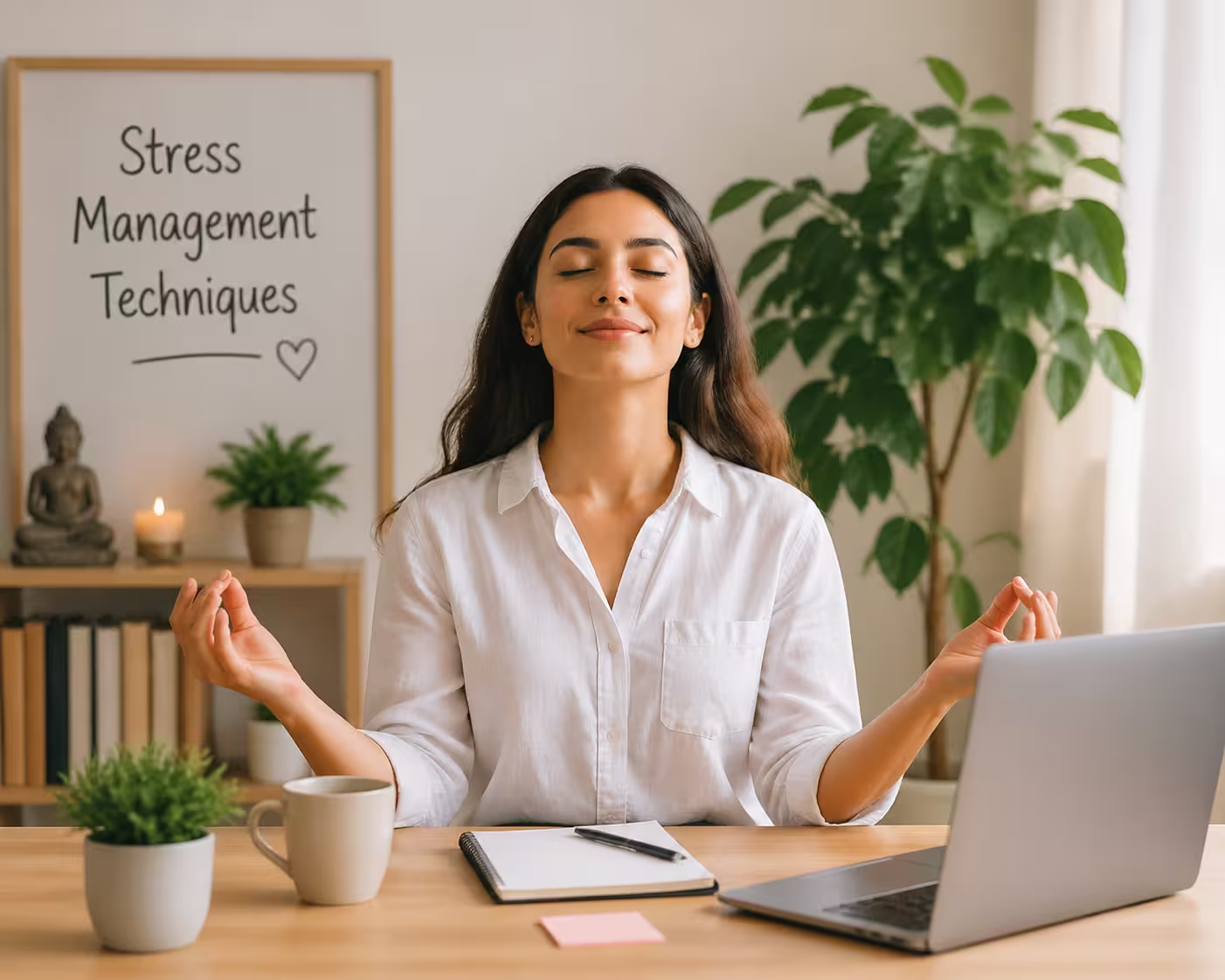
Stress management techniques are structured methods used to reduce, cope with, and recover from the physical and emotional effects of stress. The most effective stress management techniques include deep breathing exercises, mindfulness meditation, regular physical exercise, cognitive reframing, progressive muscle relaxation, journaling, and social support. These strategies work by activating the body’s parasympathetic nervous system, lowering cortisol levels, and improving emotional regulation.
Psychologists categorize coping into 4 core mechanisms: problem-focused coping (tackling the source), emotion-focused coping (managing your feelings), meaning-based coping (finding perspective), and social coping (seeking support). To manage stress effectively, it is recommended to combine daily movement, breathwork, and consistent sleep of seven to nine hours, while setting clear boundaries around work and personal time. Building these skills over time leads to greater resilience, improved mental health, and a stronger ability to handle life’s challenges calmly and confidently.
Overview
We all know the feeling. Your heart races, your thoughts scatter, and your to-do list seems to multiply by the minute. Stress is one of the most universal human experiences, yet very few people are ever taught how to handle it well. The good news is that effective stress management is a skill, not a talent — and anyone can learn it.
This guide covers the most reliable, research-backed stress management techniques available today. Whether you are dealing with work pressure, relationship tension, financial worries, or the cumulative weight of everyday responsibilities, these strategies are designed to help you respond with more calm, more clarity, and more control.
What Is Stress and Why Does It Matter?
Before diving into solutions, it helps to understand what you are actually dealing with. Stress is the body’s natural response to perceived threats or demands. When you sense danger — real or imagined — your brain triggers the release of hormones like cortisol and adrenaline, preparing your body to fight or flee.
This reaction was helpful for our ancestors facing physical threats. But in modern life, the same system fires up during traffic jams, difficult conversations, and looming deadlines. When stress becomes chronic, it takes a serious toll. According to the American Psychological Association, long-term stress is linked to heart disease, digestive issues, sleep disorders, anxiety, and depression.
Understanding this helps clarify something important: stress management is not about eliminating all stress from your life. It is about building the skills to process, respond to, and recover from stress in healthier ways.
How Well Do You Handle Stress? Start Here
One of the most overlooked steps in stress management is honest self-assessment. Before adopting any new strategy, it is worth asking yourself: how well do you handle stress right now?
Some people recognize stress immediately — tight chest, racing thoughts, irritability. Others push through without acknowledging the toll until it becomes overwhelming. Signs that your current coping approach may need improvement include:
- Feeling emotionally exhausted most days
- Difficulty sleeping or waking up tired even after a full night’s rest
- Snapping at people you care about over minor issues
- Turning to food, alcohol, screens, or other habits to numb difficult feelings
- Struggling to concentrate or make decisions
Honest reflection on these patterns is not a cause for self-criticism. It is a starting point. The most effective stress management techniques work best when you understand your personal stress profile — what triggers you, how you react, and what has worked or not worked in the past.
The 4 Core Coping Mechanisms for Stress
Psychologists have long studied how people respond to stress, and much of this research points to 4 coping mechanisms for stress that form the foundation of most strategies. Understanding these categories helps you choose the right tool for the right moment.
1. Problem-Focused Coping
This approach addresses the source of stress directly. It involves taking action, solving problems, making plans, or changing the situation causing the tension. Problem-focused coping works best when the stressor is within your control — for example, organizing a chaotic workspace, communicating clearly to resolve a conflict, or breaking a large project into manageable steps.
2. Emotion-Focused Coping
When you cannot change the situation, managing your emotional response becomes the priority. This includes techniques like journaling, talking to a trusted person, practicing gratitude, or engaging in physical activity to discharge emotional energy. Emotion-focused coping is not about suppressing feelings — it is about processing them in a healthy, constructive way.
3. Meaning-Based Coping
This involves finding purpose or perspective in a stressful situation. It might mean reframing a difficult experience as an opportunity to grow, drawing on personal values, or connecting to a sense of larger purpose. Research from positive psychology shows that meaning-based coping can significantly improve resilience over time.
4. Social Coping
Humans are wired for connection. Reaching out for support — whether to friends, family, colleagues, or professionals — is one of the most powerful and most underused coping mechanisms available. Social coping does not require others to solve your problems. Often, simply feeling heard and understood reduces the physiological stress response.
Effective Stress Management Techniques to Practice Daily
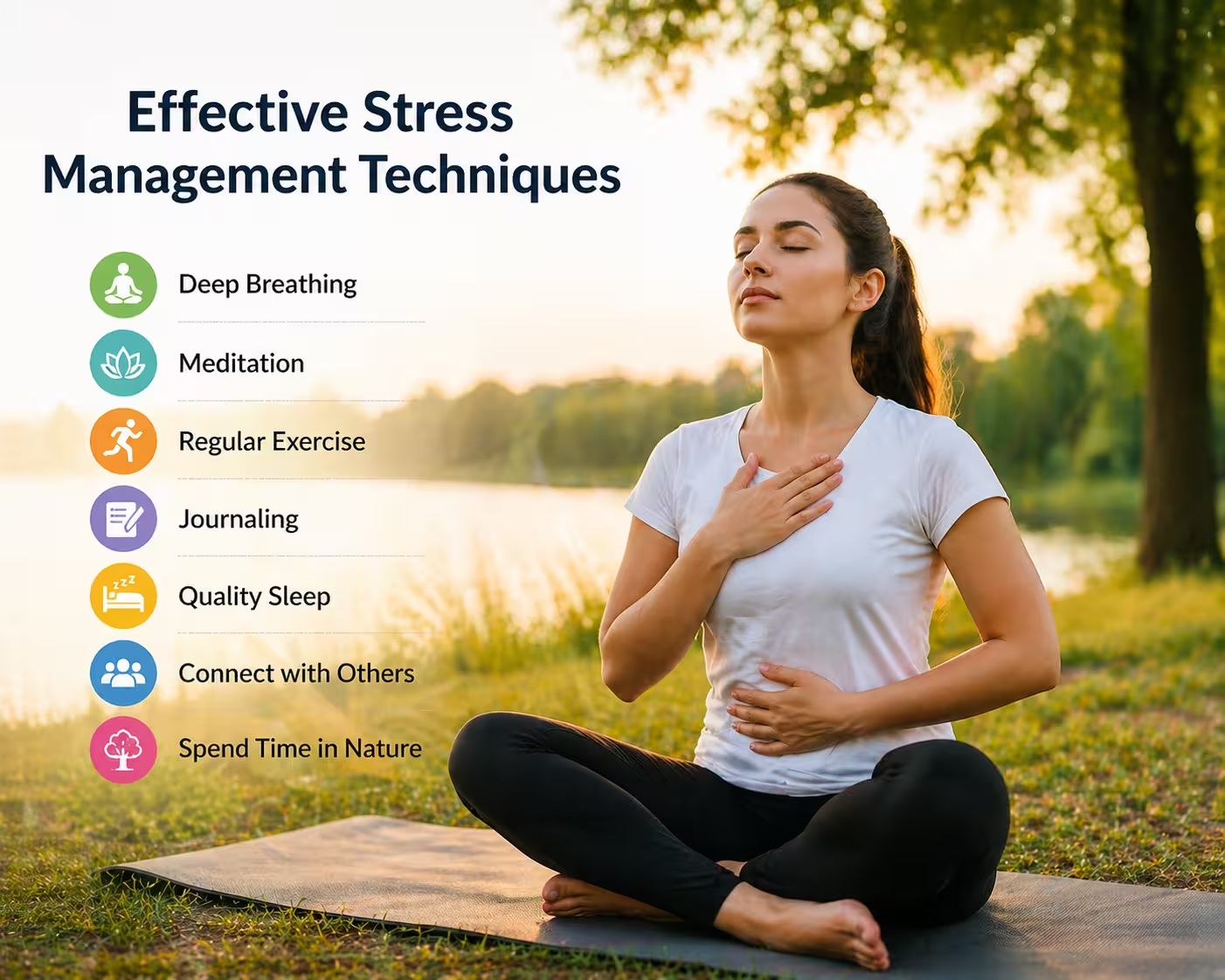
Now that you understand the framework, here are the most effective stress management techniques supported by current research and widely used by mental health professionals.
Deep Breathing and the Physiological Sigh
When stress hits, your breathing becomes shallow and rapid. Intentional deep breathing counteracts this immediately. One of the most well-supported techniques is the physiological sigh: inhale deeply through the nose, then take a second short inhale to fully expand the lungs, then exhale slowly and completely through the mouth.
Neuroscientist Dr. Andrew Huberman of Stanford University has highlighted this technique as one of the fastest ways to reduce acute stress, as it activates the parasympathetic nervous system — the body’s rest-and-recovery system — almost instantly. Practicing this for just two to five minutes can measurably lower your heart rate and calm mental chatter.
Progressive Muscle Relaxation
Progressive muscle relaxation (PMR) is a technique developed by Dr. Edmund Jacobson in the 1920s and remains one of the most studied approaches in clinical stress management. It involves systematically tensing and then releasing different muscle groups throughout the body, training your muscles and nervous system to recognize and release physical tension.
A typical PMR session takes 15 to 20 minutes and works from the feet upward, finishing at the face and scalp. Regular practice not only reduces muscle tension in the moment but teaches the body a deeper baseline of relaxation over time. Many therapists recommend it for people dealing with chronic anxiety and stress-related physical symptoms.
Mindfulness Meditation
Mindfulness means paying deliberate, non-judgmental attention to the present moment. Rather than replaying past events or worrying about future ones, you anchor your attention to what is happening right now — your breath, your surroundings, your sensations.
A landmark 2003 study published in Psychosomatic Medicine by Dr. Richard Davidson and colleagues found that an eight-week mindfulness-based stress reduction program produced measurable changes in brain function associated with reduced anxiety and improved emotional regulation. Since then, hundreds of additional studies have confirmed its value.
You do not need to meditate for an hour to benefit. Even 10 minutes of guided mindfulness daily — using apps like Calm, Headspace, or Insight Timer — has been shown to reduce perceived stress within weeks.
Physical Exercise
Exercise is one of the most powerful stress management techniques available, and it costs nothing. When you move your body, you burn off excess stress hormones, stimulate the release of endorphins and serotonin, and improve sleep — all of which reduce overall stress levels.
The type of exercise matters less than the consistency. Aerobic activities like walking, running, cycling, and swimming are especially well-researched for stress reduction. Even a 20 to 30-minute brisk walk several times a week has been shown to significantly lower cortisol levels and improve mood. Yoga and tai chi are particularly effective for combining physical movement with breathwork and mindfulness.
Journaling and Expressive Writing
Writing about your thoughts and feelings — not just logging events, but genuinely exploring emotions on paper — has a surprising body of research behind it. Dr. James Pennebaker, a psychologist at the University of Texas at Austin, has spent decades studying expressive writing and found that people who write about stressful or traumatic experiences for 15 to 20 minutes daily over several days show improvements in mood, immune function, and even physical health.
Journaling works because it helps externalize thoughts that loop through your mind, allows you to identify patterns in your stress triggers, and provides a sense of structure and perspective that raw emotion alone cannot offer.
Time Management and Prioritization
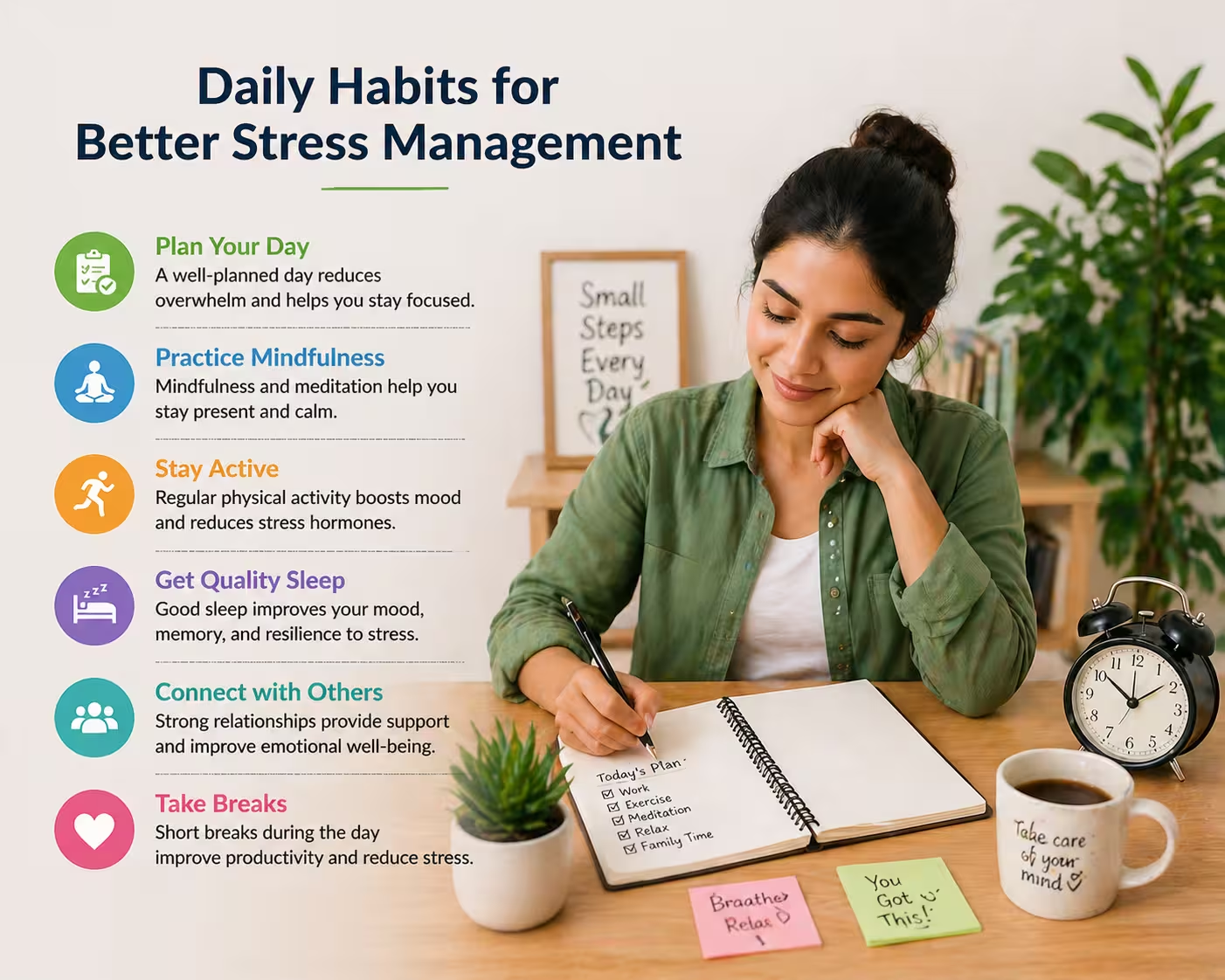
A significant portion of everyday stress stems from the feeling of being overwhelmed by too many demands. Learning to manage your time and energy intentionally is one of the most practical stress management skills you can develop.
The Eisenhower Matrix — a simple framework that sorts tasks into four categories based on urgency and importance — helps prevent the trap of constantly reacting to what feels urgent without making progress on what is actually important. Pairing this with regular planning sessions (a Sunday evening review, for example) creates a sense of predictability and control that significantly reduces daily anxiety.
Setting boundaries is equally important. Saying no to non-essential demands is not selfishness — it is an act of self-preservation that protects your time, attention, and mental health.
Social Connection and Support-Seeking
As noted in the coping mechanisms section, human connection is a core buffer against stress. But many people underutilize this resource because they do not want to feel like a burden or because they are waiting until they have something serious to say.
Regular, low-stakes connection — a walk with a friend, a short phone call with a family member, a genuine conversation with a colleague — keeps your social support network active and reduces the sense of isolation that amplifies stress. Research from Harvard’s Study of Adult Development, one of the longest-running studies on human happiness, consistently shows that the quality of our relationships is the single strongest predictor of long-term wellbeing.
Cognitive Reframing
The way you interpret a situation shapes how much stress it generates. Cognitive reframing is a skill used in cognitive behavioral therapy (CBT) that involves challenging unhelpful thought patterns and replacing them with more balanced, realistic ones.
For example, interpreting a critical email from your boss as evidence that you are failing is likely an overgeneralization. A reframe might be “This is feedback, not a judgment of my worth. I can respond thoughtfully and learn from it.” This does not mean ignoring real problems — it means engaging with them from a more grounded, less catastrophic mental state.
How to Manage Stress Effectively at Work
Workplace stress deserves its own attention because it affects so many people so consistently. Whether you are dealing with impossible deadlines, difficult colleagues, or a demanding culture, the following strategies are particularly useful in professional settings.
Set clear boundaries between work and rest. When working remotely, designate a specific end time and stick to it. Turn off work notifications after hours. The psychological separation between work mode and recovery mode is essential for preventing burnout.
Micro-recovery moments matter. Research by Dr. Sabine Sonnentag on occupational health shows that short mental breaks throughout the workday — not just the lunch break — significantly improve concentration, reduce fatigue, and increase resilience. A five-minute walk, a few minutes of stretching, or a quiet pause between tasks all count.
Communicate early when overwhelmed. Many people wait until they are completely underwater before speaking up about workload. Raising concerns early — with your manager, a colleague, or HR — often leads to more effective solutions and earns more respect than silently suffering does.
Building Long-Term Stress Resilience
Learning individual stress management techniques is valuable, but the deeper goal is resilience: the ability to adapt and recover from adversity over time. Resilience is not a fixed trait — it is developed through consistent practice and deliberate habits.
Sleep is non-negotiable. Chronic sleep deprivation amplifies stress reactivity significantly. The National Sleep Foundation recommends seven to nine hours for most adults. Prioritizing sleep hygiene — a consistent schedule, a cool dark room, limiting screens before bed — is one of the highest-leverage health decisions you can make.
Nutrition and hydration affect mood and stress tolerance. A diet rich in whole foods, lean proteins, healthy fats, and complex carbohydrates supports stable blood sugar and neurotransmitter function. Even mild dehydration has been shown to increase perceived stress and reduce cognitive performance.
Limit stimulants and alcohol. Caffeine in excess disrupts sleep and increases anxiety. Alcohol, though it may feel relaxing initially, disrupts sleep architecture and exacerbates mood instability. Both can undermine even the best stress management plan.
Spend time in nature. Research consistently shows that spending time in green or natural environments lowers cortisol, reduces blood pressure, and improves mood. Even short walks in parks or time spent in a garden can have measurable benefits.
When to Seek Professional Support
Self-directed stress management techniques are powerful, but they are not always sufficient. If stress has escalated into persistent anxiety, depression, or panic attacks or is significantly impairing your daily functioning or relationships, professional support is an important and appropriate next step.
A licensed therapist, particularly one trained in cognitive behavioral therapy (CBT) or acceptance and commitment therapy (ACT), can provide personalized tools and a safe space to work through deeper patterns. Many people also benefit from speaking with their primary care physician, as some stress-related symptoms have physiological components that deserve medical attention.
Seeking help is not a sign of weakness. It is one of the most intelligent and self-aware things a person can do.
Conclusion
Stress is an unavoidable part of a full life. But suffering unnecessarily under its weight is not. The stress management techniques in this guide — from breathwork and mindfulness to cognitive reframing and social connection — are all grounded in evidence and accessible to anyone willing to practice them.
The key word is practice. Managing stress effectively is a skill, and like any skill, it improves with repetition, patience, and self-compassion. Start with one or two techniques that feel most relevant to your current situation. Build from there. Over time, you will not just respond to stress better — you will become the kind of person who handles life’s challenges with greater steadiness, wisdom, and grace.