
What Is a Biopsychosocial Assessment? A Complete Guide to Whole-Person Mental Health Care.
Introduction
Many people walk into their first therapy session feeling nervous and unsure. You may have questions about what happens during that first appointment and why your provider asks about everything from your medical history to your childhood relationships. Without a clear explanation, the process can feel overwhelming or even intrusive.
That uncertainty matters. When treatment is built on an incomplete picture, outcomes suffer. People spend months in therapy without real progress — not because they are not trying, but because the root causes have not been fully identified. Fortunately, there is a structured, evidence-based solution to this problem. A biopsychosocial assessment gives your care team a full, three-dimensional view of who you are. As a result, your treatment plan becomes more accurate, more compassionate, and far more effective.
What Is a Biopsychosocial Assessment?
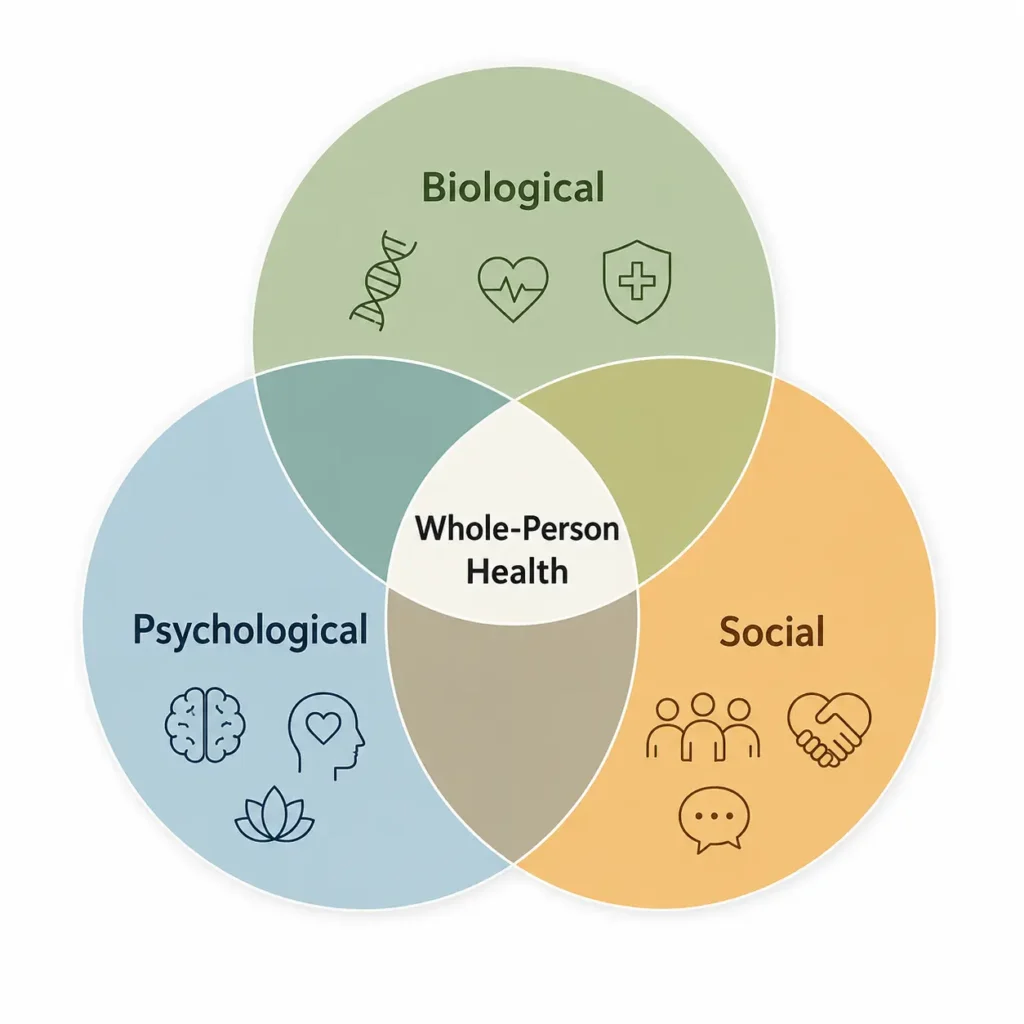
A biopsychosocial assessment is a comprehensive clinical evaluation used by mental health professionals. It examines three interconnected dimensions of a person’s health: biological, psychological, and social. Together, these three areas explain how your body, mind, and environment shape your mental well-being.
The concept behind this assessment is rooted in the biopsychosocial model, which psychiatrist Dr. George L. Engel introduced in 1977. Before Engel’s groundbreaking work, mainstream medicine focused almost entirely on biological causes of illness. Engel challenged that narrow view. He argued that human health — especially mental health — is far more complex. In his framework, a person’s well-being stems from a dynamic interaction between physical, psychological, and social forces.
Today, this model is widely accepted across the United States. Mental health clinicians use it during intake assessments, treatment planning, and case formulation. Moreover, regulatory bodies and insurance providers often require it as part of clinical documentation standards.
In simple terms, a biopsychosocial assessment answers one essential question: What is this person’s full story?
The History and Significance of the Biopsychosocial Model
Before the biopsychosocial model existed, mental illness was largely viewed through a purely medical lens. That is, conditions like depression or anxiety were seen primarily as chemical or neurological problems. Consequently, treatments were often limited to medication with little attention to a person’s life circumstances, trauma history, or support systems.
Engel recognized this approach as incomplete. He proposed that biological factors alone could not explain why two people with the same brain chemistry might have vastly different mental health outcomes. After all, social context plays a profound role. A person with strong community support, stable housing, and a nurturing upbringing will often respond to treatment very differently from someone dealing with isolation, poverty, or childhood trauma.
This insight transformed clinical practice. Furthermore, it gave rise to a whole new standard of care — one that sees the individual as a whole person, not just a collection of symptoms. Today, the biopsychosocial model is considered the foundation of evidence-based mental health care in the United States and globally.
The Three Core Dimensions of a Biopsychosocial Assessment
Understanding the three pillars helps you know what to expect. Each dimension covers a different part of your life. However, all three are deeply connected and influence each other constantly.
Biological Factors
The biological component of the assessment covers your physical health. During this section, your provider will explore topics such as the following:
- Current and past medical diagnoses and conditions
- Prescription and over-the-counter medications
- Family medical history, including hereditary conditions
- History of substance use, including alcohol, marijuana, or other drugs
- Sleep patterns, appetite, and physical activity levels
- Genetic predispositions that may affect mental health
- Neurological functioning and any history of head injury or seizures
Physical health and mental health are closely linked. For instance, thyroid disorders can trigger depression. Chronic pain often contributes to anxiety. Hormonal imbalances can cause dramatic mood shifts. Therefore, reviewing your biological health is not optional, it is a critical first step toward accurate diagnosis and effective treatment.
Psychological Factors
The psychological component explores your mental and emotional inner world. Specifically, it looks at:
- Your current mental health symptoms and their duration
- Any prior mental health diagnoses or psychiatric hospitalizations
- Emotional patterns, including how you manage stress
- Cognitive functioning and thought patterns
- History of trauma, including adverse childhood experiences (ACEs)
- Coping strategies — both healthy and unhealthy
- Risk factors such as suicidal ideation or self-harm history
This section helps your clinician understand not just what you are feeling but why you feel it. Moreover, it highlights your psychological strengths alongside your vulnerabilities. A well-trained clinician will look for resilience just as carefully as they look for risk.
Social Factors
The social component examines your environment and relationships. This section covers:
- Family structure, roles, and relationship quality
- Social support network — who is in your corner
- Housing stability, financial stress, and food security
- Cultural background, identity, and spiritual beliefs
- Work or school environment and any related stressors
- Interpersonal conflicts or a history of abuse
- Legal history, where clinically relevant
- Community involvement and social isolation
People do not exist in a vacuum. In fact, social determinants of health — such as poverty, systemic discrimination, or unstable housing — are among the most powerful predictors of mental health outcomes. Consequently, understanding your social world is just as important as examining your biology or psychology. Without this dimension, the picture remains incomplete.
Who Conducts a Biopsychosocial Assessment?
A licensed mental health professional is required to conduct this type of assessment. Qualified providers typically include:
- Licensed Clinical Social Workers (LCSWs) — often the primary providers in community mental health settings
- Licensed Professional Counselors (LPCs) — common in outpatient therapy practices
- Psychologists (PhD or PsyD) — particularly in settings that require formal psychological testing
- Psychiatrists (MD) — especially when medication management is part of the plan
- Licensed Marriage and Family Therapists (LMFTs) — particularly when relational or family dynamics are central
Additionally, some primary care physicians and licensed addiction counselors are trained to conduct biopsychosocial assessments. In Medicaid-funded settings across the U.S., regulations specifically require these assessments to be completed by appropriately licensed clinicians operating within their defined scope of practice.
Why Is a Biopsychosocial Assessment Important?
This assessment is far more than routine intake paperwork. Rather, it is the backbone of your entire care plan. Here are the most important reasons it matters:
It Creates a Whole-Person View. Instead of reducing you to a single diagnosis, the biopsychosocial assessment captures who you truly are. It reveals your strengths, your struggles, your history, and your environment. As a result, your treatment is more personalized and ultimately more effective.
It Supports Accurate Diagnosis. Mental health diagnoses are rarely simple. Similarly complex are the factors that contribute to them. By reviewing all three pillars simultaneously, clinicians significantly reduce the risk of misdiagnosis. Furthermore, they can identify co-occurring conditions such as depression alongside substance use disorder that might otherwise be overlooked.
It Guides Tailored Treatment Planning. Once the assessment is complete, your provider uses its findings to build a treatment plan designed specifically for you. This plan may include individual therapy, group support, medication management, community resources, or lifestyle interventions. Ultimately, it reflects your unique needs rather than a generic protocol.
It Improves Communication Across Providers. Other healthcare professionals — including psychiatrists, primary care doctors, or future therapists — frequently review the biopsychosocial assessment when taking on a new client. Therefore, it functions as a critical communication bridge across your entire care team.
It Ensures Thorough Clinical Documentation. From a compliance standpoint, thorough documentation protects both the client and the provider. In fact, many insurance companies and Medicaid programs require a current biopsychosocial assessment to be on file before authorizing ongoing treatment services.
What Happens During a Biopsychosocial Assessment Appointment?
Most assessments are conducted during an initial intake session. Depending on the complexity of your situation, the appointment typically lasts between 60 and 90 minutes. However, some settings divide the process across two separate visits.
During the session, your clinician will generally:
- Begin with an open-ended conversation about what brings you in
- Ask structured questions across all three dimensions
- Listen attentively and observe your affect and demeanor
- Review any prior records, referrals, or documents you have provided
- Document findings carefully in your clinical chart
The setting should feel safe, private, and nonjudgmental. Additionally, some providers ask clients to complete brief written questionnaires before or after the session to supplement the interview data.
At Ziwo Wellness Health, our clinical team approaches every assessment with deep respect for the person sitting across from us. In our experience, clients who feel genuinely heard during intake are far more likely to engage meaningfully in their treatment. We know that sharing your story takes courage and we honor that.

How Biopsychosocial Assessment Results Are Used
After the assessment is completed, your clinician synthesizes the information into a clinical narrative. This narrative explains how the biological, psychological, and social factors in your life interrelate — and how they contribute to your current mental health challenges.
Based on this narrative, your provider will:
- Formulate or confirm a working diagnosis
- Identify priority areas for treatment
- Recommend specific therapy modalities (such as CBT, DBT, or trauma-focused therapy)
- Coordinate with other providers if medical or psychiatric support is needed
- Set measurable treatment goals
- Connect you with relevant community resources if needed
In essence, the assessment becomes a living document. As your treatment progresses, clinicians refer back to it to measure change, adjust goals, and update their understanding of your needs.
Biopsychosocial Assessment vs. Other Clinical Evaluations
|
Evaluation Type |
Focus Area |
Timing |
Primary Use |
|---|---|---|---|
|
Biopsychosocial Assessment |
Biological + Psychological + Social |
Initial intake |
Holistic treatment planning |
|
SOAP Note |
Session data + observations |
Each session |
Ongoing clinical documentation |
|
Mental Status Exam (MSE) |
Current cognitive and mental state |
Any session |
Snapshot of current functioning |
|
Psychological Testing |
Cognitive, personality, behavioral |
Periodic |
Formal diagnosis support |
|
Progress Note |
Session content + client progress |
Each session |
Tracking therapeutic change |
As this comparison shows, the biopsychosocial assessment is by far the most comprehensive clinical document. Specifically, it is the only tool that ties together all three dimensions of health in a single structured evaluation. Consequently, it provides a foundation that no other assessment type can fully replace.
Common Conditions Addressed Through Biopsychosocial Assessments
Biopsychosocial assessments are used across a wide range of mental health conditions. Some of the most common applications include:
- Depression and anxiety disorders — where biological, psychological, and social triggers frequently overlap
- Post-traumatic stress disorder (PTSD) — where trauma history and social support networks are critical factors
- Substance use disorder — where biological predisposition, mental health history, and social environment all intersect
- Eating disorders — where body image, family dynamics, and medical complications require simultaneous consideration
- ADHD and neurodevelopmental conditions — where school environment, home dynamics, and neurological functioning must all be addressed
- Chronic illness and co-occurring behavioral health conditions — where physical and mental health challenges are deeply intertwined
In each of these scenarios, a single-factor approach would fall short. Therefore, the biopsychosocial model of health offers a far more effective and ethical framework for care.

How to Prepare for Your Biopsychosocial Assessment
Preparing in advance makes the process smoother and more productive. Here are five practical steps to take before your appointment:
- Gather your medical records. Bring a list of current medications, chronic conditions, and any past hospitalizations or surgeries.
- Reflect on your mental health history. Think about previous therapy experiences, psychiatric care, or diagnoses you have received.
- Know your family history. Mental health and medical patterns that run in your family are valuable clinical data.
- Be ready to discuss your social environment. This includes your current relationships, living situation, employment, and cultural background.
- Write down your primary concerns. Knowing why you are seeking help focuses the conversation on what matters most to you.
You do not need to have all the answers. Instead, simply be as open and honest as you can. The more context your clinician has, the better equipped they are to help you.
Frequently Asked Questions
What Questions Are Asked During a Biopsychosocial Assessment?
During a biopsychosocial assessment, clinicians ask questions about a person’s physical health, mental health symptoms, medical history, family background, relationships, education, employment, substance use, and daily functioning. They may also explore stressors, coping skills, safety concerns, and treatment goals. These questions help create a complete picture of an individual’s well-being and guide personalized treatment planning.
What Is an Example of a Biopsychosocial Assessment?
An example of a biopsychosocial assessment involves evaluating a client experiencing anxiety. The clinician reviews biological factors such as medical conditions and medications, psychological factors like thoughts, emotions, and coping strategies, and social factors including family relationships, work stress, and support systems. This comprehensive assessment helps identify contributing factors and develop an effective treatment plan.
What Are the 4 P’s of Biopsychosocial Assessment?
The 4 P’s of a biopsychosocial assessment are Predisposing, Precipitating, Perpetuating, and Protective factors. Predisposing factors increase vulnerability to a condition, precipitating factors trigger symptoms, perpetuating factors maintain the problem, and protective factors support resilience and recovery. Understanding these elements helps clinicians create targeted and individualized treatment strategies.
What Is the Biopsychosocial Approach to Assessment?
The biopsychosocial approach to assessment examines how biological, psychological, and social factors interact to influence a person’s health and behavior. Rather than focusing only on symptoms, this holistic framework considers medical conditions, emotional well-being, lifestyle, relationships, and environmental influences. The approach is widely used in mental health and healthcare settings to support accurate diagnosis and personalized care.
How long does a biopsychosocial assessment take?
A biopsychosocial assessment typically takes between 60 and 90 minutes. However, in complex cases or certain clinical settings, the process may be divided across two separate appointments.
Is a biopsychosocial assessment the same as a psychological evaluation?
No. A psychological evaluation often involves formal standardized testing for cognitive or personality functioning. A biopsychosocial assessment, on the other hand, is a broader structured interview that examines biological, psychological, and social factors together. Both are valuable, but they serve different purposes.
Does insurance cover a biopsychosocial assessment?
In most cases, yes. Most private insurance plans, as well as Medicaid and Medicare, cover the initial clinical intake assessment. However, coverage details vary by plan and provider. It is always best to contact your insurance company directly to confirm your benefits before your appointment.
Can the assessment be updated over time?
Absolutely. A biopsychosocial assessment is a living document. It can and should be updated when significant life events occur, when a new diagnosis is being considered, or when a client transitions to a new provider. This ensures that the clinical picture stays current and relevant to treatment.
Conclusion
A biopsychosocial assessment is one of the most powerful tools available in modern mental health care. Rather than reducing a person to their symptoms, it explores the full landscape of their life — the biology that shapes their body, the psychology that drives their thoughts and emotions, and the social world that surrounds them every day.
This kind of comprehensive evaluation is not just clinically sound—it is also deeply humane. It recognizes that you are more than your diagnosis. You are a whole person with a unique history, a complex inner life, and a specific set of circumstances that deserve to be understood.
At Ziwo Wellness Health, a biopsychosocial assessment is always the starting point for care. We believe that lasting mental wellness cannot be built on guesswork. It must be built on a clear, compassionate, and complete understanding of who you are. If you are ready to take the first step toward whole-person care, we are here to walk that journey with you—from the very first question to your last milestone in treatment.